
Posted by Annika Landis, EnjoyWinter-NTS Factory Team Athlete on Jul 7th 2026
What does it mean to suffer well?
Lessons from Ultra Running.
This is a question I am revisiting often as I prepare for a summer of trail races and big mountain adventures.
For most, suffering is suffering. Pain is pain. But for those of us who derive our purpose and even our joy from seeing how far back in the pain cave we can get, we experience pain through a kaleidoscope. While the foundational discomfort remains constant, shifts and twists can create a fresh pattern and reveal new intricacies. I am not unfamiliar with the feeling of suffering, decades of ski racing has made sure of that. But as I venture into the world of ultra trail running, I am confronted with a new form of physical discomfort that feels less familiar, less manageable, and presents a new pattern of colors and shapes that sometimes feel overwhelming.
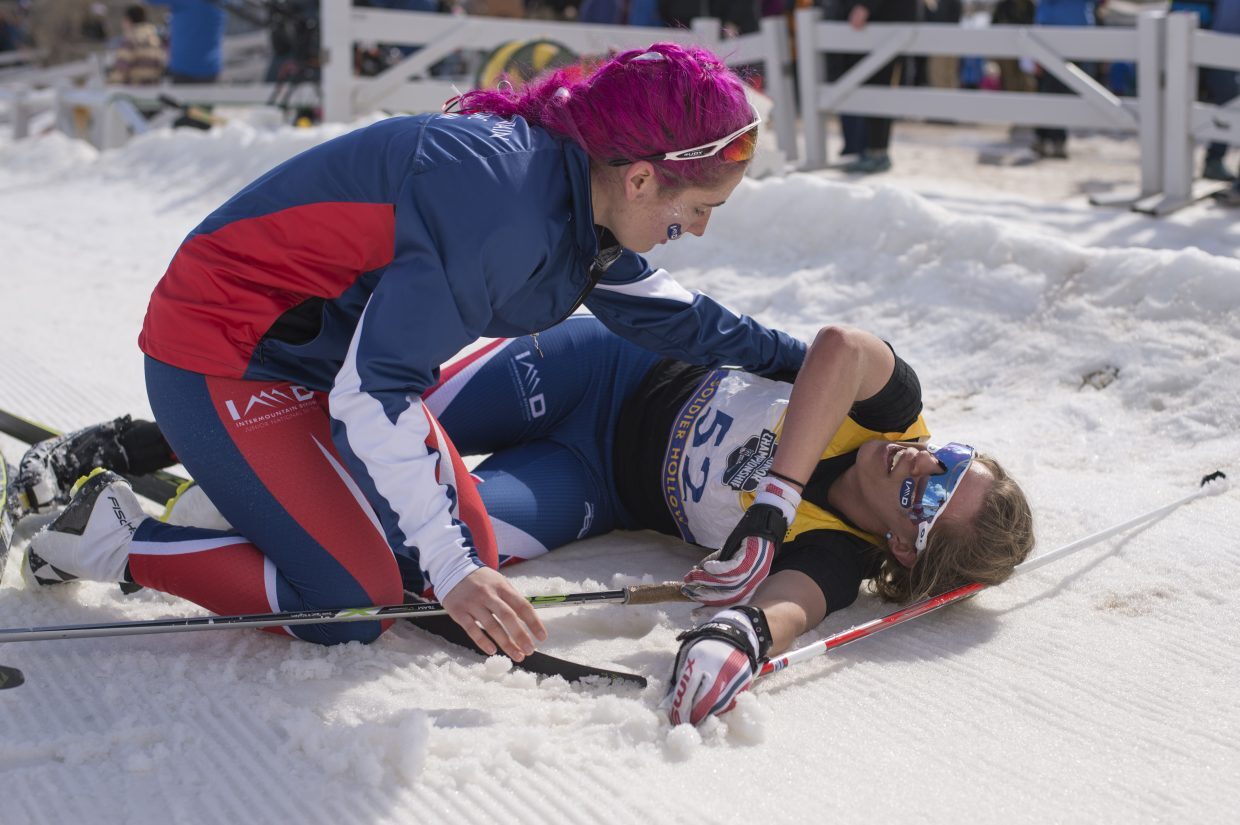
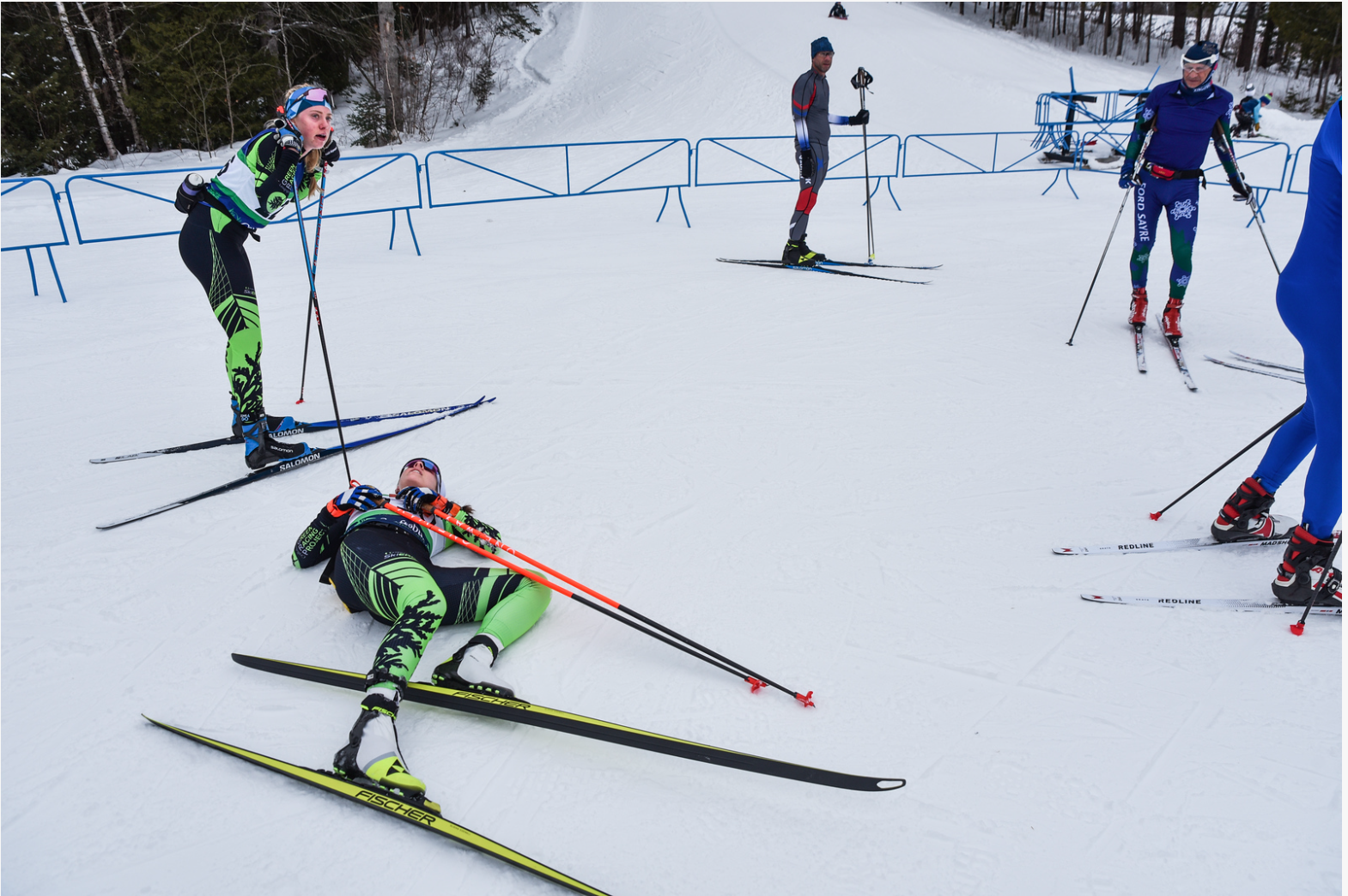
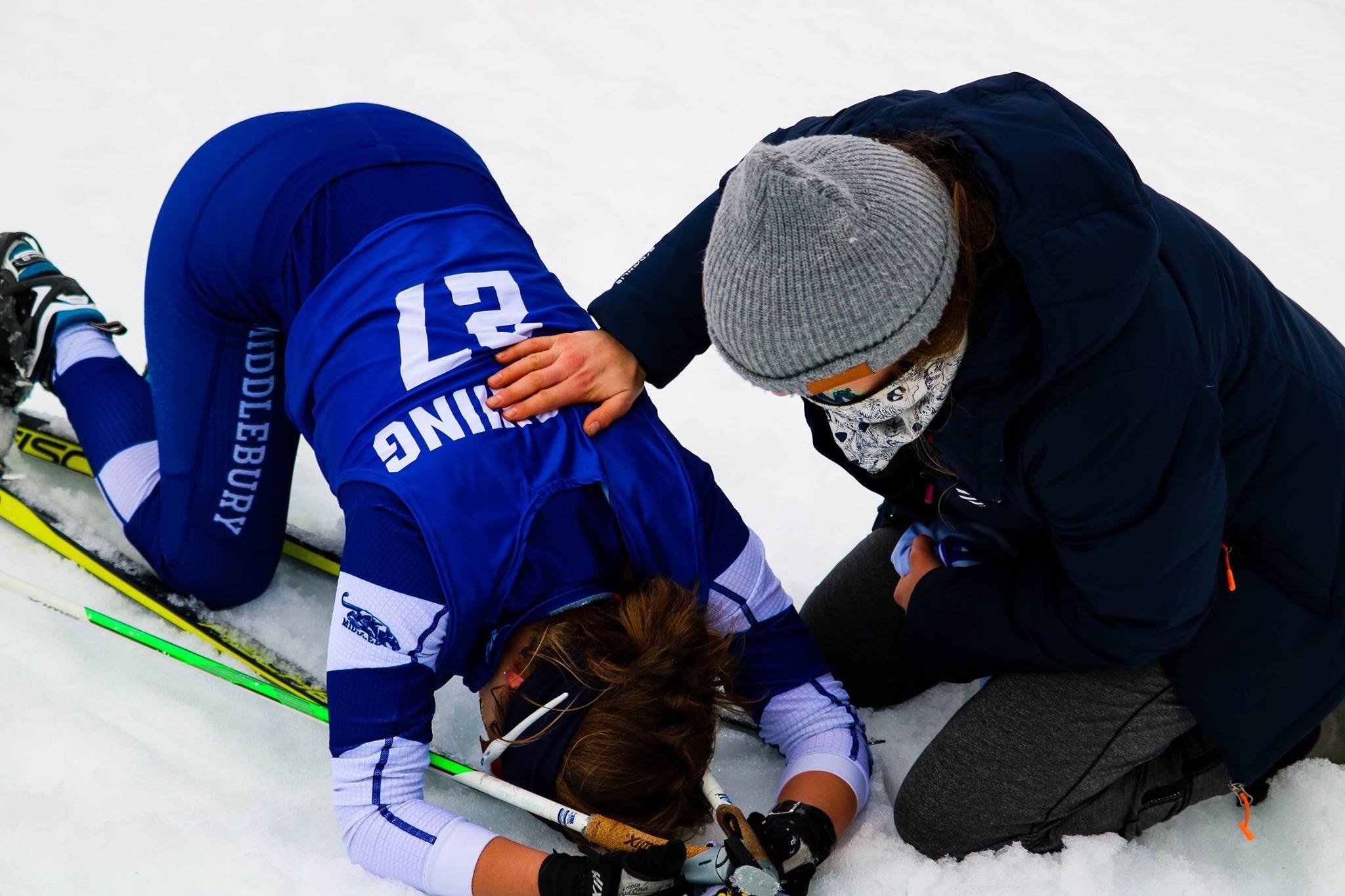
that all too familiar finish line feeling
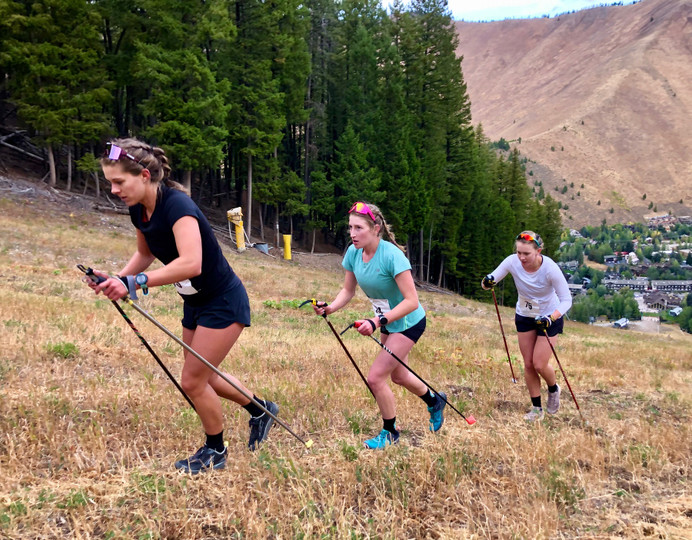
Running has always been harder for me than skiing, both physically and mentally. As long as I can remember, I have been self conscious of my technique and critical of how my physique and physiology affect my performance. I find it hard to feel consistently in good running shape, even when I’m running a lot. My body hurts and fatigues in different ways and I haven’t quite figured out the key to racing fast or long without feeling completely worked afterwards. Within this context, I am constantly presented with an opportunity to learn - both how to train specifically to improve my running, and how to adjust my mindset to be curious and not disparaging.
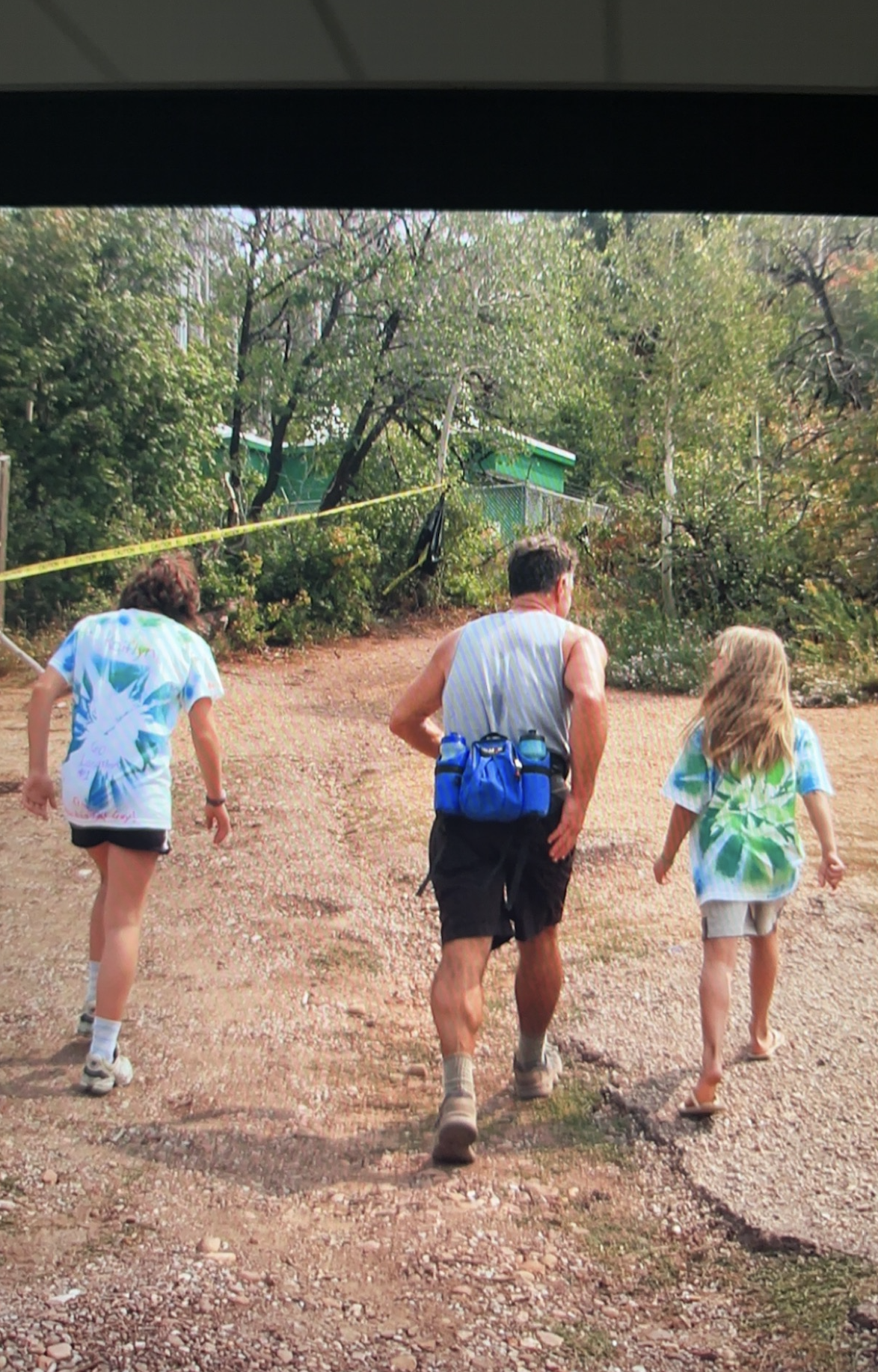
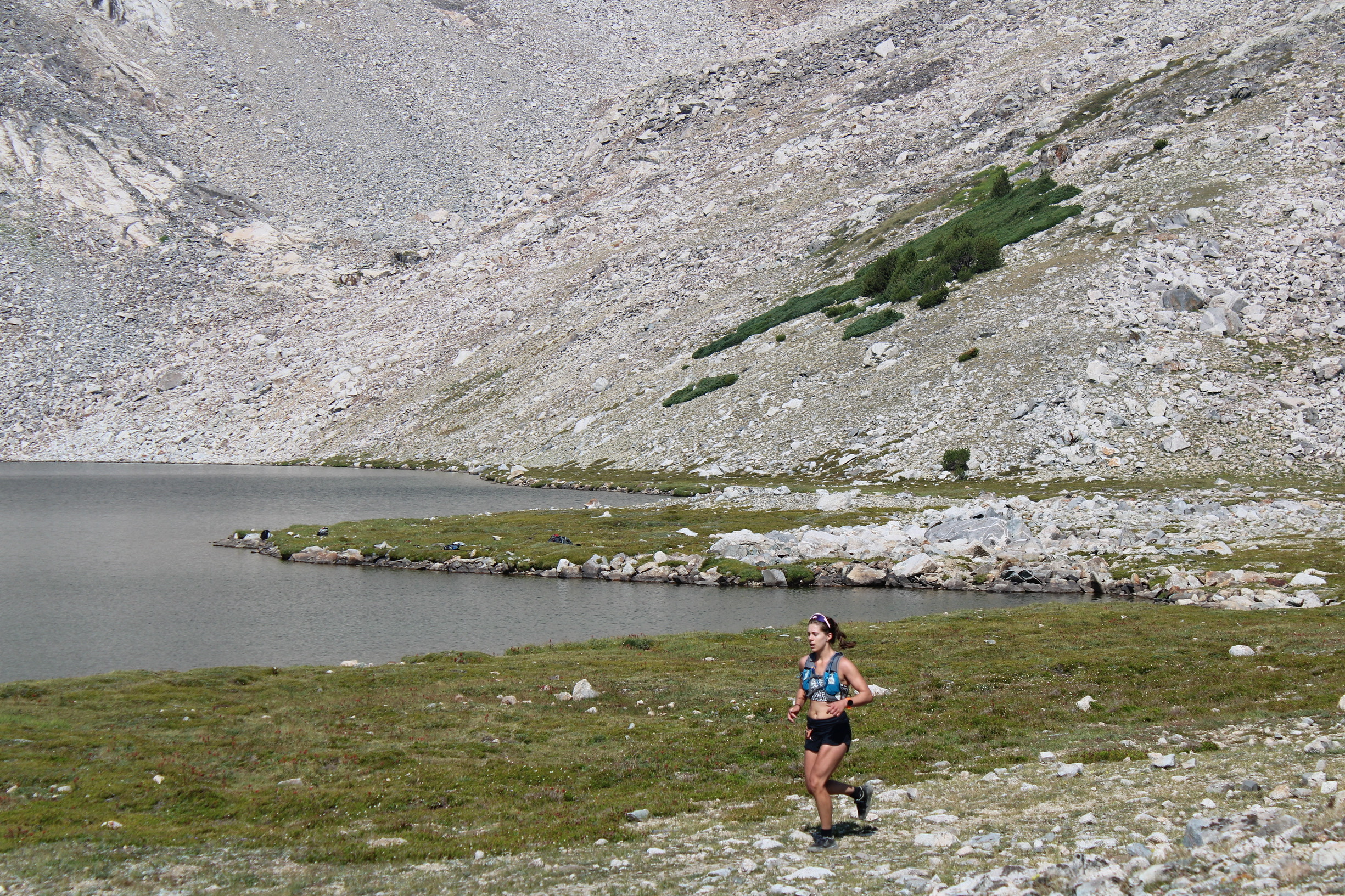
My sister and I running with my dad out of the aid station during the Wasatch Front 100 miler, my first up close experience with what it takes to thrive in endurance sport. (right) Running the Standhope 30k in Idaho.
I am a competitive person by default and I hold myself to a high standard of performance. Whether it is realistic or not, I am critical when I do not achieve the goals I lay out. I have run competitively my whole life, but always as a complement to skiing, not as the main event. In a ski race, I know when I will begin to feel fatigue, and when my muscles will start to hurt, and how much to eat and drink before I feel sick. I know how to perform in that space, and how to be adaptable to the unique pain attached to skiing. But with running, those familiar patterns don’t apply. I still have a lot to learn about how and when the discomfort will present itself. However, there is a sense of excitement about challenging myself to re-learn how to suffer in a new capacity. For now, instead of focusing on achieving a certain result, I am focusing on embracing this novel discomfort as gracefully and productively as possible. In ultra-running, variations of the phrase “suffer well” have been adopted by many athletes as an inspiring and motivating mantra.
Tara Dower, who set the FKT on the AT has it tattooed on her leg.
Stephanie Case considers her capacity to suffer to be her competitive advantage.
Courtney DeWaulter looks forward to the moment she enters the pain cave, instead of pushing it off as long as possible.
It's an iceberg phrase, simple enough on top, but with plenty of depth if you dip further beneath the surface. I've spent a lot of time in the past few years thinking about what that phrase means to me. I was reminded recently that suffering well does not inherently mean pushing yourself so hard that your vision blurs, your stomach revolts, and you collapse at the finish line. Rather it is a radical acceptance of pain by choice, and the graceful and sometimes selfless deferral of your own suffering in partnership with, or in the service of, others. I’ll do my best to explain what I mean by this, using my own experiences and years of “data," but I'll admit that I still struggle to fully articulate my personal understanding of this concept. Likely because it keeps endlessly evolving.
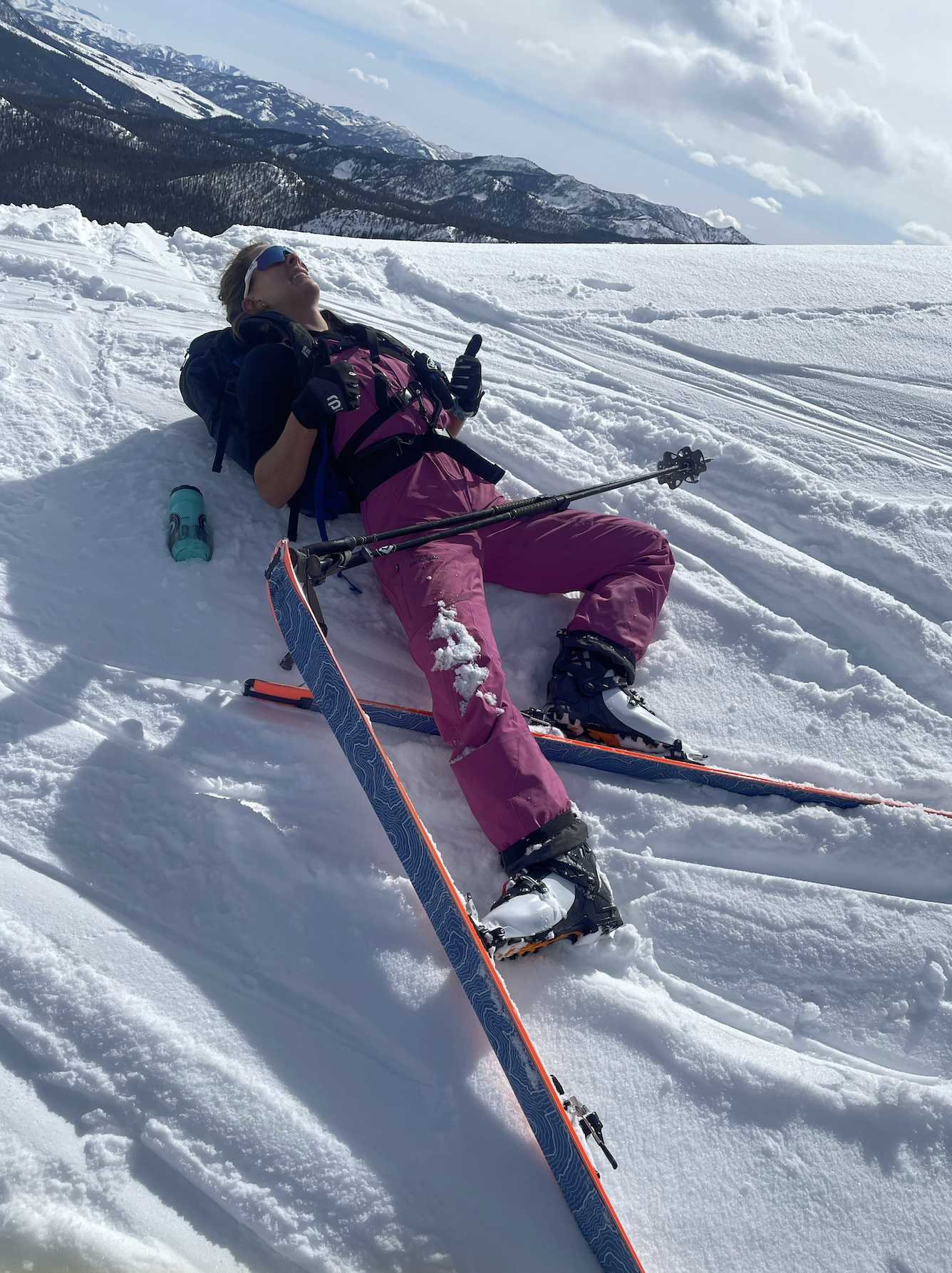

(left) Out of gas after skimo KOM chasing [for fun]. (right) Stopping the clock on a challenging Birkie.
Suffering Well by Suffering Selflessly
A few weeks ago, I drove with my family down to Pocatello, Idaho to watch my sister run in the Scout Mountain 50k (this was a misnomer, since the course was actually 36 miles, technically making it a 60k). The morning of the race, I headed up the trail to the high point of the course so that I could cheer for my sister on the longest climb. What struck me along the way was how many racers, some racing 50k, some 100k, cheered me on as we passed each other on the trail. Through labored breathing, on a tough climb, with hands on their knees, they went out of their way to offer encouragement to a fellow runner. I eventually stopped telling them I wasn’t racing and just embraced it.
When I reached my cheering spot about ¾ of the way up Scout Mountain, I settled into a sunny nook on the side of the trail to wait for my sister. As I lounged, with plenty of water, plenty of snacks, and only nine miles in my legs, racers passed by in a steady stream, focused and determined to get to the top of the mountain. Nearly every single racer paused by where I was sitting to ask if I was ok, and if I needed anything, interpreting my suntanning for race distress.
I got a bit embarrassed by having to assure people I was more than ok. I felt such amazement that these folks who were in the midst of their own suffering, some dragging a cramping leg, limping on a bleeding knee, or battling a 1000 yard dehydration stare, still had the capacity to look out for somebody else’s well being.
Which brings me back to what it means to suffer well. Suffering well means not just embracing and overcoming your own discomfort, but maintaining a sense of compassion, and camaraderie to help others through theirs. In studies of extreme survival (such as a remote plane crash, or getting lost on a mountain) one of the biggest predictors of who lives and who dies is whether you have a victim or a rescuer mindset. While a running race is far from being stranded in the middle of the ocean on a leaking raft, many of the lessons of survival still apply. Here are a few takeaways from the book “Deep Survival” that I think embody some of the same characteristics that allow us to dip deep and thrive in an endurance race, which is often a survival story with lower consequences on a smaller scale.
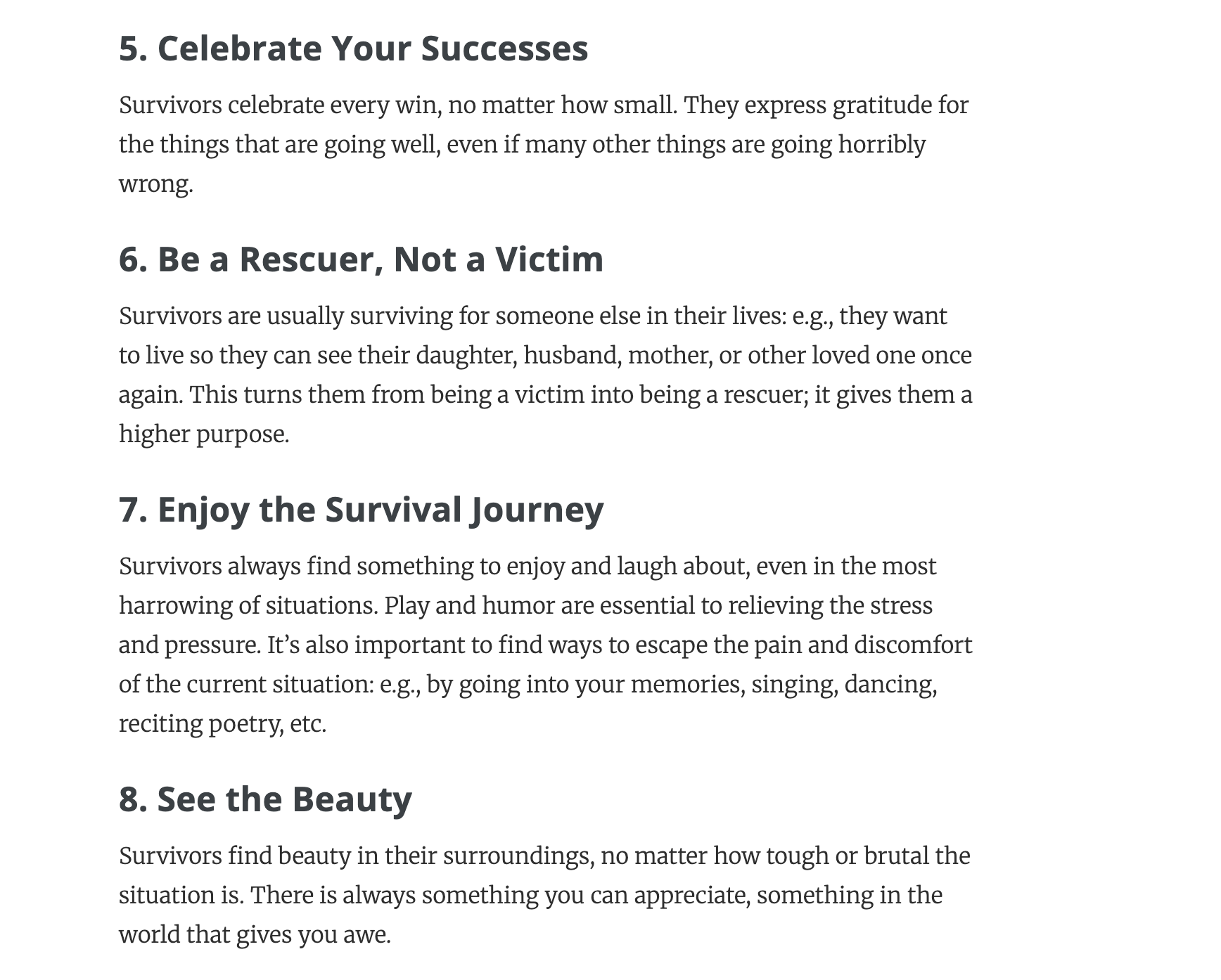
Credit:https://www.ybrikman.com/blog/2024/11/29/deep-survival-who-lives-who-dies-and-why/
All of the racers who asked me if I was ok, or who helped out a stranger on the trail, were adopting a rescuer mindset. Instead of being self absorbed in their own discomfort, they tried to ease someone else's, and by doing so, inadvertently distracted themselves from sinking into a defeatist mindset. Watching my sister round the corner with a huge smile on her face, even though she was hurting, and then disappear up the trail radiating optimism, stride for stride with a fellow racer, made me so proud. She is tough as nails without being so serious about it, which is a lesson in racing that I am still learning to embrace. She was embodying enjoying the journey and seeing the beauty, and it carried her to the finish line, where she became the first woman in our entire lineage (that we know of) to run over 35 miles in one go. Pretty darn cool.
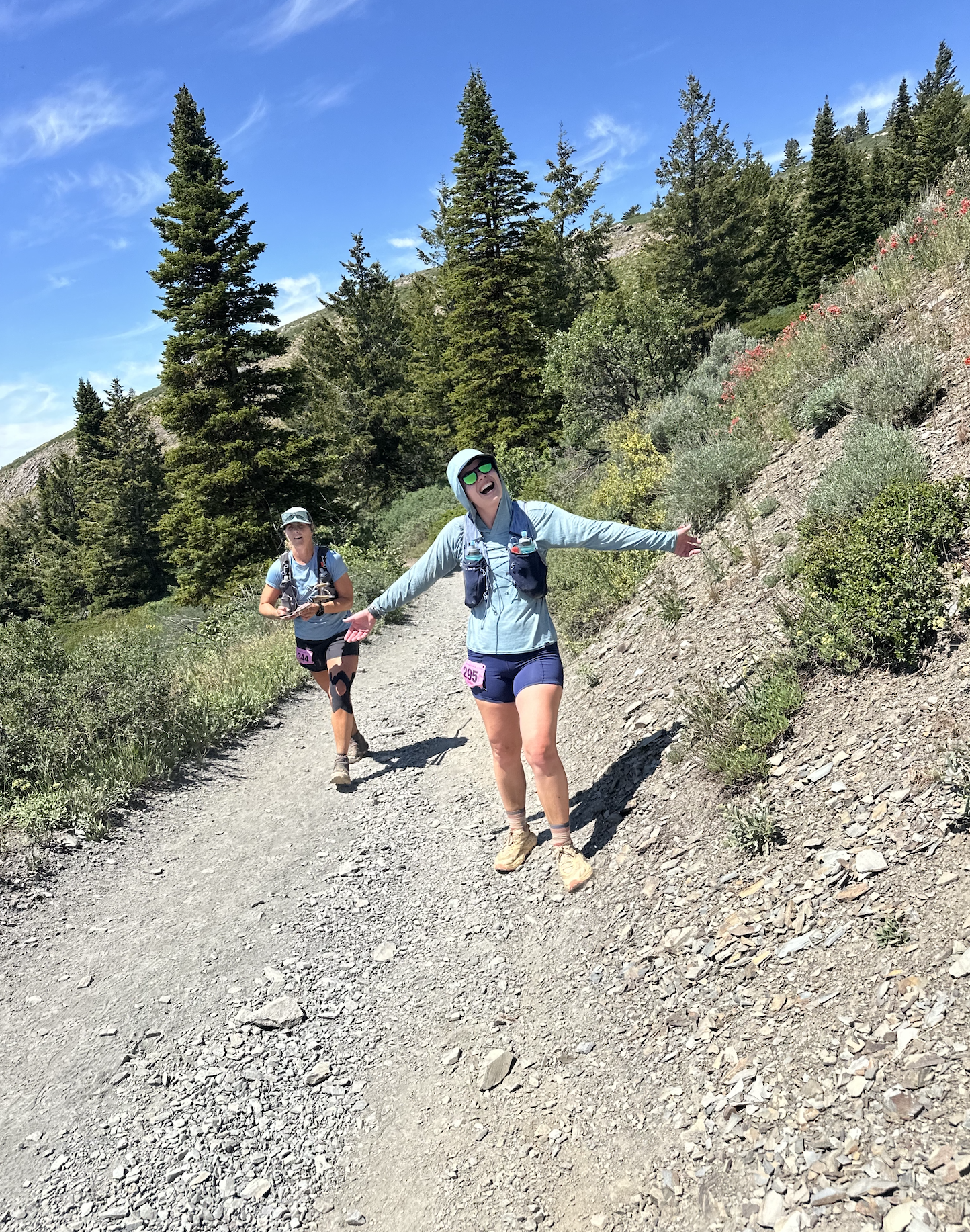
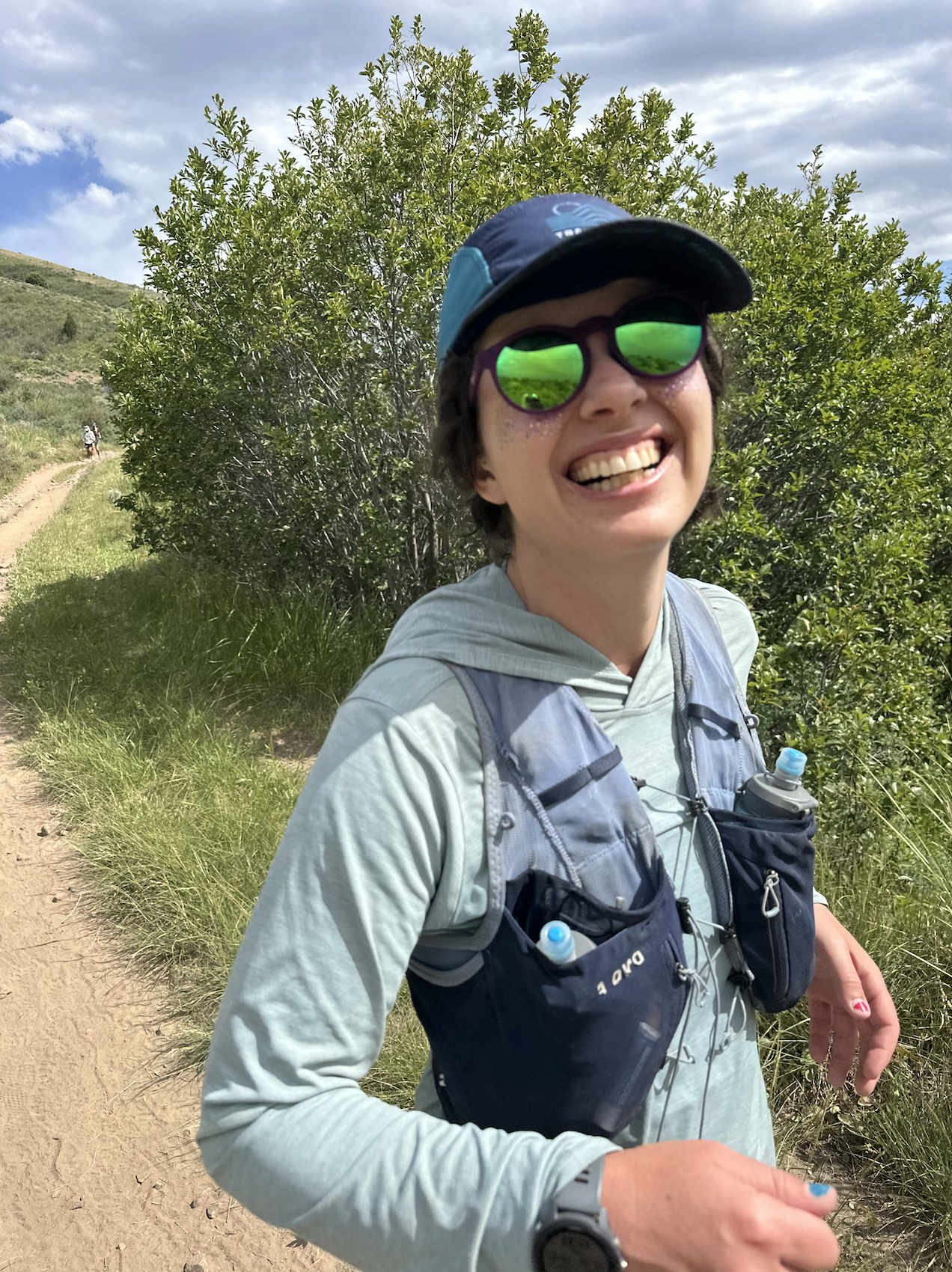
Suffering doesn’t need to be dead serious, and it doesn’t need to be masked with pounds of glitter, but there can be a positive acceptance of this challenge by choice that makes the pain easier to bear, and even enjoyable.
Two weeks later, I found myself on the start line of my own 55k race, with the certainty of discomfort waiting for me down the trail. I started a bit fast (at a pace I convinced myself was conservative) and really started to pay for it around mile 17. I knew I had to lock in, and get through this slump, if I wanted to be able to maintain my position. I had slipped from 2nd to 4th at this point, and was hoping to keep a top-5 finish. I kept thinking about my sister and her endless optimism. I drew on the inspiration from the racers at Scout and tried to interact positively with every runner and volunteer I saw. I reminded myself that if I stuck to my fueling plan, it was likely I would feel better (or at the very least, not feel worse).
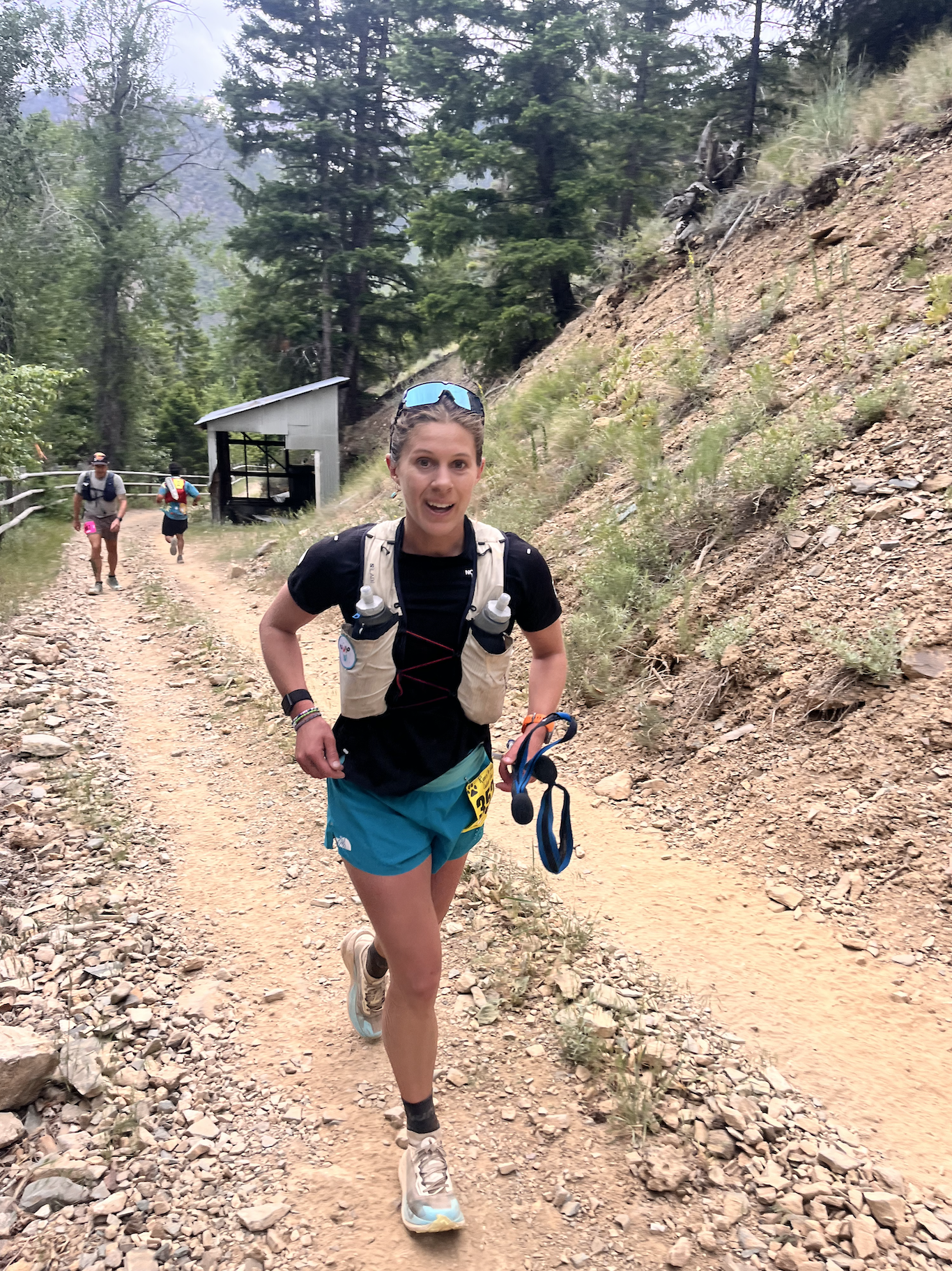
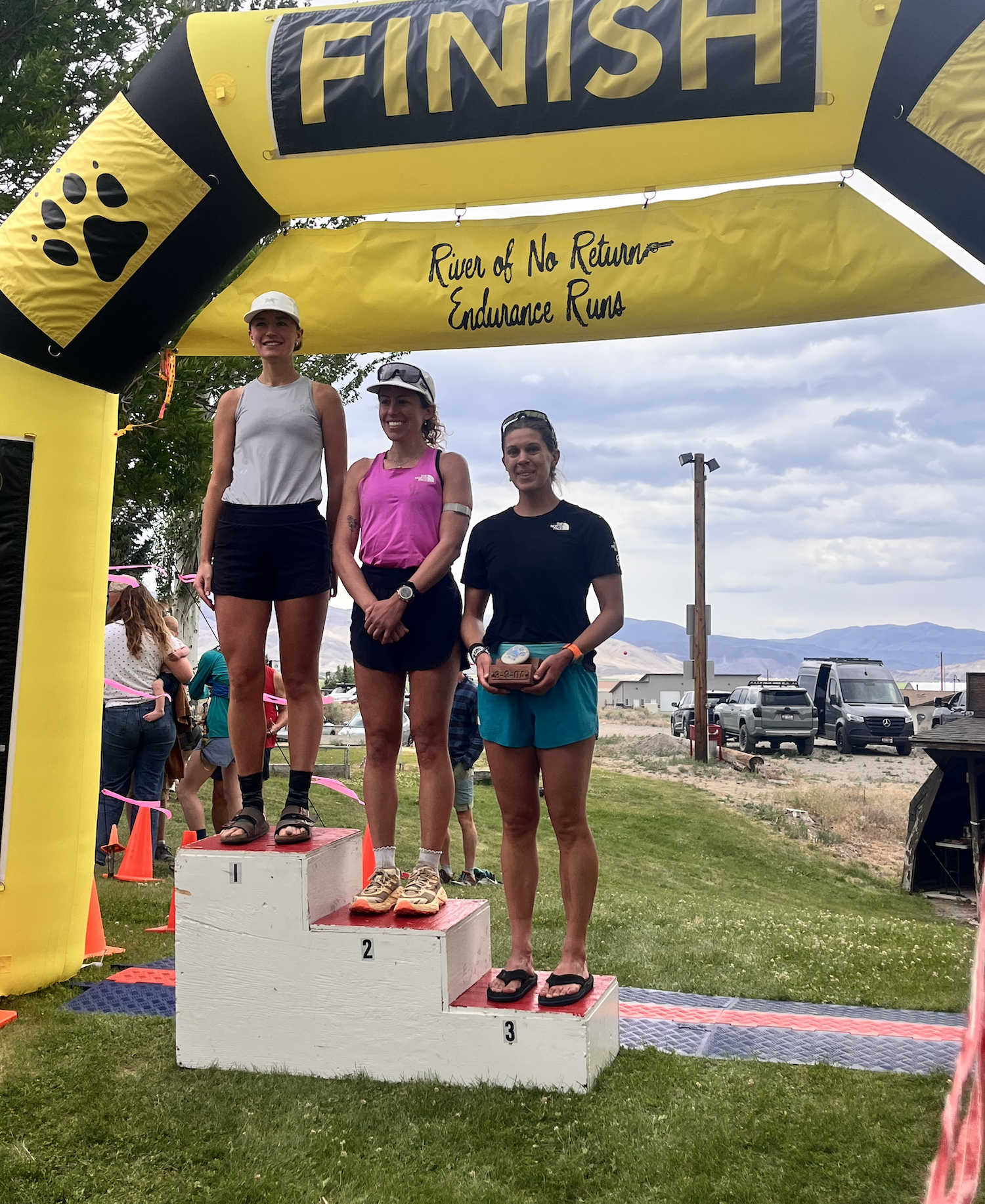
Smiling big running by my family out on course. Taking 3rd at the River of No Return 55k.
I kept putting one foot in front of the other, because discomfort is inherent to racing and it doesn't mean things are going badly. I allowed myself a smile at the top of the climb when I was rewarded with views of scrubby sagebrush dotted with vibrant desert wildflowers and the Lost River Range as looming shadows in the distance. Towards the end of the race, which was six miles of downhill, I found myself fighting cramping and mild stomach distress, but mentally feeling determined, focused, and present enough to enjoy the final stretch to the finish line. Despite not feeling my best competitively, and learning in real time how to adapt to the specific aches, pains, and surprises of running hard, I was able to enjoy myself.
For me, there is something about longer distances that elevates the process of racing over the result itself. Self-discovery, curiosity, and connection coalesce at the edge of resilience, creating a deep, meaningful challenge that is about managing and mastering my limits for the intrinsic reward of personal growth. How do we get to this place of seeming contradiction; where physically we’re battling extreme discomfort, but mentally or emotionally, we can be having a relatively good time? Is this something we learn to do? Something we can train for?

niche Harry Potter reference that fits very well with the theme of this blog.
Can we train to suffer well?
I recently had a debate with a friend about whether you can train to suffer, and even if you can, whether it actually makes things any easier. He was of the opinion that no amount of training really makes suffering any easier. At that moment, I disagreed. But, what I think we were really disagreeing on was vocabulary. I agree that while the objective physical distress doesn’t ever get much easier, we can train ourselves to accept discomfort and make our subjective experience of it more tolerable. I recently came across a substack from ultra runner and coach Marcus Scotney [You Don't Need to Learn to Suffer], where he argues “discomfort is information, suffering is the story you attach to it.”
Which is a fancy way of saying, suffering is all in your head.
The most powerful tool that we have as athletes is our mindset. We can train our bodies as optimally as possible, but if we aren’t able to control our own narratives, even the best athletes will falter. We can’t train away pain - it’s inextricable from endurance sport - but we can train our response to pain and rewire our brains to have a positive or neutral reaction to negative feedback from our bodies.
For example: “my legs are starting to cramp [information]”
Neutral Response: “that’s ok”, I’ll drink some electrolytes and wait 20 minutes then reassess"
Positive Reframe: “wow, how cool that my legs are strong enough to run 30 miles, I bet they can make it another 4 to the finish line”
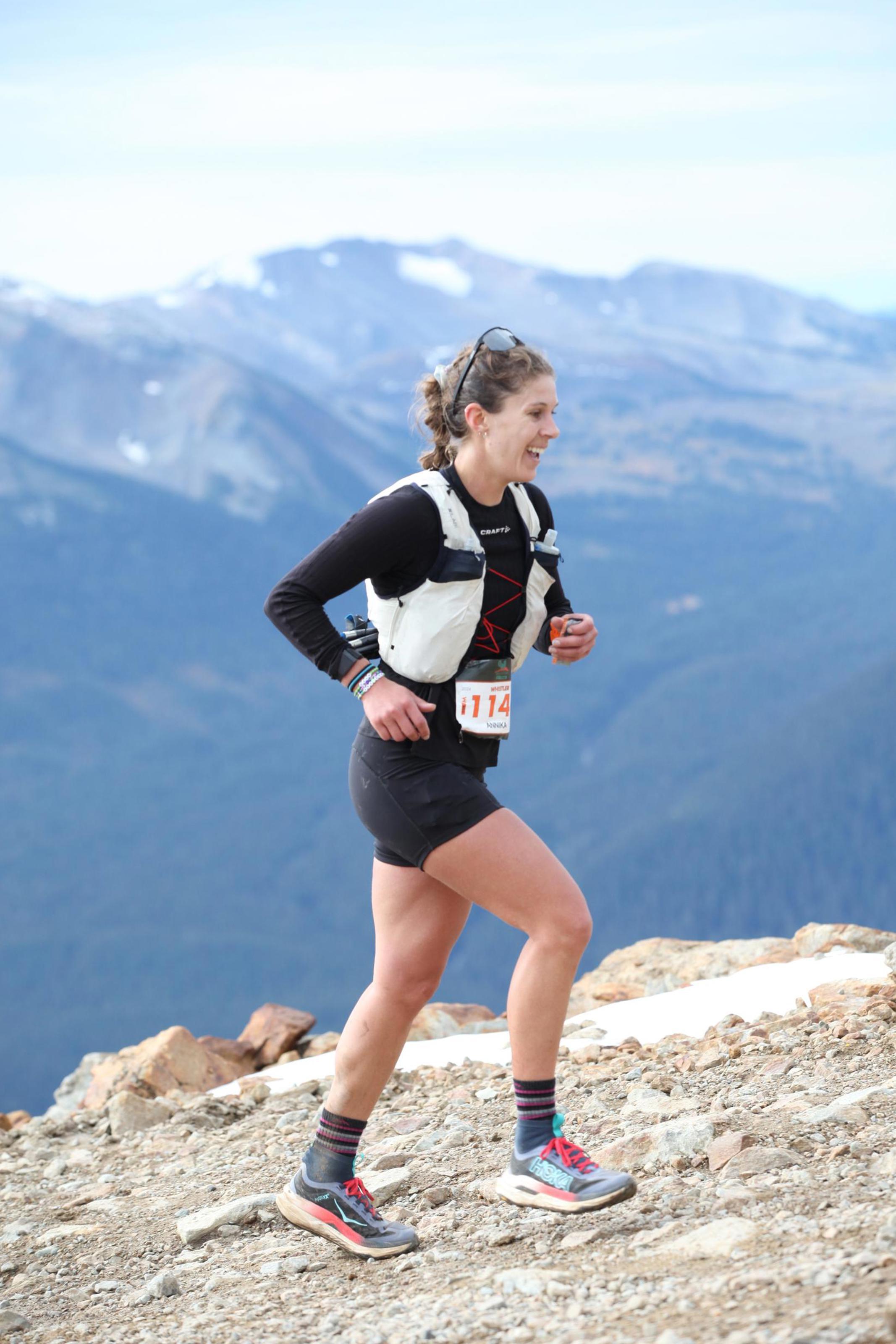
Reaching the top of the climb at the Whistler 50k
This is a simple example of taking the physical information from our body, and deciding how to respond to it. Suffering well is not just the skill of embracing and deferring our body’s alarm signals to stop. It is also a mindset of humility (Molly Seidel - Western States 100*), and an acknowledgment that challenge by choice, discomfort on purpose, and pain as joy, are all such an immense privilege. The narrative that we curate around the physical discomfort that we have created for ourselves is equally as powerful as our ability to grit our teeth, and “suffer” longer than anybody else. So, when my legs start to cramp at mile 30, and I can feel the salt crystalizing on my forehead, I can remind myself that I chose to do this because I inherently love spending a long day out in the mountains, breathing hard and testing my limits.
Suffering well to me means not taking my ability to move my body for granted and having perspective about what is hard by choice. It means moving forward, at whatever pace, and being compassionate and selfless when I can. It means risking a fall to look up from my feet and take in the view, and saying affirmations out loud. It means celebrating making it to the point where I get to learn something new about myself at the margins of my durability. It means enjoying each moment as an opportunity to learn, and grow, and sharing that moment with the people I love. “Suffering well” will look different for everyone, but I think there is a throughline of exploring the human condition through movement, that at the end of the day, we can all relate to.
*Molly Siedel is an Olympic bronze medalist in the marathon. She is an extremely accomplished athlete with an impressive resume. This past week, she ran the Western State 100 miler - the grand prix of trail running in the US - and her first attempt at the distance. It was brutal; she battled nausea, cramping, chafing, fatigue, hypothermia, (and more), and finished 9 hours after Jennifer Lichter, the winner (and new CR!). Many pro athletes in ultramarathons DNF when it becomes clear that they are no longer competitive for the top positions. This makes sense, because running 100 miles is an immense load on the body, and they likely have another high stakes race in a month or so. But Molly kept running, she never quit, and came across the line with a smile. The humility of being the only person in the field with an Olympic medal, and yet not being above limping to the finish line well behind the leaders when she easily could have dropped out, epitomizes suffering well as a form of empowerment and of unapologetic human agency.