
Posted by Annie McColgan - APU on May 30th 2026
The Lesson from this Year’s Winter Olympics: Take a Break
I watched more figure skating this Olympics than I have ever watched in my entire life. I have a feeling that this statement may be true for quite a few watchers of the Milan Winter Olympics this year. Mainly, I became captivated and obsessed with the press interviews, energy, talent, and hair of Olympic Gold Medalist, Alysa Liu. Liu’s gold medal skate on the ice to the disco medley “MacArthur Park” recorded by Donna Summer, has been viewed on YouTube 9.6 million times. I probably account for at least ten of those views because it truly is a spectacle to watch. Her composure on the ice has a unique combination of relaxation and intensity that athletes in any sport can admire. At the beginning of her skate, the announcers relay her statement that she “doesn’t need a medal” rather she just needs to “show people what [she] can do.” For someone who proclaims that ‘they don’t need a medal,’ Liu at the same time soars into the air and lands with a ferocity that can only come in competition. The first few minutes of any free skate program tend to be the most tense with the biggest jumps and technical challenges. Yet, Liu’s smile and relaxation not only seemed to release her tension but the entire arena’s. I found myself smiling not only watching her skate, but also at the joy on her coaches’ faces as she nailed every last piece of her four minutes. At the end of the routine, she quite literally wipes her hands of it, then emphatically looks into the camera to give the quote of the games: “That’s what I’m F****** talking about!”
But as captivating as the pure four minutes of her Olympic performance is on its own, it’s Liu’s story that brings it to life. I strongly urge anyone who watches her Olympic routine on YouTubeto pair it with her 60 Minutes Interview from January. This interview chronicles Liu’s dramatic comeback to the skating world. After competing in the 2022 Olympics in Beijing as a 16-year-old, Liu retired from skating citing the pressures she felt from her father and the desire to try new things. She wrote in her retirement Instagram post “been an insane 11 years. A lot of good and a lot of bad but yk that’s how it goes…now that I’m finally done with my goals in skating I’m going to be moving on with my life.” Liu took that break and used it to experience that crucial part of a young adult’s life to do what they do… explore. She went to Everest base camp, traveled with friends, and lived what she called “her best life.” However, after two years, she began to feel the desire to skate again. At first just for workouts for quick hits of dopamine but then later, she felt the urge to return to competition. This time, it would be on her terms. She convinced her former coaches that this time her skating would be her own and that she would be fully invested in the collaboration and creative process of her program. One particularly incredible part of the video is a montage of Liu failing jumps and pounding the ice hard. Over and over and over again. In contrast to the video of her Olympic Championship program, you actually see and hear the pain of how many times Liu had to fall in order to stand atop the podium. When the interviewer comments on Liu’s scrappiness, she gives a response wiser than her age of 20. She says, “I love struggling. It makes me feel alive.”
Liu wasn’t the only one returning to their sport after retirement in Milan this year. Notably, Lindsey Vonn took the slopes again after retiring in 2019. Vonn’s qualification for the Olympics was pretty incredible in and of itself considering her age and the severe injuries and surgeries she’s dealt with over the years. While Vonn’s ending of the games was brutal to say the least—ending in a devastating crash resulting in a broken leg with complex fractures—her presence at the games was no doubt impressive to say the least.
However, there were some other ‘returners’ to sport on Team USA, notably on the cross country squad. On the women’s roster, there were two athletes returning from breaks from the sport: Novie McCabe and Hailey Swirbul. McCabe took the 2025 year off to reset to gain traction on ongoing health issues, and Swirbul returning from her 2023 retirement with a new sense of curiosity and openness to the sport. On the men’s side, Hunter Wonders returned to the world of World Cup racing after retiring in 2023, with a new sense of balance in his life outside of the world of skiing. Again, this return led to his qualification for the US Olympic team.
Liu’s incredible story of return on her terms, ending in a captivating gold medal performance became the story of Milan. However, to me it also signaled a greater shift in the world of sport psychology. So much of sports is centered around the toughness, the grittiness, and the dedication that manifests in sacrifice of other parts of an athlete’s world. One thing that really stuck with me in Alysa Liu’s 60 Minutes Interview was her wish that every athlete could take a break from their sport. Sports figures like Michael Phelps and Michael Jordan carry a cultural memory of those who pushed themselves harder than the rest of the competition, trained more, and became more. However, it can be easy to forget that Phelps, like Liu, retired from his sport in 2014, only to come back and win more Olympic medals in Rio 2016. Jordan retired more than once, once to pursue a career in Minor League baseball, only to come back and earn his second three-peat championships with the Chicago Bulls.
I’m not necessarily trying to claim that retirement is the only way to achieve great heights in sport. However, I think there is certainly a lesson to be learned from athletes like these. I think we all have something to learn about taking long-term breaks from a sport and what it can do for performance. An involuntary break from sport, such as due to injury or health, can be hard for an athlete to wrap their heads around as they watch their competitors and teammates continue to train. However, they may be surprised later by the benefits that come from a period of true mental and physical rest from a sport when they return. Perhaps, rather than coming to the field of play with pressure to perform, an athlete may come back happy to just be on the field.
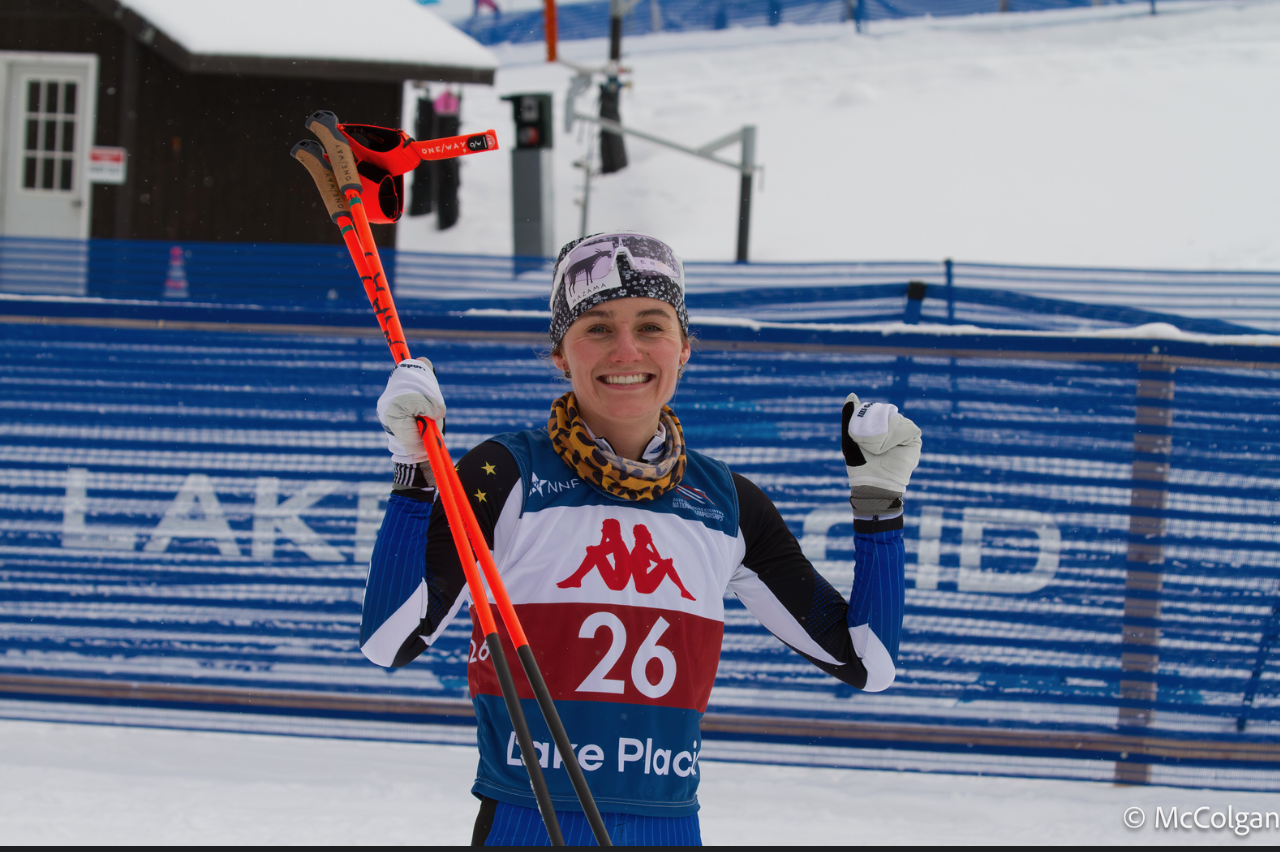
This year at US nationals, I saw Novie McCabe at the finish line of the mass start 20k in which she had just won her national championship and earned her spot on the Olympic team. The joy I saw on her face was pretty awesome to see (full disclosure, I am good friends with Novie McCabe, so I may have some bias on this front). Coming back to a racing scene, just being happy to be present rather than being wrapped up in the performance, ironically but unsurprisingly does good things for performance.
In contrast to a forced break due to injury, a voluntary break or retirement from sport may be even more powerful for an athlete’s mentality. This is a choice that an athlete makes to grow outside of their sport. Athletes like these chose to retire from the sport in order to change their relationship to the sport. However, that mental and physical rest—if they do decide to return—sometimes manifests similarly to as it does for athletes returning from injury. While the reasons for stepping back, and the results of their performances were different, watching the joy on Liu’s face finishing her Olympic performance was not unlike the joy on McCabe’s face at the end of the Lake Placid 20k skate.
I find myself wondering: What can the rest of us learn from these breaks (especially if we aren’t taking a break ourselves)? No doubt, at the forefront of this lesson is joy. Sport psychology has perhaps shifted from the Jordan mentality of “do all you can at whatever cost.” I’m not saying it’s wrong… because it has and does produce incredible results. However, maybe that lesson isn’tthe lesson that we pass onto our junior racers in sport. I think just as we search for ways to better ourselves in this sport and accomplish our performance goals, we must also search for ways to better that search itself.
The lesson from this Olympics for me wasn’t about all the ferocity and the intense dedication that it takes to be great (if you’re interested in that maybe go watch Klaebo’s documentary). It was in fact about how fun that process can be, when it’s on your terms (if you’re interested in that… after watching Alysa Liu’s 60 Minute Interview, go watch Ben Ogden’s UVM commencement speech starting at 57:37). Ben’s speech is all about defining success on your own terms, community collaboration and embracing the personal growth that comes with striving for a goal. There is nobody that embodies this style of tenacity, balance, and joy better than Ben. Perhaps that is why he is the most decorated US male cross country skier of all time. And knowing Ben, I have a feeling that the return he has after this injury will have the same kind of comeback results found across the board (again… maybe some bias here from me… go cats…).
Coaches of junior athletes everywhere: I ask to have your athletes watch Alysa Liu’s sixty minute interview and Ben Ogden’s commencement speech. At the beginning of the training year,it can be easy to fall into the thinking about all the training we have to do this year to get better and getting wrapped up in the struggles we have had in the past. This oftentimes (at least in my experience) leads to overcompensating for those insecurities, often by training too much. And by training too much, I don’t necessarily mean too much volume. In fact, I think a better term to use would be training without adequate balance. Every athlete is going to need different levels of that balance to have optimal performance. And it will change throughout the process! That’s what’s cool about it!
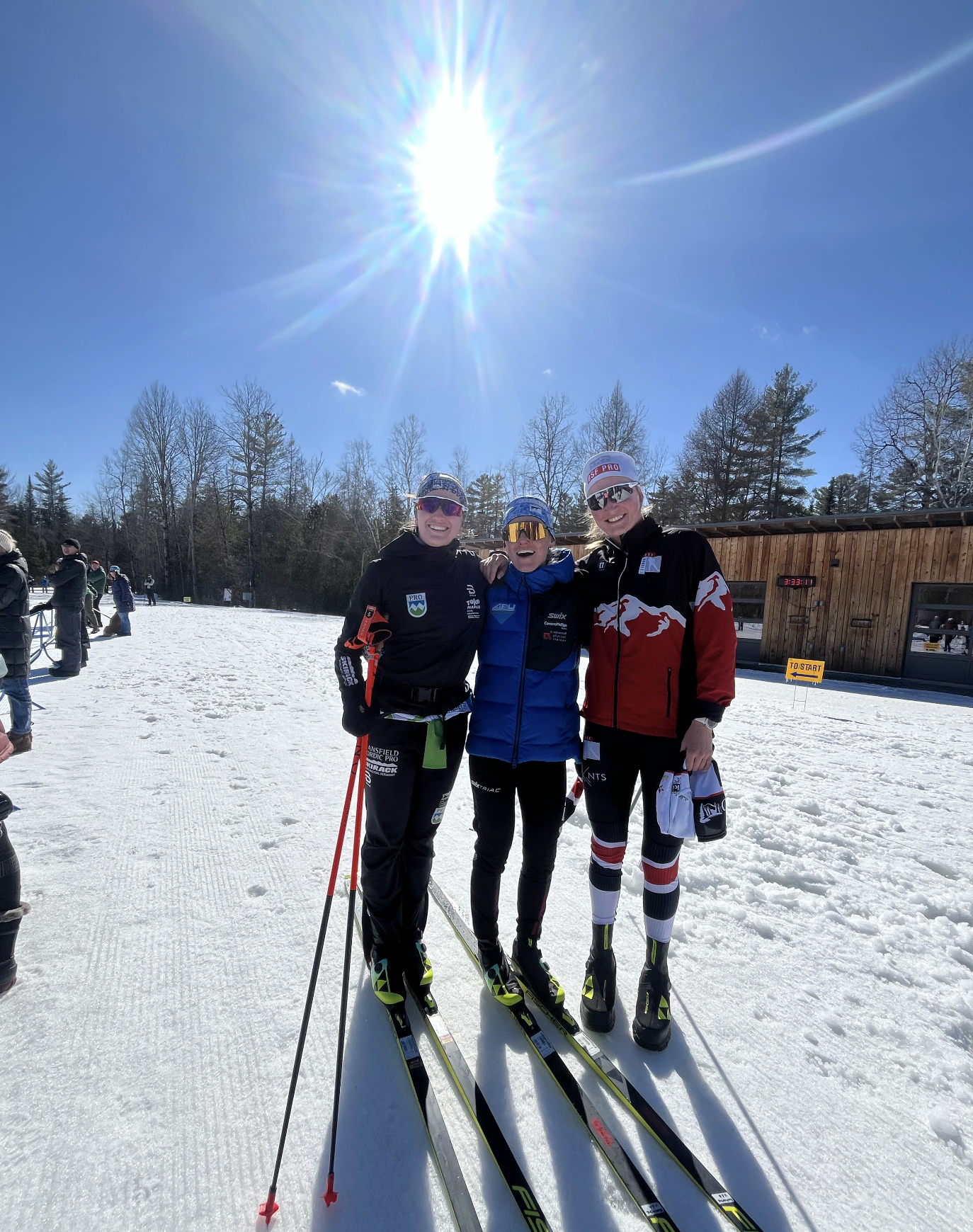
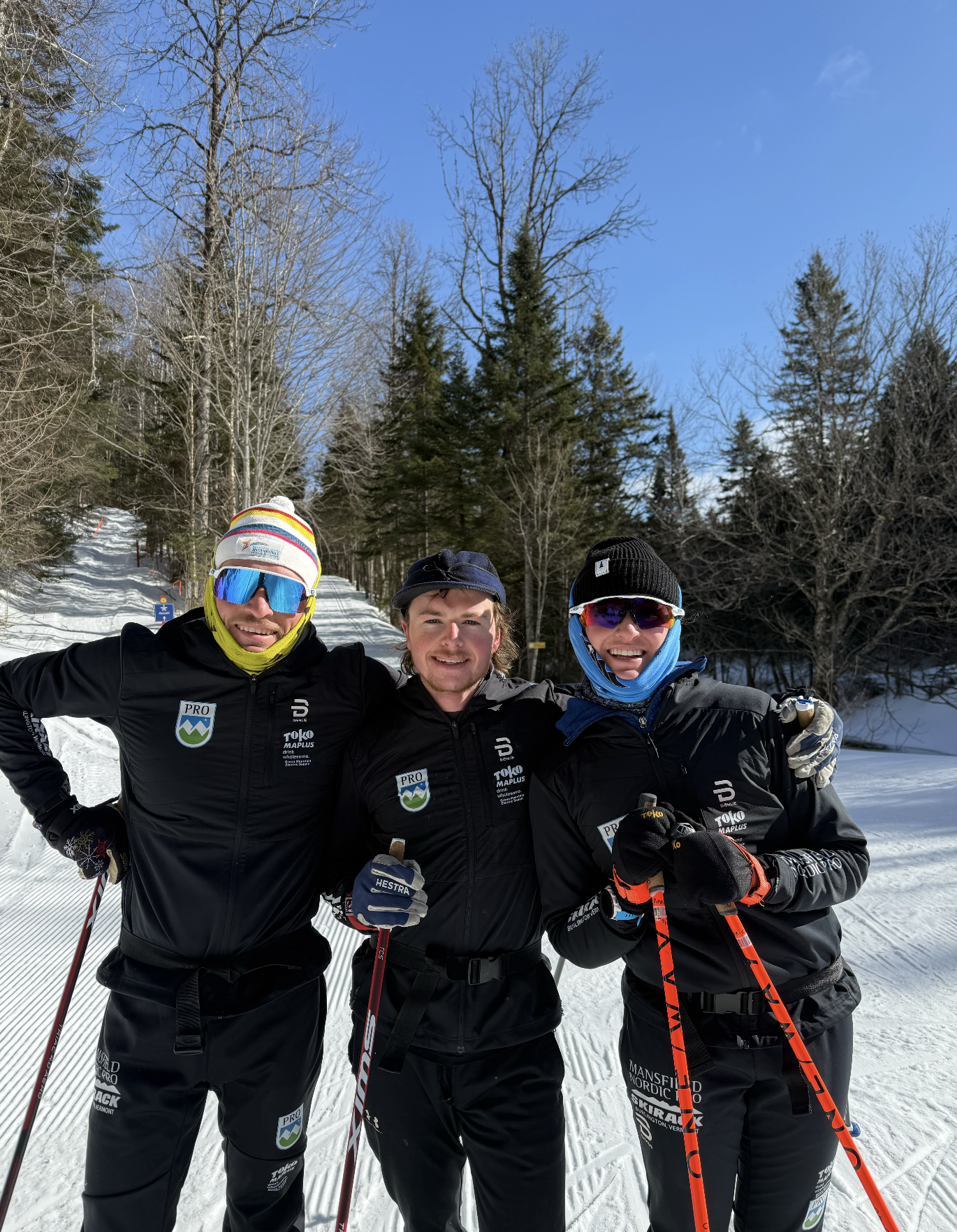
This winter, I was doing some solo L4 intensity at Catamount Outdoor Center in Vermont with the cheering of my teammate Colin Freed. For reference, Colin is one of the best cheerers and teammates out there, so this story perfectly exemplifies his character. It was a set of 7x3min at L4, which is by all accounts… a very hard set. Just as I was getting to the middle of the set—the real meat and potatoes of it—I stopped for some fuel, and Colin asked me how I was doing. I said, “man I’m struggling.” His response quoted Alysa Liu:
“You love to struggle! It makes you feel alive!”
And while I didn’t look nearly as good, nor win an Olympic gold on the track that day, my teammate reminded me that the struggle doesn’t always have to be such a struggle. It can be fun.