Posted by Jack Young: EnjoyWinter Athlete Force on Jul 10th 2026
Pushing the Limits on Summer Snow
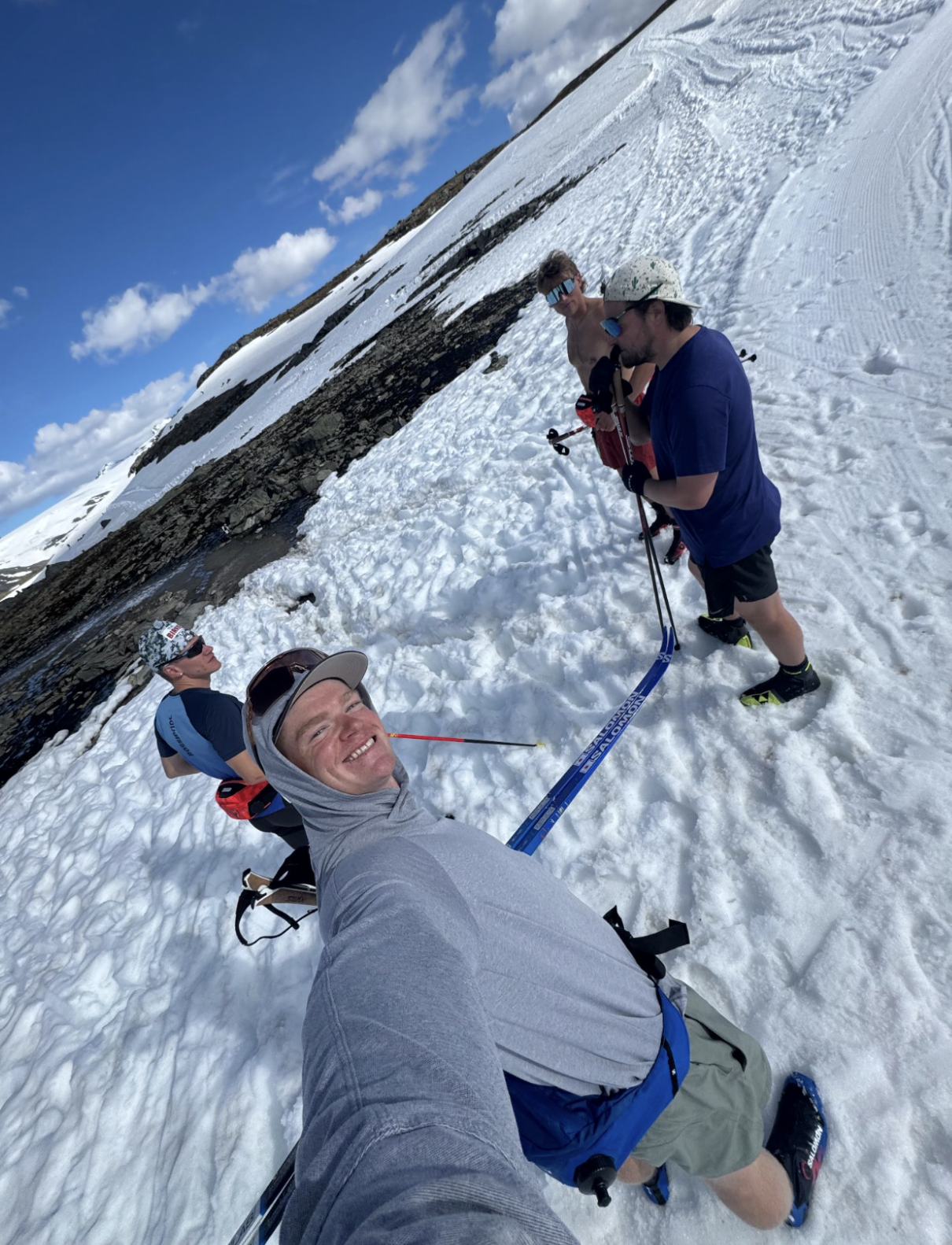
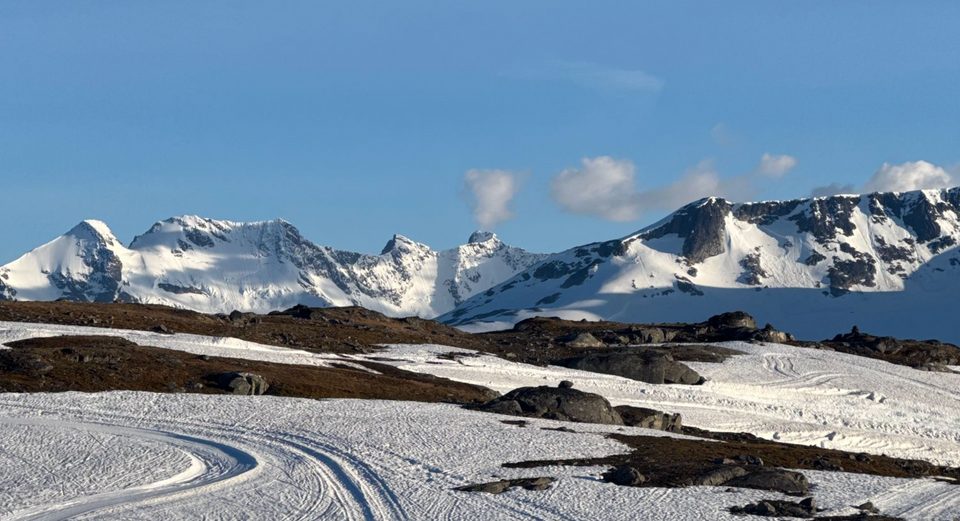
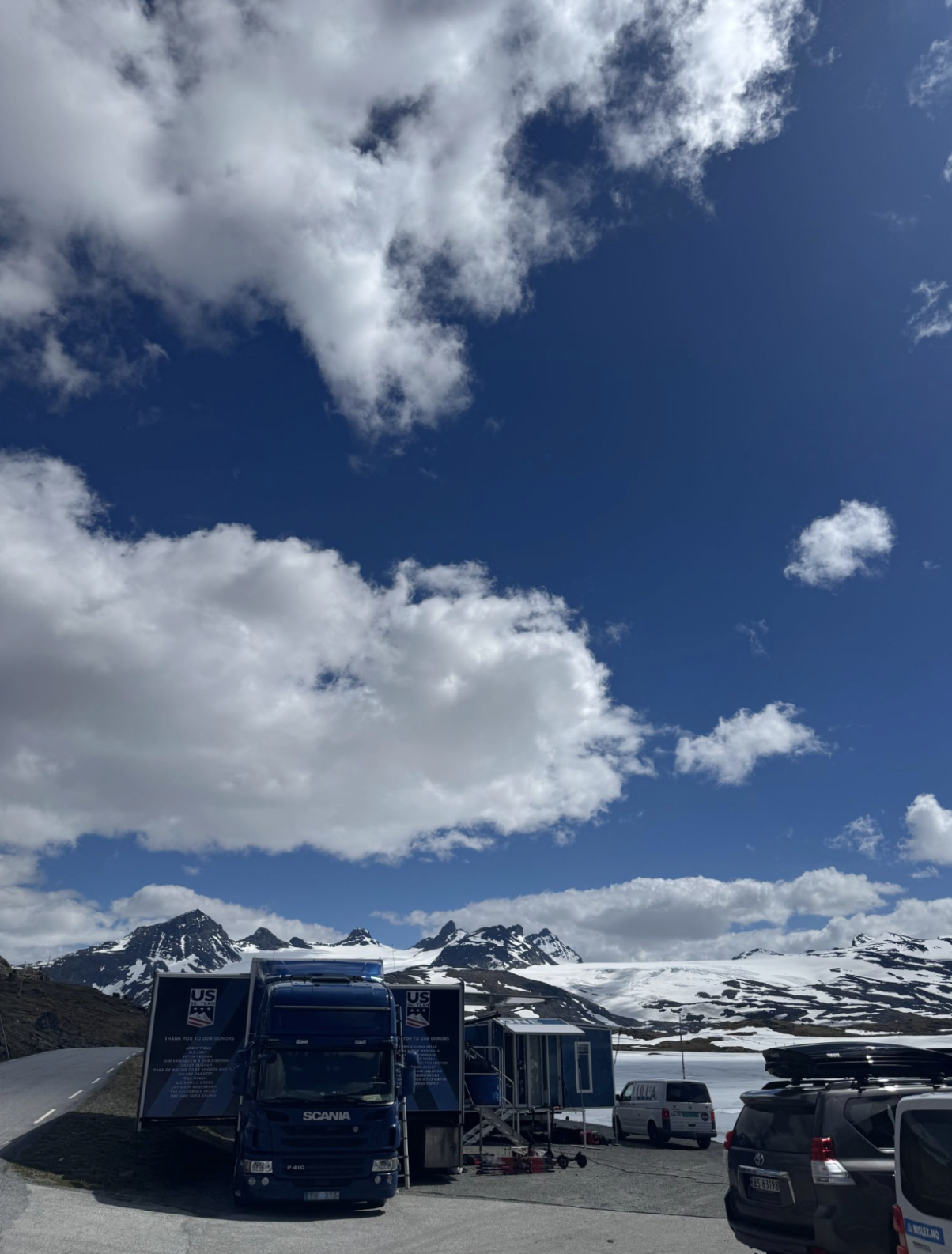
Two weeks ago, I completed an 8-day training camp on snow in Sognefjellet, Norway. Bend, Oregon, the usual site of the spring/early summer US Ski Team on snow camp, had a dry winter, so plans changed, and the team shipped off across the pond for our first dose of summer snow. Our schedule for camp was to fly into Oslo, drive to Sjuseon where we would stay for a few days of dryland training, and then make our way up to the snow field for our 8 days on snow. When you consider an entire summer of ski training, 8 days on snow, even if you are training twice a day, can sound miniscule. This mindset leads to most athletes (including me) skiing as much as they possibly can regardless of how tired they become. I want to talk about how productive (or not productive) this mindset can be in the context of an entire season of training and racing.
I may try to make a few generalizations by the end of the post, but mostly, I am going to talk about my own experiences and how they affected my decision making at this most recent camp and how it will affect future camps. With another Alaska glacier camp on the horizon for early August, I’ll certainly be able to apply my findings.
In order to think about how productive it is to train way too hard once you are on snow, it would help to first identify why I want to get on snow during the summer in the first place. Last year, in my Alaska camp trilogy, I stated while discussing the factors that make a camp productive that snow is one of those factors. Now, I’ll give it my best go at answering why.
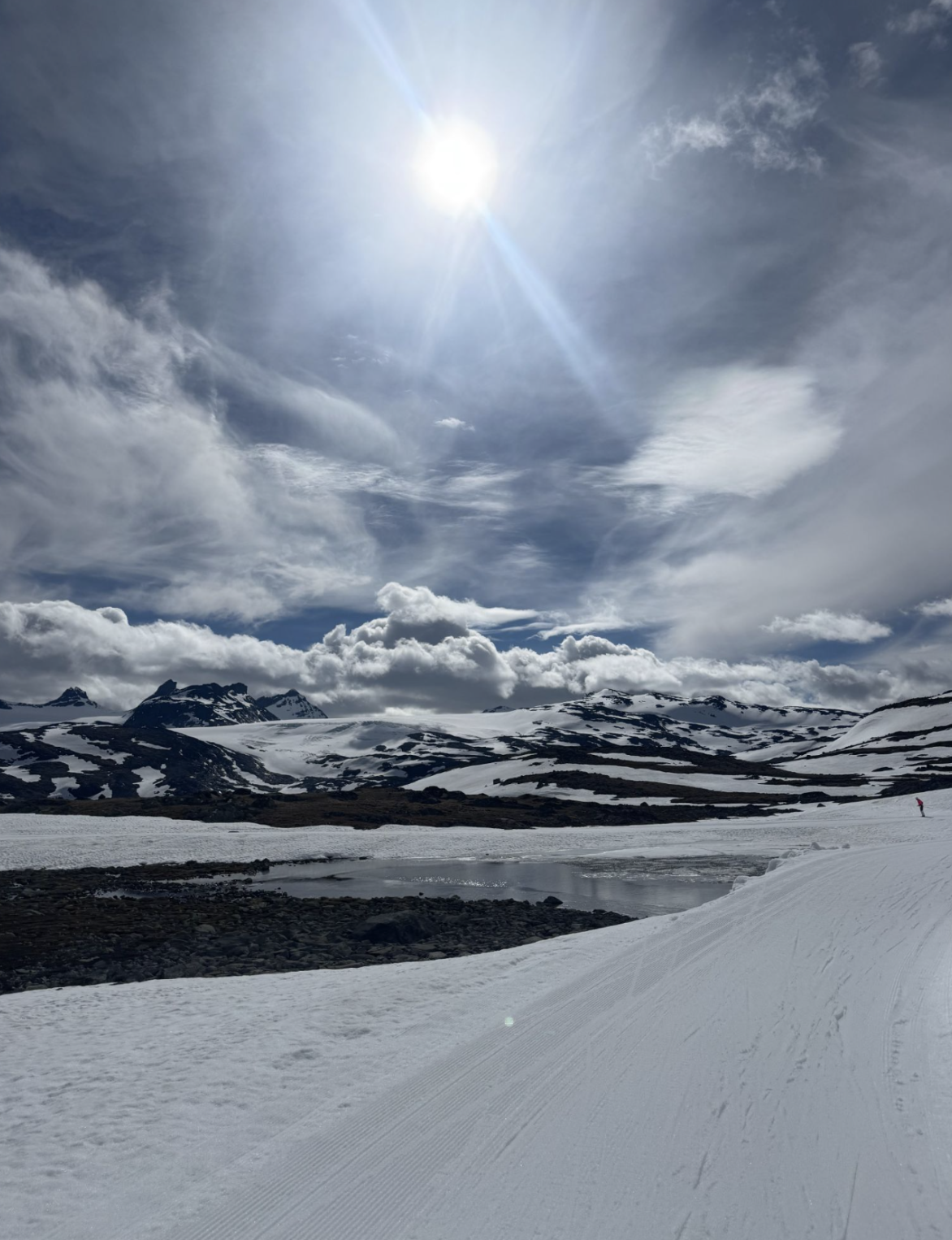
I think one can answer this question with one word: technique. A skier can train pretty well on rollerskis, and a particularly driven skier can train really well on rollerskis if they pay constant attention to mimicking their on-snow technique. However, even if you are perfectly replicating what you do on snow in your rollerskiing, you are unable to progress as a technician. One could argue that you could try to change things for the better while rollerskiing, but there is no way to gauge if the change actually works on snow. Not only to progress, but to avoid regressing during the summer, skiing on snow remains crucial for elite cross country skiers.
In my mind skate skiing and double polling are not too bad for technique on rollerskis, but diagonal striding in the classic technique is very hard to get right on pavement. It also just so happens that diagonal striding is one of the weakest points of my skiing as a whole. What remains is the question of how to best work on this weakness while also training as best I can as a whole during my 16 sessions across 8 days.
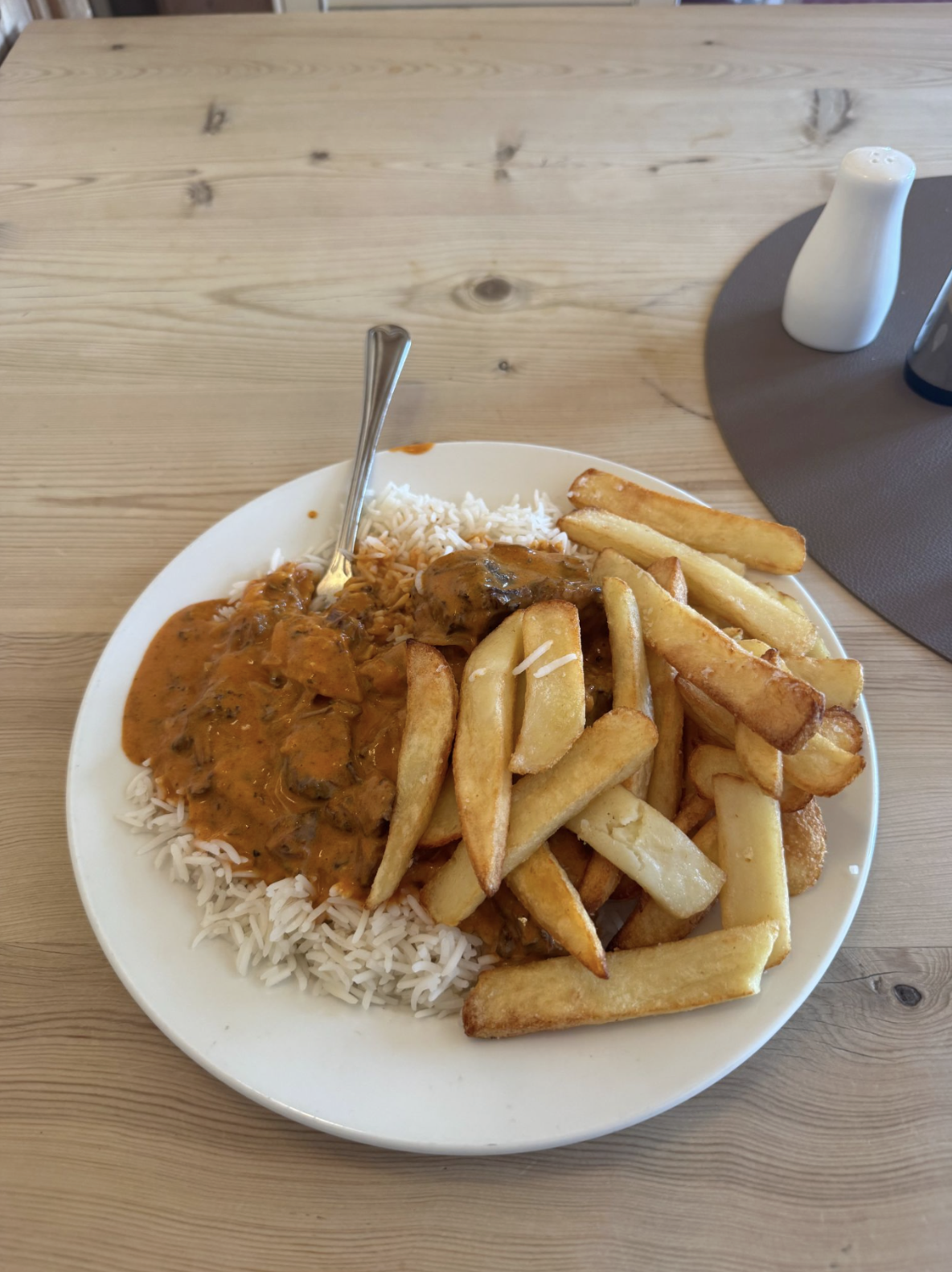
food
This time around, I went for it. I trained the most volume I ever had during a 7 day stretch and a lot of the easy hours that I did were at a slightly higher intensity than I was used to. I also completed two pretty standard L3 workouts and a speed session. Everything else was easy(ish) skiing and technique work. Early on during this camp, I knew I was pushing pretty hard and was quite close to my limit. But how do I define the limit? In normal summer training, my limit is not only avoiding missing key sessions and always having enough energy to ski well, it is also leaving enough in reserve so that after I take a few easy days every 4 weeks I can bounce back and start training hard within a reasonable time frame. The limit of how much you can train and bounce back over the course of a few days is really hard to find, so luckily I wasn’t looking for this. In Sognefjellet, I was looking to blow by this limit and instead just try to keep things in check enough, so that I wasn’t compromising quality at camp.
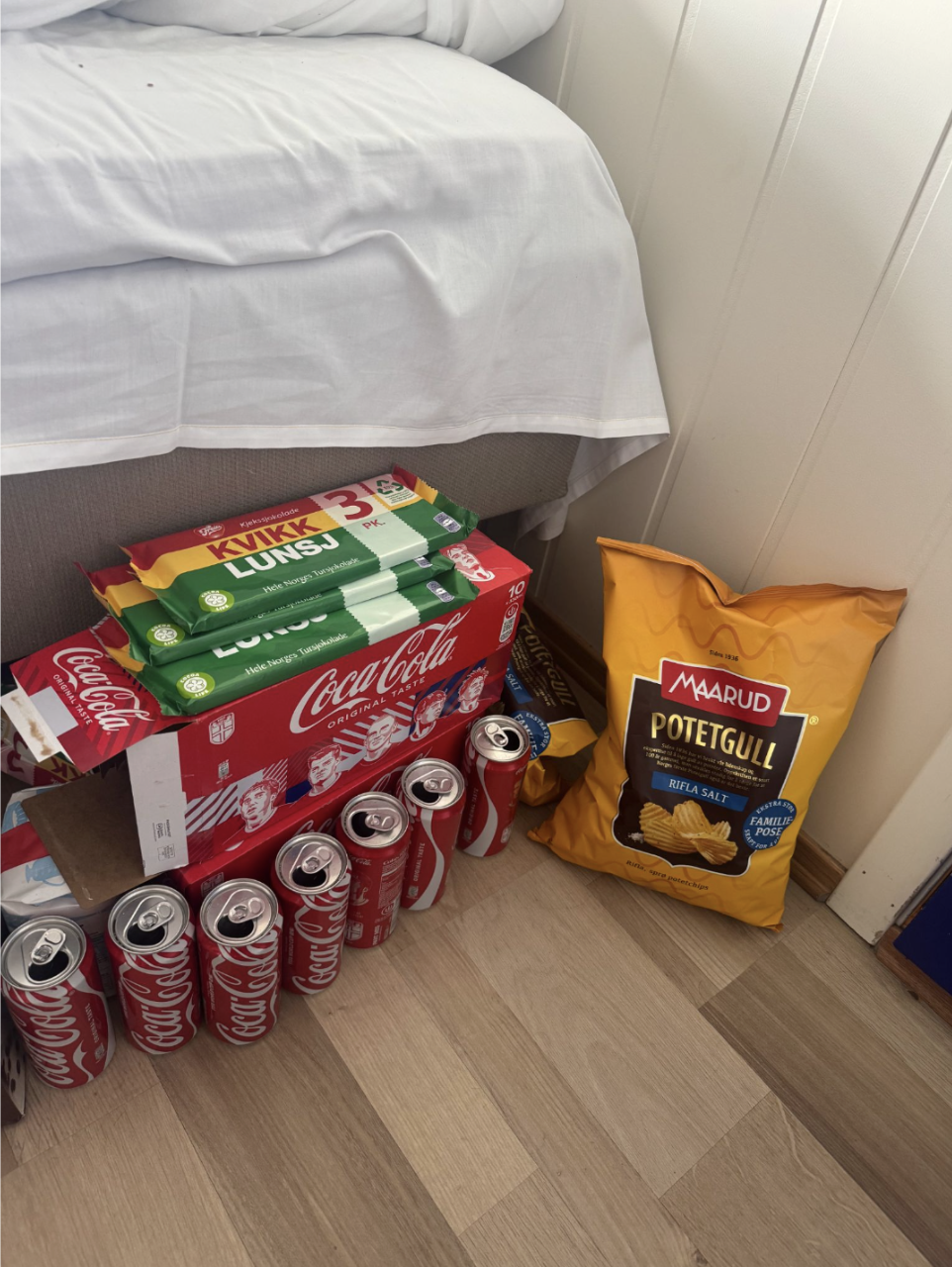
Other food
I took this approach because of how much work I have to do in classic skiing. In a perfect world, I would be both fit enough and proficient enough at the classic technique, so that I wouldn’t feel this pressure to push so hard in training. This is not the case, and I think in order to make the progress necessary in striding, I had to do a lot of my easy training at a higher intensity.
Another factor that made me a little more comfortable with pushing past my usual training limits was the fact that I had a few built in off days before traveling back to the US. My teammate Zak Ketterson got married on the back end of the camp, so I was staying in Norway for two days after I was done training. Having a few days to recover before starting the transatlantic journey gave me some peace of mind that I was less likely to get sick on the trip home.

Wedding!
I think I did a pretty good job during this camp of pushing the limit of what I could accomplish for volume and quality of training, and although there were a few things that I kept track of that support this, there were also a couple details that suggested the opposite.
First and foremost, when I say I wanted to train as hard as possible without compromising quality during the camp, I mean that I don’t want to compromise much quality. When you train a lot, you have to be ok with sacrificing some quality, so it is sometimes hard to find where to draw the line. For example, there were a couple afternoon sessions where I was not happy to be out skiing and wanted nothing more than to go inside and rest. This isn’t necessarily a bad thing, but it can easily lead to losing quality of training. I’m happy to report that I only had two afternoons like this and on one of them I cut the session short.
Feeding into that feeling of not wanting to be out skiing was being a little bit grumpy during this camp in general. I find that when I am training a little bit too much I can have a hard time detecting sarcasm and have a bad habit of assuming the worst of everything anyone says. I know I was a little grumpy, but I don’t think I was at the point of being unpleasant to be around.
As for things that you can actually measure, my sleep, HRV and RHR were all pretty normal during this camp. I don’t like to pay attention to HRV on a daily basis because of how variable it is, but a full week of very low values can be worth paying attention to. On the other hand, I will take an alarmingly high RHR in the morning seriously and consider adjusting training. The last piece of this puzzle of objective recovery measurements is sleep. I find that when I am training way too much (like even too much for this camp) I start to have a hard time sleeping. Luckily, this never happened during camp, so I’m pretty confident I was in an ok spot.
The reason I mention all of these details that I was monitoring during the week is that it is ok for one or two things to not be quite right in a hard training week. Especially this week, which I had pencilled in as a very hard one, I was ok with a couple of details not being quite right. This being said, if all of the factors that I just described were going south, I would have wanted to take a day off. Even though I only had eight days on snow, it would not have been worth sacrificing the whole camp by overdoing it. Losing a day on snow is better than either being so tired you can’t ski right or losing multiple days on the backend because you got sick.