

Posted by Annika Landis, EnjoyWinter-NTS Factory Team Athlete on Jun 5th 2026
Finding Your Spring Rhythm
Have you ever just sat in the parking lot, fully dressed and intending to go run, ski , lift or ride, and just can’t bring yourself to get out of the car? Or, have you finally motivated yourself to do that first set of intervals and felt like you have never exercised a day in your life? I certainly have. I did it yesterday. I hyped myself up to head over to the track for some mile repeats, part of my training for the 55k I am racing at the end of June.
It was a disaster. I felt like I had never run before in my life. My heart rate was high for the pace I was going, and my chest felt tight. I struggled to breathe normally which gave me a side cramp. Add that to my stomach ache (too much breakfast?) and this first interval set couldn’t really have felt much worse. After interval #3, I almost called it quits and headed home, subdued. However, I had one thing going for me that allowed me to overcome this cascade of negativity and complete the session: years of experience building up the mental tools to trust the process and adapt to changing or unexpected circumstances.
After that third interval, I was feeling angry and embarrassed; how could I possibly be running this slow and have it feel so hard? Turns out, there is a perfectly good explanation for that - it’s my first time this summer trying to run flat and fast, with not many miles in the legs yet, and a full spring of rest and recovery not too far in the rearview mirror.

The other thing I had going for me after my track intervals was a date with some pastries.
The journey back to peak fitness is a slow, steady, but non-linear process. I’ve navigated this cycle enough times that when it became clear that goals for my workout were simply not going to be the reality, I was able to pivot mentally, adjust my expectations, and set a new goal for the session. Instead of pace, I focused on effort, efficiency, and rhythm. I slowed down just enough so that I could focus on quality instead of flailing my way around the track with a side cramp, chasing the time that “I should be running.” And lastly, I allowed myself some compassion. Rome wasn’t built in a day and your fitness won’t be either.
Each spring, I struggle to some degree to get back into a training rhythm. Jumping back into summer training can be especially hard if you have taken some time off in the spring to rest and recover after a solid winter racing season. Your body NEEDS that rest in order to make training adaptations and re-set for the upcoming summer. But that also means that a 90 min run that felt easy peasy just a few months ago, feels much harder now. It’s also entirely likely that you aren’t feeling unmotivated at all, and that you are ready as ever to jump into a summer full of fun activities and training opportunities. Awesome, you’re ready to get after it! Feel free to skip to the next article (but I’d bet if you kept reading you might find a useful tidbit).
As we all navigate this return to training together, here are a few tips I have found helpful to keep myself grounded and focusing on long-term sustainable progress.
Go Slow & Be Patient: Just like you won’t win the mass start in the first 100m, you also won’t “win” summer training in the first month. But you sure can lose! Ease back into training by gradually increasing the volume and intensity each week. Maybe you start with just three workouts (1 strength, two aerobic), then the next week is 4, and the next is 6, etc…Our main goal is to remind the body and the mind what training regularly feels like and jumping off the deep end into a 15 hour week with two interval sessions is asking for trouble.
It’s also normal and ok to feel like crap. I went for a trail run the other day where it felt like I was going both as easy as I could and as fast as I could at the same time. I got in my head about it, frustrated by that heavy out-of-shape feeling in my legs and my labored breathing. I tried to remind myself that this feeling meant I had taken the time to let my body recover, and that building back fitness is a process of patience and consistency. I also reminded myself that the purpose of exercise doesn’t always have to be about fitness. It can be about getting to the top of the ridge (no matter how out of breath) just so you can get a better view of the mountains and bold green hills dappled with the bright yellow of balsam arrowroot and lupine.

Be Flexible: My general rule for spring training is to do things that I enjoy doing. There is a time and place later in the training season to put your head down and grind through a workout you aren’t stoked on. It’s ok to adjust your “plan” to something else that you feel more excited to do. If you aren’t motivated to go for a jog, swap it out for a hike or walk. Strength feeling intimidating? Do yoga and core instead. Don’t want to do anything but want to be outside? Head to the garden! You get the idea. I think we forget that deliberate activity, even if it is moderate or short, is still meaningful movement. This flexibility to adapt both physically and mentally to what you are capable of achieving well on a given day, will help your brain get the rest it needs, and avoid early burnout later in the summer.
Go with Friends: This is a simple one. It’s way easier to get through a workout if you are yapping the whole time. Gossip = gains.
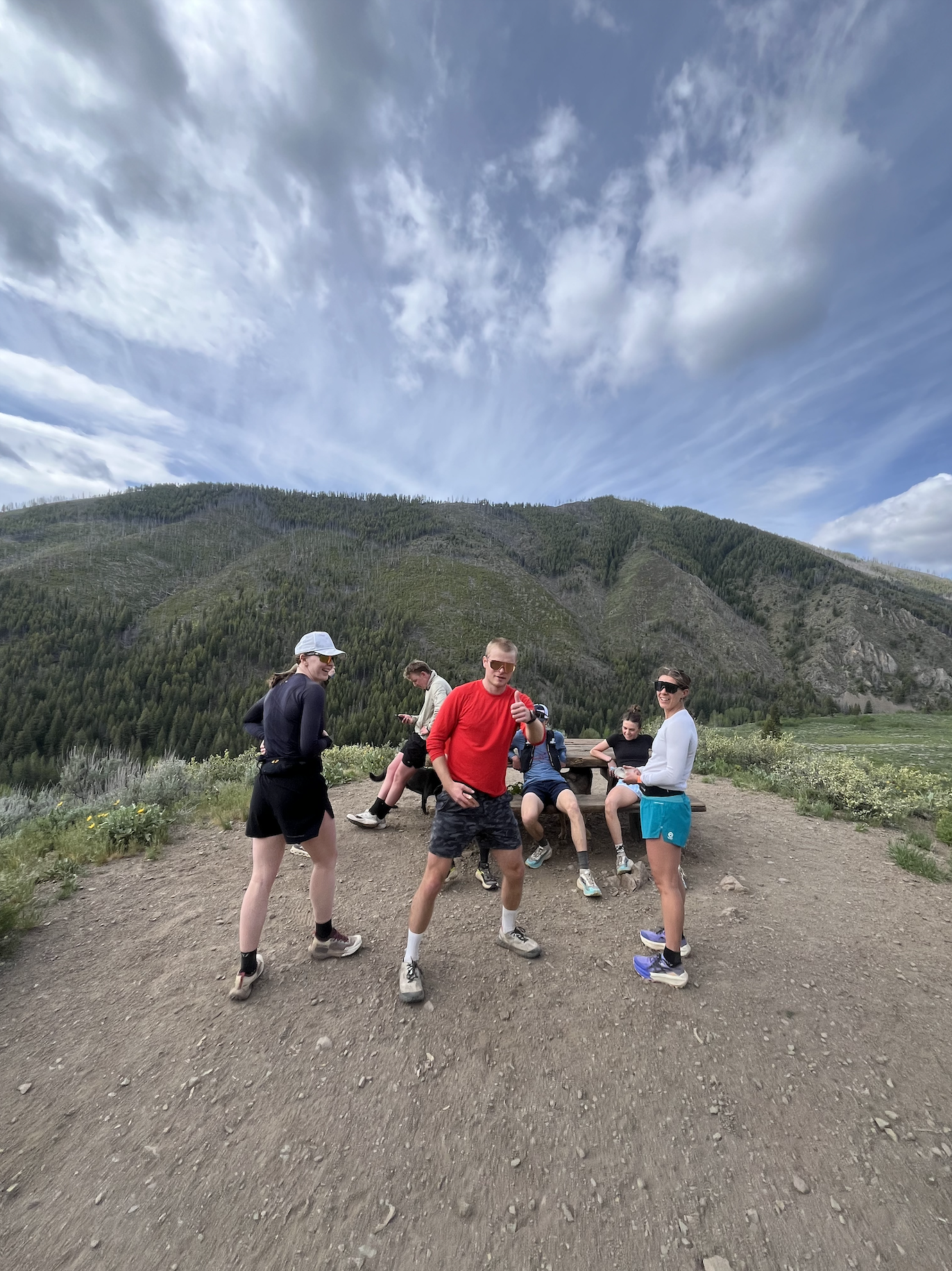
Focus on the Foundations: Lastly, the key to a successful summer of training is building good habits into your training foundation from the start. For example, instead of running for 90 minutes (and feeling horrid doing it), I am doing 20 min of mobility/core, running 45min, and then doing 15 min of stretching. Building consistent rehab/rehab into my routine will be more effective for me in the long run, than getting in a higher training volume. This can also look like building wellness/self-care activities back into your routine. Get that extra hour of sleep, fuel well, fill out a training log, review technique, etc…Doing the ‘little things’ well consistently is not only the key to improvement, it can also help you feel more productive and intentional as you build back your training routine.

—
The takeaway here is that it’s ok to go slow. It’s ok to swap out workouts if you aren’t feeling it right away. It’s ok to listen to your body and build back fitness and strength at a pace that works for you.
Training is a huge privilege, but it is also hard work. To make it sustainable and effective, we have to be honest and kind to ourselves, and build a personal understanding of when to push through and when to back off.
That being said, you won’t build back a training rhythm or fitness if you never start. At some point you will need to buckle up and do the workout you’ve been dreading, but YOU get to decide when that is. And with every workout it gets just a little bit easier.
Happy Training!