
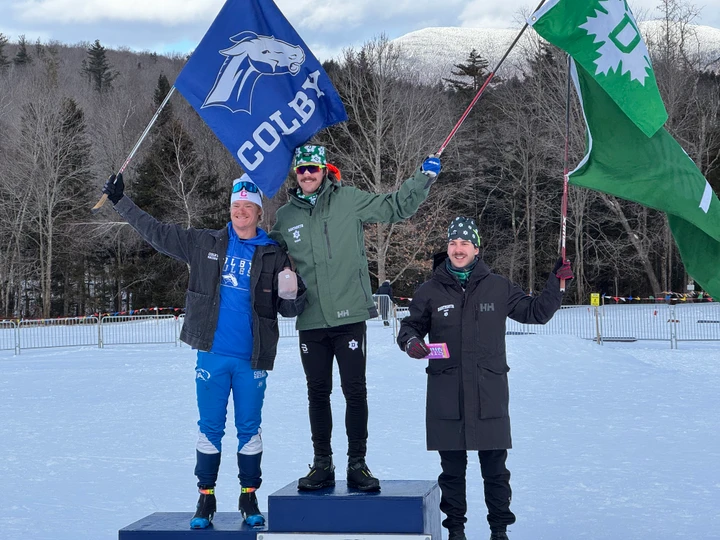
Posted by Jack Young: EnjoyWinter Athlete Force on Oct 30th 2026
Why Colby? A look into why choosing Colby ended up being the perfect decision
Compared to other World Cup skiers, my development through high school was unusual having played multiple non-endurance sports. However, as I started my college search the spring of my Junior year, I don’t think my position was unique at all compared to so many of my fellow high school skiers. I was a good, not great, cross country skier who had qualified for JNs once and had two ok results at that JNs. Past that, I had had some success in the Vermont public high school league winning state championships in three of my four years of high school. These results were far from extraordinary, and I found myself vying for spots on mid-level college teams against high school skiers just like me. By that, I don’t mean mediocre at skiing, I mean skiers who either didn’t commit to skiing in high school or weren’t quite able to achieve their goal results who were eager to try to make a jump in college.
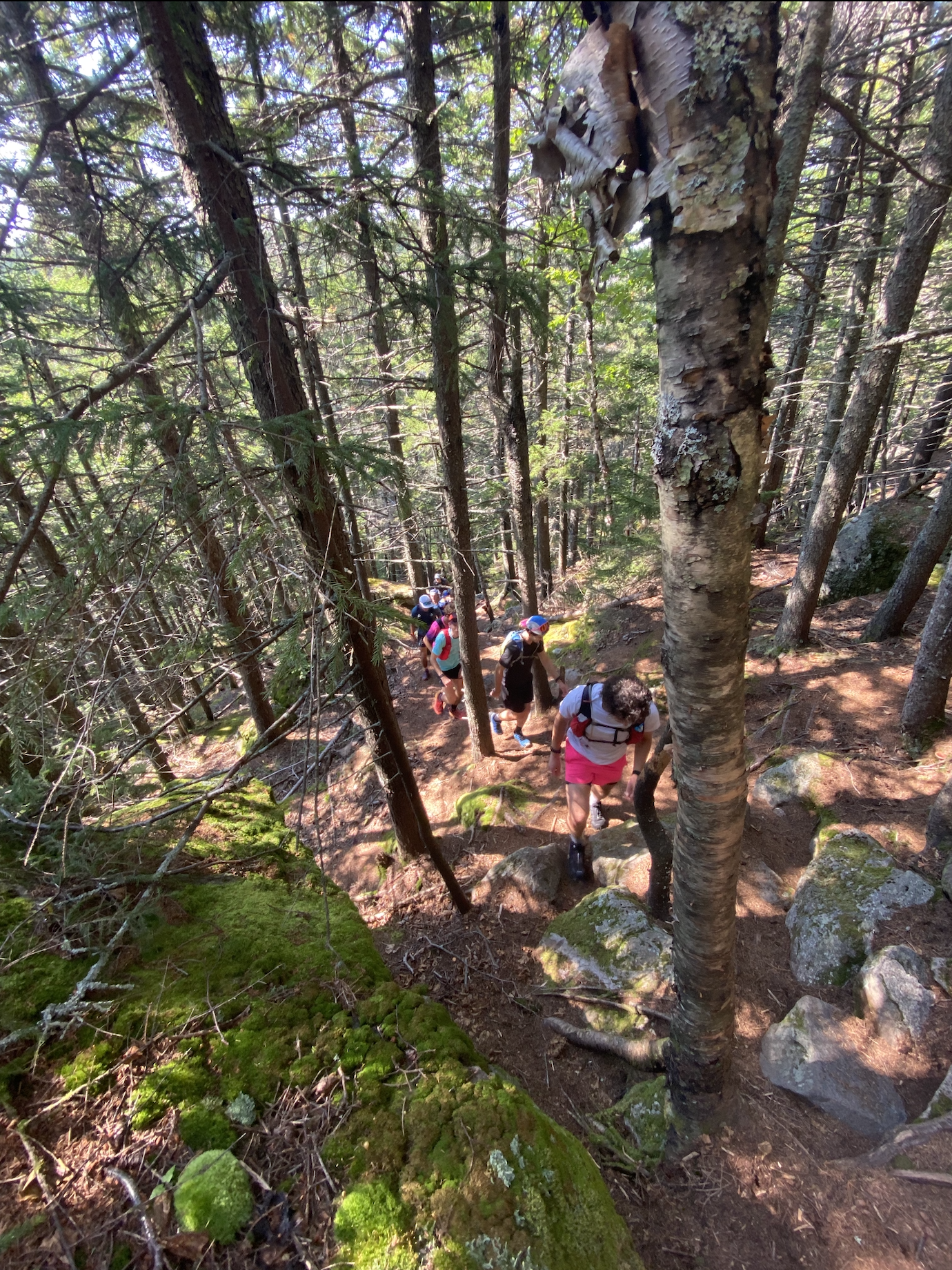
Sophomore year Bigelow Traverse!
Sure, I wanted to get better in college, but it would be far from the truth for me to claim that I had ambitions of being a world cup caliber skier when I was making my college decision. It would be more fair to say that I was excited to make skiing my priority and see where the sport could take me–I didn’t have a 5 year plan involving skiing at that point. With this in mind, the factors that went into starting emailing coaches were simple enough. For my first round of communications, I emailed every eastern coach whose program had a good reputation, had a quality place to ski, and I thought I had a shot at actually being on the team. I didn’t reach out to any western schools because I both thought I had almost no chance of securing a scholarship and had little chance of making it as a walk-on. For similar reasons, I didn’t reach out to Patrick Weaver, the UVM coach. Other than this, I emailed almost every eastern college coach and facetimed with each of them that spring into summer.
After meeting with 8 or so coaches, I had pared down my list to just Colby, Dartmouth, and Bowdoin. One of my biggest priorities in the college search was selecting a “good” academic school with a generous financial aid package. I mainly got to those three schools from just having good Facetimes (my recruiting was all done remotely due to covid) with Tracey (Colby), Nathan (Bowdoin), and Brayton (Dartmouth) about their approach to coaching and skiing, but since those three schools were all excellent options academically, I felt free in the next round of decision making to make some choices based on solely skiing.
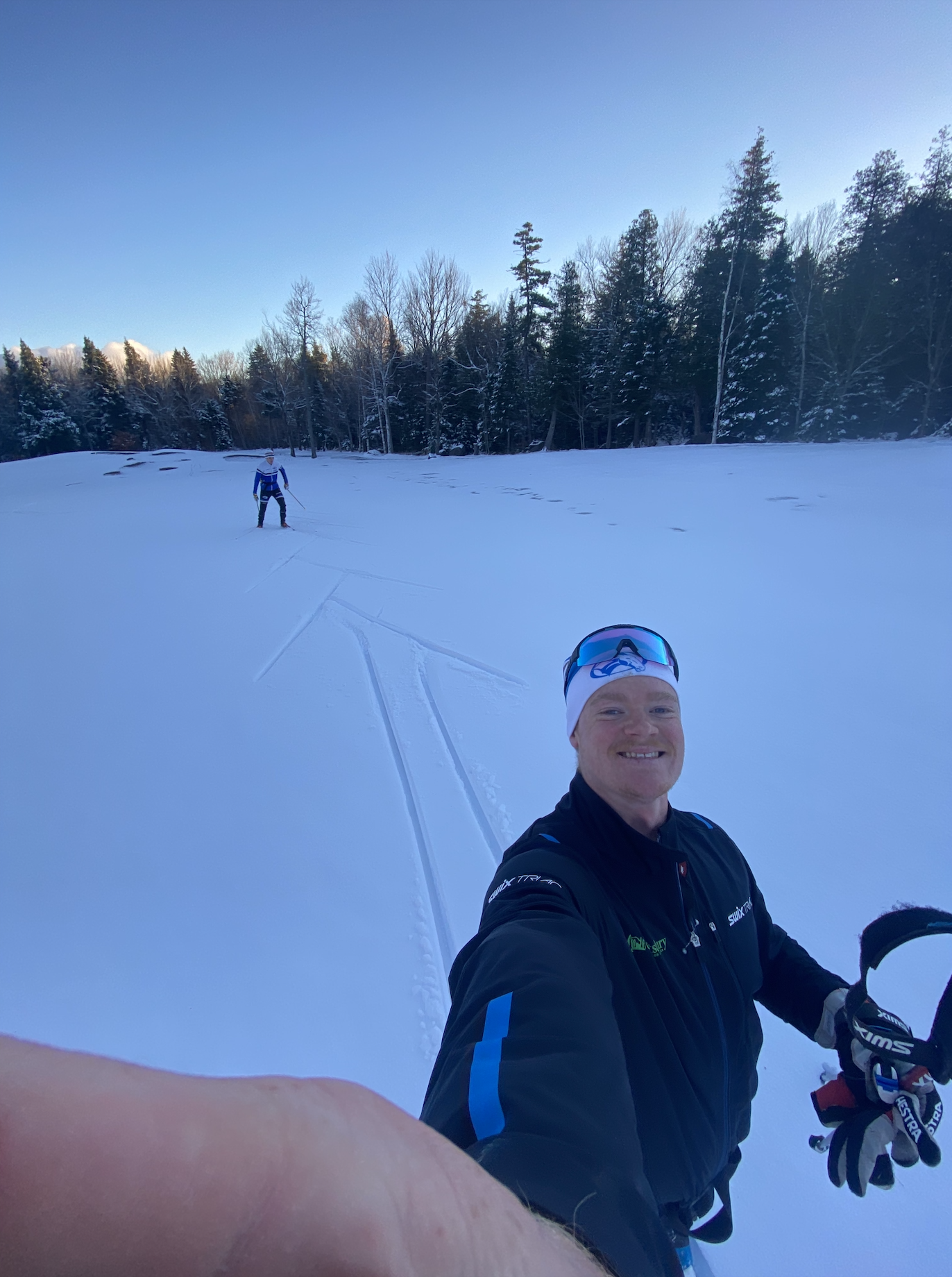
October Skiing at Sugarloaf
It is worth noting here that I was lucky in this stage of the process to have secured “coach support” by these three schools. How the system generally works with D3 schools and Ivys is that with the absence of athletic scholarships, coaches will encourage the athletes they want on their team to apply Early Decision and in return the coach will use their influence with the admissions department to get you in. Having confirmation that I would be accepted if I applied to any of these schools early decision made the process much simpler. Without applying ED with coach support, the main obstacle to skiing for a school like Colby or Bowdoin becomes just getting in.
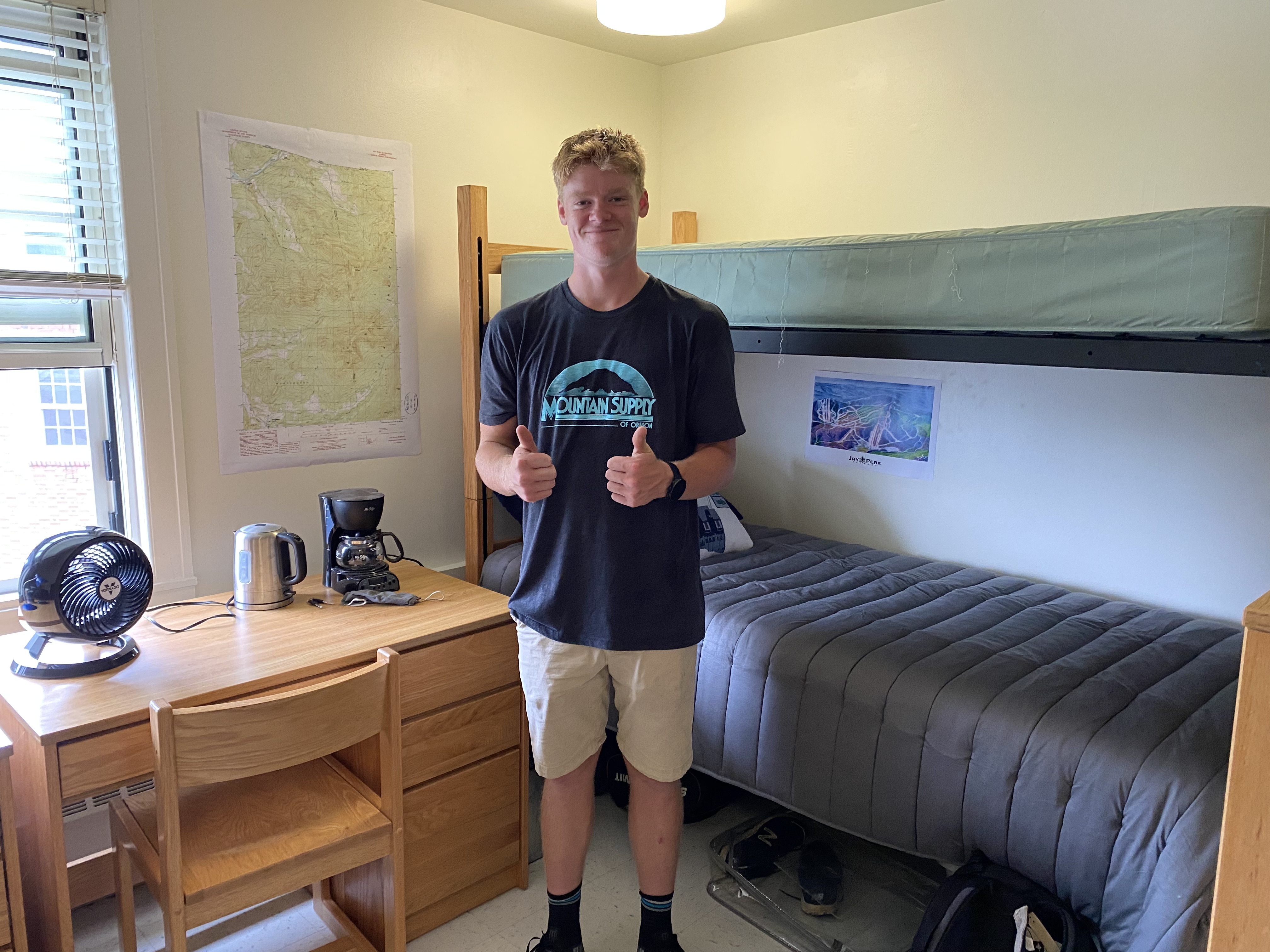
Move in day!
I was choosing between Colby, Dartmouth and Bowdoin simply because they were all programs and coaches I could see myself skiing for. They already had guys on the roster who I was competitive with, and their top end wasn’t so strong that I didn’t think I could make the starting roster of 6 men. I ended up not considering Bowdoin in September of that year because of Dartmouth and Colby both having much better access to skiing, but that still left a very tough decision between two great programs. On one hand, Colby had no extremely fast skiers, but they had 5 or 6 guys who I thought with a little improvement I could train with and eventually beat out for a starting spot. Dartmouth had a similar feeling group of guys, but I had heard that my recruiting class at Dartmouth already had two extremely talented skiers. Looking back on it, I think this was a silly way of looking at it, but I was intimidated by being on a team with skiers that were that much faster than me, and I was worried about never having a chance at making the 3 man NCAA roster. If my ambition had always been to eventually be a World Cup level sprint AND distance skier, Dartmouth would have been the obvious pick. I would have had faster training partners which in my mind can play a huge role in development. Although I think this was a questionable decision at the time, if I could go back in time and do it again, I would not have changed a thing.
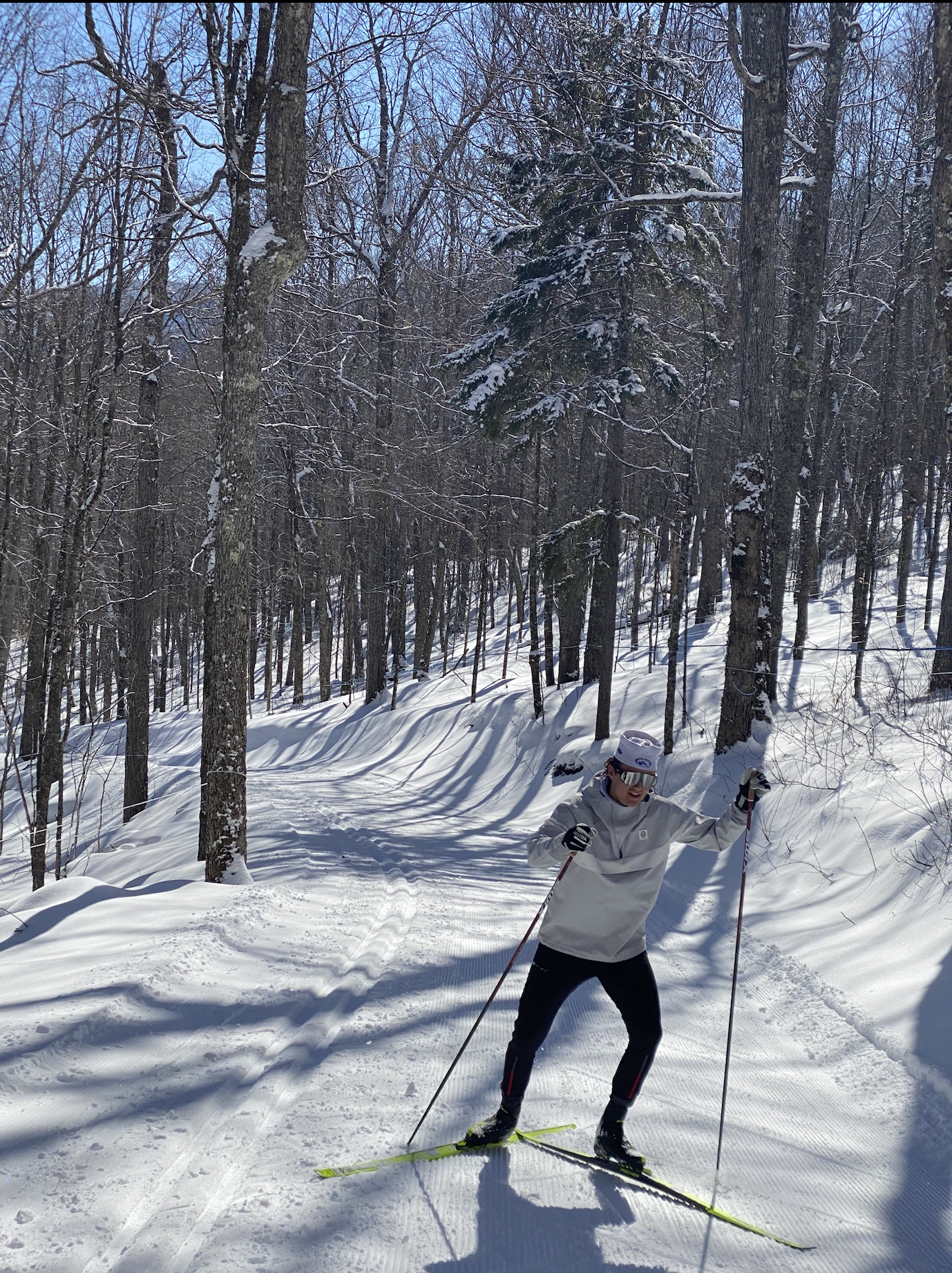
Lake Placid NCAAs
At the end of the day, I chose Colby because it was a team and coach that I thought I could see myself growing with. It was one of the best decisions I have ever made. During my college years, the Dartmouth Men’s team became arguably as strong as it's ever been. After UVM graduated most of their team after my Freshman year, Dartmouth was certainly the team to beat on the EISA. It would have been a ton of fun to be a part of that, but while I may have been a faster distance skier as a result of training with those guys, I am almost certain that I would have been a slower sprinter. When I got to Colby my biggest goal was to qualify and race at NCAA Championships. I can’t imagine why that would have been any different at Dartmouth. So, when my Junior year rolled around at Colby and I wanted to prioritize qualifying for the North American World Cup’s I could do so while still feeling like I was contributing to the team. I had cemented myself as one of the fastest skiers in that program at that point, and the goal of making NCAAs was no longer a big challenge. This gave me freedom to pursue the discipline of the sport that I was actually good at: sprinting. This is not to say that I could not have made this switch at Dartmouth–that could have happened, but deep down, I know that once that goal was set of making the NCAA team, I would have had a hard time not doing everything in my power to achieve it. This would have meant training less for sprinting and more for distance races.
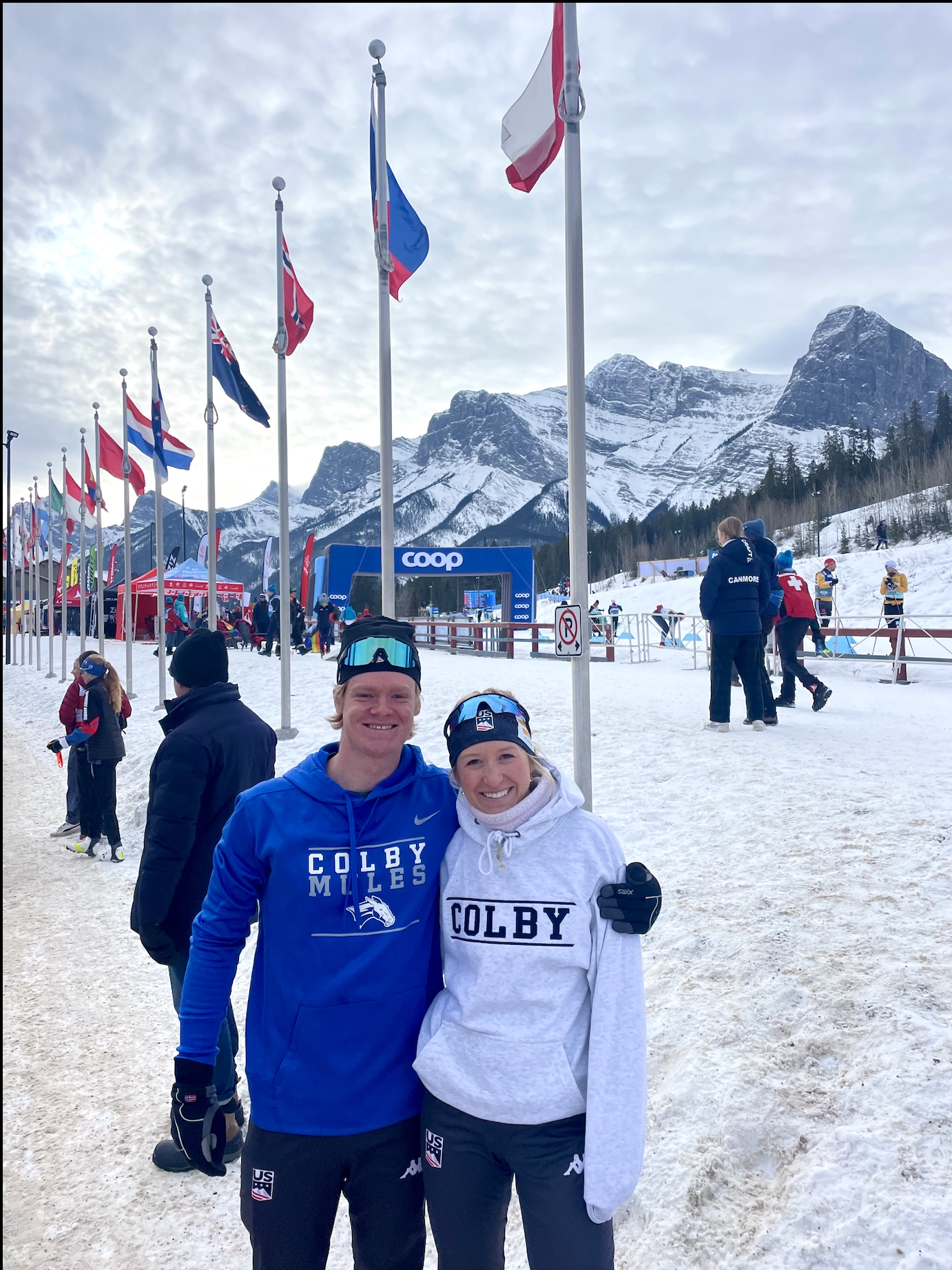
Me and Victor, my roommate of 3.5 years, freshman year in Canada
I can thank both the flexibility that Tracey offered me in my last two years of college and the flexibility of the culture of Colby Skiing for where I am today. Colby is a competitive program in the general sense, but they are not competitive in the sense of competing for national titles. Because this isn’t the one and only goal, the program can focus on smaller individual wins that aren’t directly tied to NCAA skiing. I am lucky to have made use of this.
Through the process of figuring out where I wanted to ski and then actually skiing there, I learned quite a bit about myself. In my life as a skier through high school, I had never been the fastest in a training group. Before college, I had always had someone to chase, and I always thought that this was a good thing. However, after four years at Colby with 3 years of being the fastest or second fastest on the team, I learned that I actually do better at the front. It is not that I dislike chasing after people that are faster than me; I still think this is important. It is instead that I gain more confidence in what I am doing when I have full control over the pace in which I do it. I want to lead intervals and have a say in what the team training plan will look like. Because I went to Colby and was working with Tracey, I had every opportunity to do this. In the end I think knowing under what conditions you thrive in as an athlete can be a very important part of a college decision. I think I would have been worse off if I had chosen the “higher achieving” of the programs I was considering.