
Posted by Jack Young: EnjoyWinter Athlete Force on Jan 1st 2026
Tour de Ski Strategy for a Sprinter
Ciao! At the time of writing this post I have completed half of the Tour de Ski! Historically, the tour has always favored distance skiers who are at the very least decent sprinters. Sprinting has been a component of the tour for quite some time at this point, but success relies on being a good distance skier while the same can’t be said for being a good sprinter. An easy example of this is that many skiers in the hunt for placing in the overall top ten placed worse than 80th in the freestyle sprint. Being this far back in any of the distance races during the tour makes it virtually impossible to get back in the overall race.
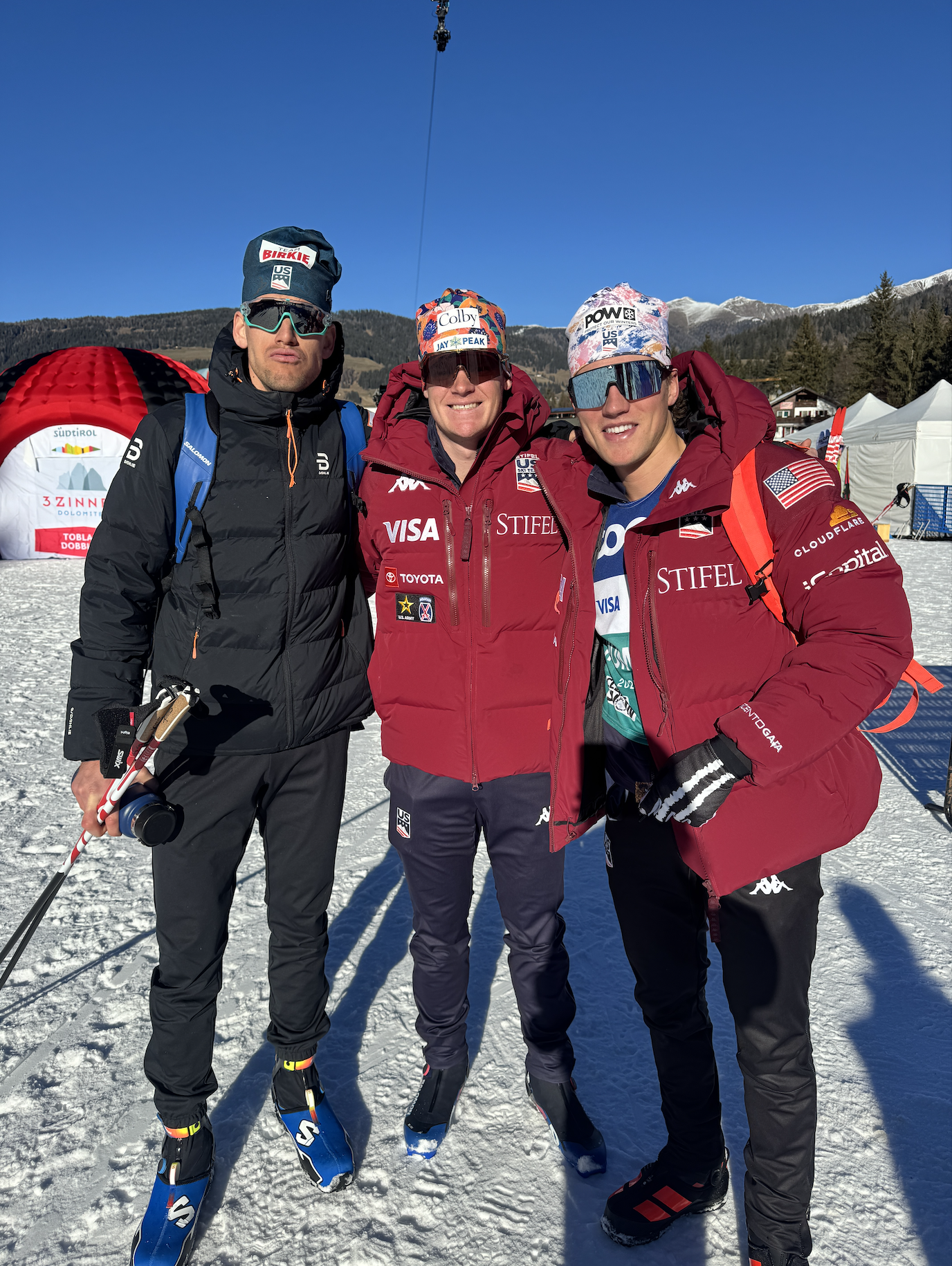
Heats squad minus Ben
This being said, I’m not complaining that the tour has a distance bias. I think an event like this should heavily favor distance skiers. This then raises the questions of: why am I, a pure sprinter, doing the tour? And how do I approach the event in its entirety knowing that I am not competing for anything meaningful in the overall tour standings?
The first of these questions can be answered pretty easily. The first and foremost reason I am competing in the Tour de Ski this year is to get a practice run on the Olympic course for the classic sprint in Val di Fiemme. This race is key, for a good performance is a convincing argument on my behalf for starting the classic sprint and because specific experience is oftentimes paramount for success in sprinting. Besides this, I am also competing in the tour because my body reacted very well to it in the late stages of last year. If I can avoid sickness, as I did last year, the fitness gains from the tour are a great ingredient in finishing the season strong. Lastly, it makes sense to race the tour again because it keeps my schedule simple and limits travel. By racing the tour, I get a period of 11 weeks that started in December where I don’t have to get on a plane. These last two reasons alone wouldn’t have been enough to convince me to partake in this year’s tour if the first reason didn’t exist, but it is always nice to have multiple good reasons to take a particular path when planning out a season of racing.
The title of this post is about strategy, but it would be foolish to come up with a strategy without having goals that the strategy aims to help achieve. So what were my goals for the 2026 Tour de Ski? In order of importance, they were: perform well in the Classic Sprint on the Olympic course, throw down a good skate sprint, and give myself at least a shot in the 5k skate heat start. Beyond this, I just want to get some valuable experience doing some world cup distance races and try and have some fun along the way. 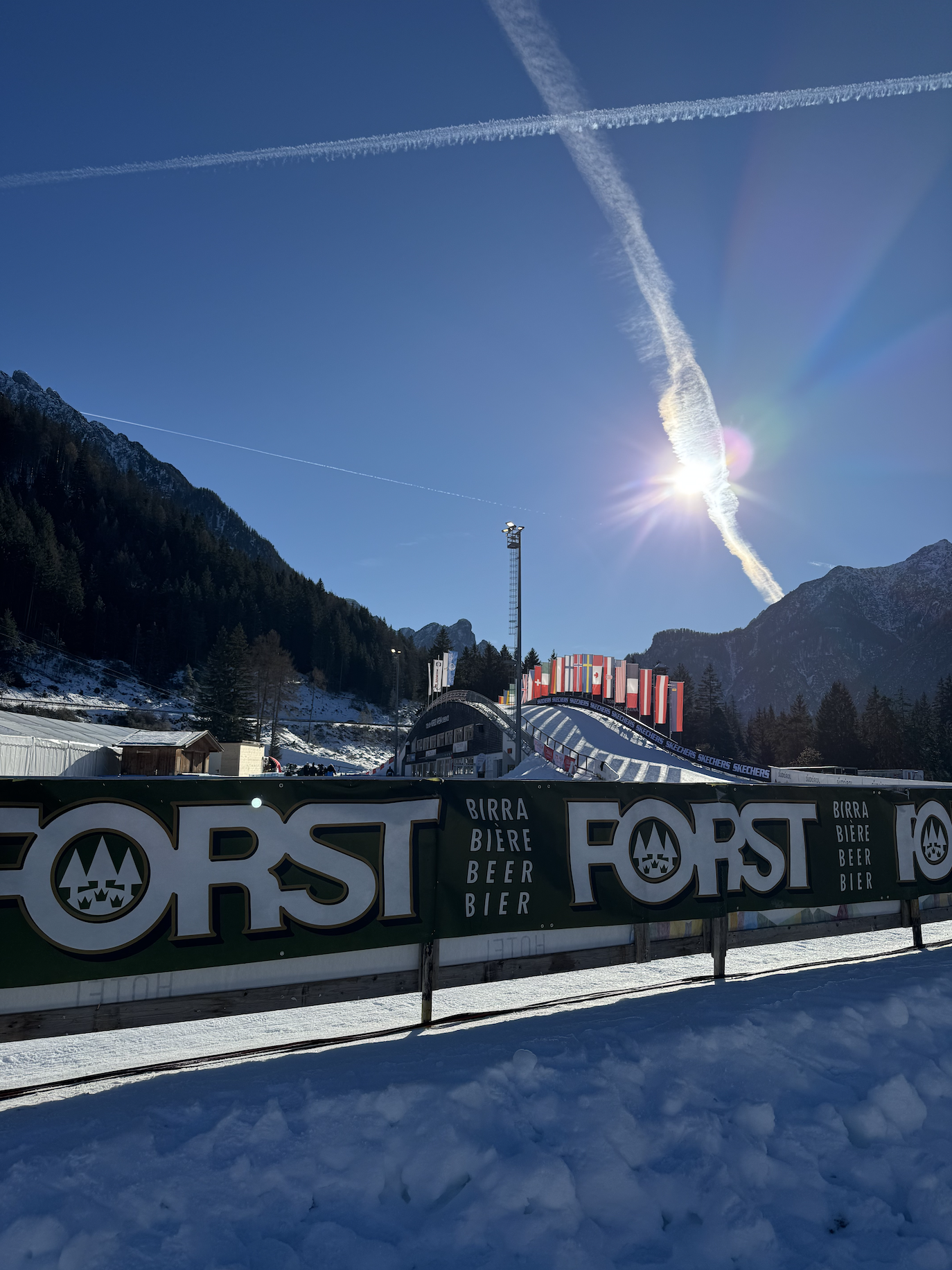
Dobbiaco Stadium
With my goals made clear, how can I best put myself in a position to execute? The biggest key to success for any athlete, sprinter or not, during the tour is nutrition. The challenge of the tour is not in how many calories you can take in during a race as it is in the Tour de France. Instead, the challenge lies in eating enough after repeated very high intensity races that by their nature suppress your appetite. Athletes that are able to eat enough are the ones that are less likely to get sick and will recover better between races–especially near the end of the tour. As for my specific strategy for attacking the tour, the point of emphasis is on pacing in the distance races. I can’t simply go easy and use the distance days as recovery days, for the tour has a rule that prohibits any athletes from finishing further than 20% back of the winner on individual start days. Likewise, if an athlete is lapped during a mass start or pursuit, they are pulled from both the race and the tour. With decent racing, the time cuts are not a problem, so I can try to relax a little bit for the first kilometers of every distance race to give myself as best a chance as possible of evenly splitting the races. Why would I want this? Simply put, a heavy positive split in a distance race almost always feels much worse and takes more out of me than a well paced race. Since my most important race is the 5th stage, I’m trying to conserve as much energy as possible without being cut.
a lighter read
I’m writing this post while the tour is moving along steadily, and the last race I have finished before completing this is the 5k heat start. This was a fascinating event, so I thought I would devote the rest of this post to all of the intricacies that made this race so interesting. I’m also not sure if the US has ever had a win in both genders on the same day in world cup history, so I think today is worthwhile of some thought. Congrats Gus and Jessie!
So I thought we left 5ks behind in high school? Apparently FIS decided to bring them back in a never before seen format. This new format involves 4 heats of 20-25 athletes, depending on the size of the race, and each heat is staggered by 20 minutes so that no two heats are on the course at the same time. The composition of the heats is determined by this diagram:
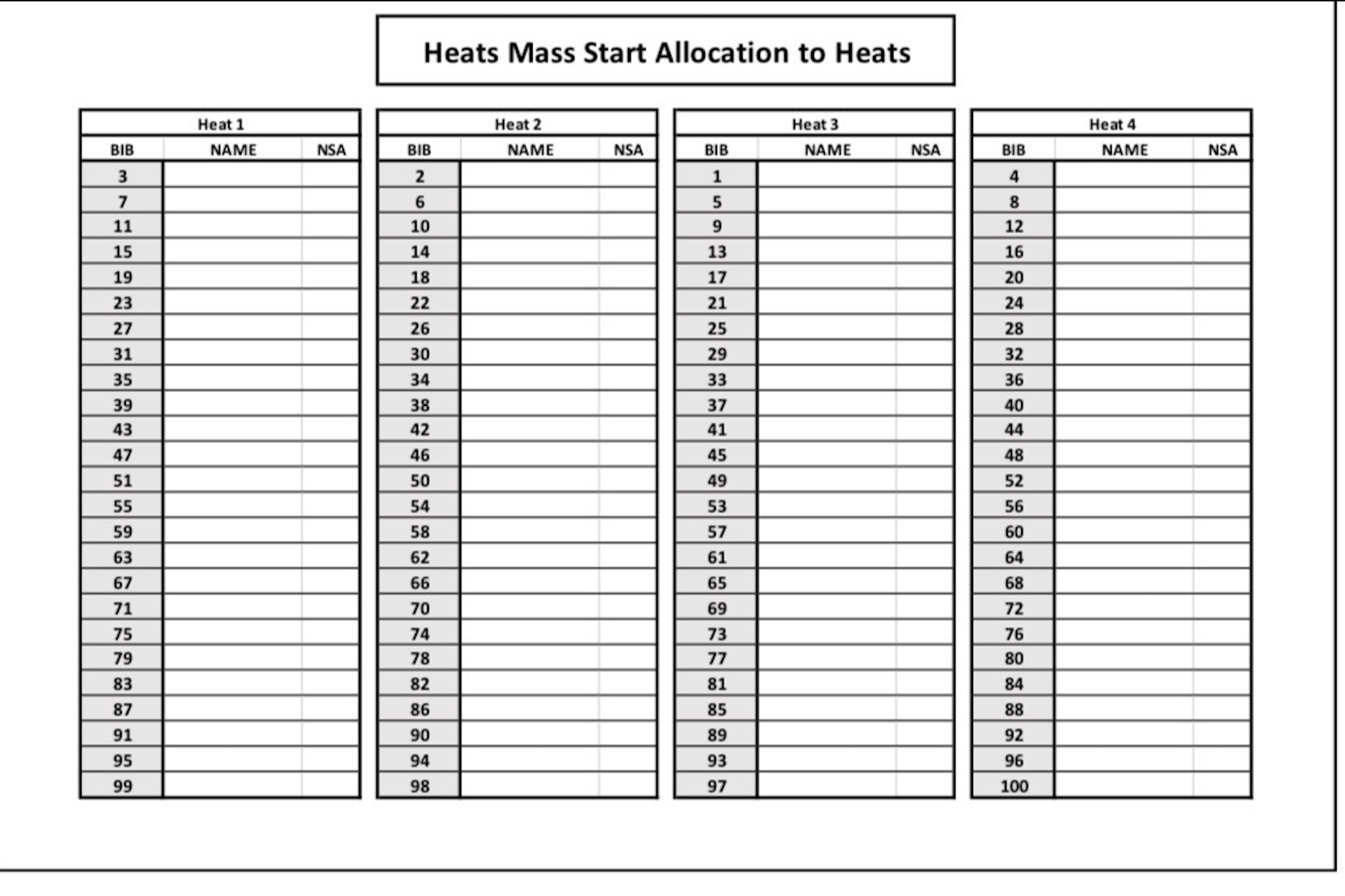
As you can see, there is a fair distribution of talent in each heat. That is, theoretically, each heat should have a similar chance of being the fastest. This was plainly shown by Gus’s heat which didn’t have the biggest names on the world cup but contained all three podium spots.
Going into this race, the nerves were high across the board. None of the athletes knew how this new format would shake out. The favorites knew that they would have to work together for any chance of creating a heat fast enough to claim the win, but working together is easier said than done when final position within the heat still matters.
On the other hand, the unknowns were almost doubled for people like me and Zak who started near the back of our heat. We were at the mercy of the leaders, and although we were fairly certain we would be able to stick with the pack, it was hard to be sure. We were very worried about not being able to move up and being left behind in the event of a breakaway. Would a top skier like Amundsen be able to break the field early and ski alone to victory? Doubtful, but covering a move like that from the back of a 25 person heat would be nightmarish.
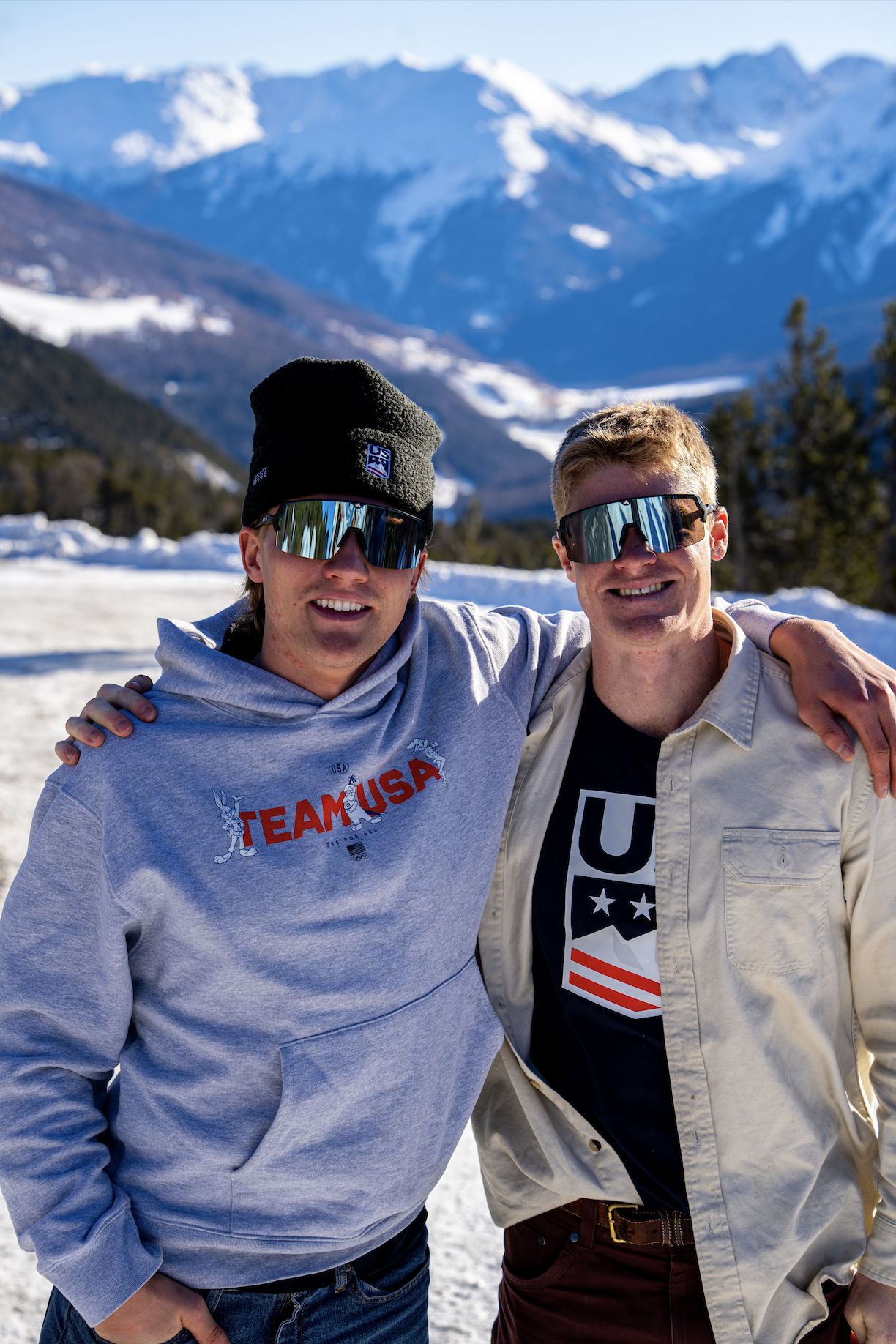
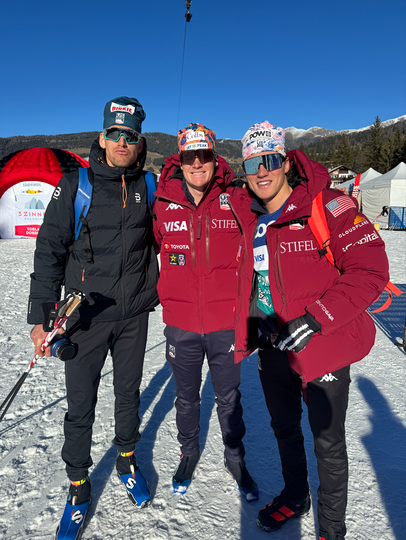
Smiling- probably thinking about 5k heat starts
So, what do I think about the new format? Simply put, I love it. I think FIS would be insane not to continue to incorporate this in the future. The reasons I feel this way are simple enough:
The format encourages fast racing
Very rarely do we get to see how fast a world cup field can race. Individual starts are fine for this, but they cannot be as fast as pack racing simply because of the physics of drafting and the psychological benefit of chasing. The heat start format forces the competitors to not play games at the front and instead put their heads down and work. The dynamic of the best skiers in the world pushing as hard as possible then giving way to their rivals to also do the same is a perfect recipe for fast, intense racing. Something that the mass starts on the world cup, especially on the men’s side, sometimes lack.
Middle distance
In cross country skiing, there is a very large gap between sprinting and the next shortest race being the 10k. Sure, the rounds of sprinting being only minutes apart forces sprinters to have excellent fitness to compete, but the 5k is such an interesting cross over. Today we saw athletes who had never had success in anything but sprinting find good results right alongside pure distance skiers. This format seems to be accessible to the vast majority of world cup skiers, and I think that makes it really cool. It also creates many avenues to success.
Entertainment
There is something very special with watching something and having no idea what is going to happen. Too often on the world cup do races seem to be decided well before the finish line is crossed. In this format the team tactics across nations are so important that it is hard to imagine having any strong inclination of what will happen until you actually see how the front of the heats are skiing.
Selfishness
Another reason I really like this format is because it is really good for me. I am just good enough of a distance skier to stay in the pack and hang for 5k, and if a few things had gone slightly differently today, I think I could have really popped a result. I like sprinting, but being only a sprinter at the world cup can be tough, especially when things aren’t going your way. There are just so many fewer sprints than distance races. Even just having one or two extra races a year of this format would be really cool to give the pure sprinters another racing opportunity where they can compete.
Today marks the halfway mark of the tour (I guess I will have hopefully completed two thirds by the time this is posted, but that is irrelevant), and I’m feeling great! I think I have executed as well as I could have in preparation for the classic sprint, and I’m getting pretty excited for that race. It is calming having a central goal of performance in one race during an event like the tour, and I’m ready to give it my best shot.
Happy New Year!