
Posted by Amanda Kautzer: Enjoy Winter NTS Factory Team on Dec 19th 2025
Tips for Staying Warm and Why Alfa Boots Might Just Save Your Feet
Between biathlon and growing up in Minnesota (and learning biathlon in northern Minnesota!) I’ve spent a lot of time in the cold, and have often been forced to ditch warmups and mittens to shoot. Distilled from over a decade of experience and experimentation, here are my best tips for staying warm when temps drop.
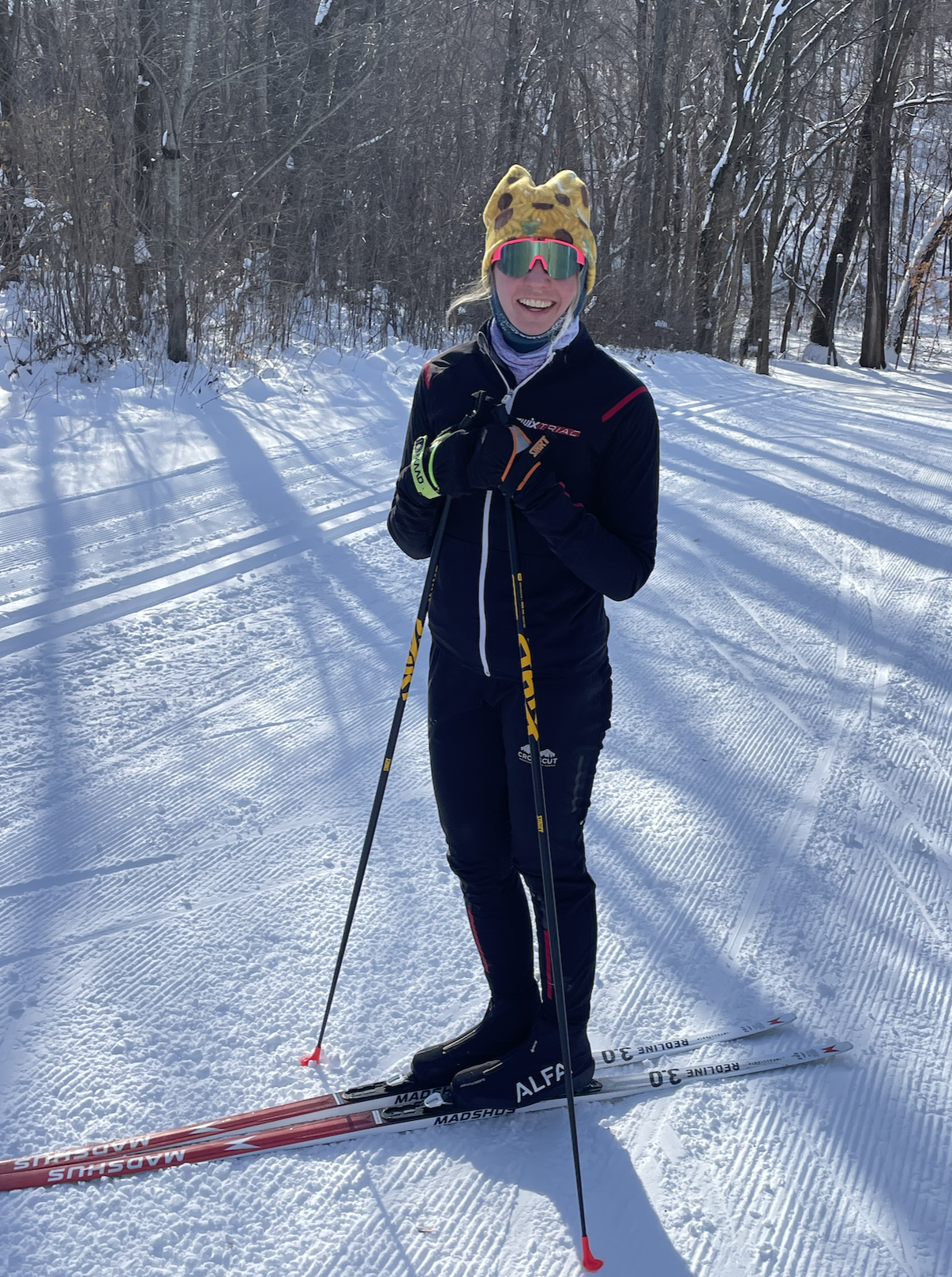
Layers: We all know layering is important, but what the layers are matters too. To quote my high school coaches “cotton is rotten.” Aim to wear all synthetic layers, unless you can get your hands on wool. In the last year I’ve switched to wool for all my base layers, including socks, sports bra and underwear, and it’s life changing. It dries quickly and often is woven in such a way that it traps warm air near your skin, adding warmth without adding weight and bulk.
Vests are incredibly common for biathletes, but for some reason haven’t permeated the Nordic community quite as thoroughly. I love vests to help keep my core warm without impeding mobility in my arms. Often the only difference between my layers for a +15 degree day and a -15 degree day is a light puffy vest and something on my face.
There’s a common phrase among some ski communities: “be bold, start cold.” I don’t believe in it. If it is below freezing, I know it takes me between 18 to 20 minutes to warm up, so I always plan to start my workout with about a 20 minute loop before swinging by the car or trail head to ditch a layer. Keeping yourself warm for 20 minutes (or however long your personal warm up stage is) takes a lot of energy, and isn’t any fun. There’s no shame in starting a workout in a puffy! (Or two!)
Extremities: Keeping your fingers, toes, and nose warm tend to be the hardest. The easiest modification to keep your toes warm is to loosen your boots. What you sacrifice in control of the ski, you’ll make up for in circulation. It’s also important not to jam an extra pair of socks in your boots - the extra material will limit blood flow, and by the time you zip/tie the boots, any loft from the extra socks will get compressed and it will lose its insulating properties. Same concept applies to disposable toe warmers - if they cram your toes, they probably aren’t helping. Lastly on the sock front, always, always have dry socks. I wear one pair to drive to the trails, one pair for skiing, and one more dry pair for the way home. If I’m racing, I sometimes also change into a dry pair between warming up and the race start.
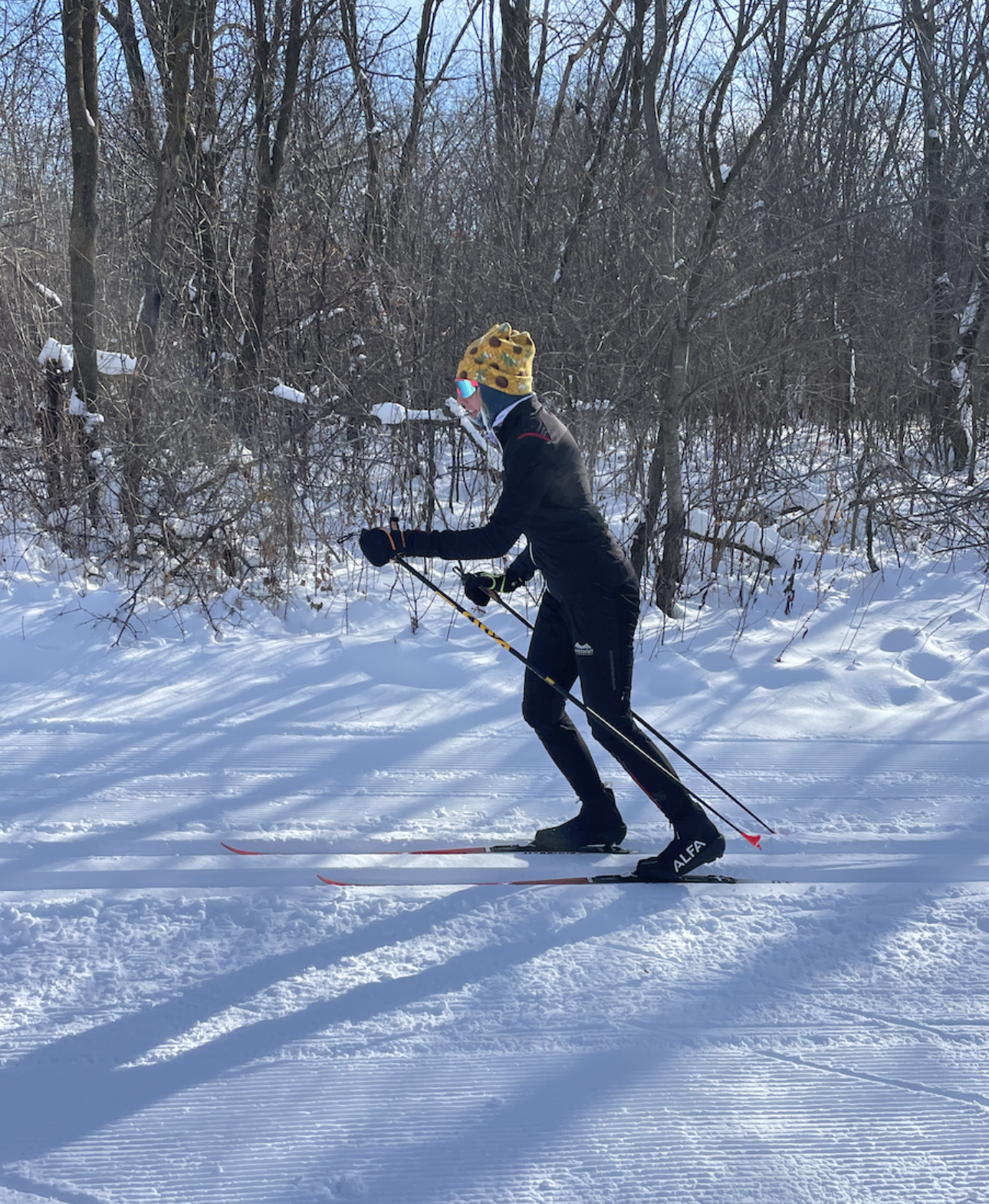
Having tried probably 30 different models of boots in half as many years, I had given up on Nordic boots ever being warm by design, so much so that when the Factory Team director sent me a pair of Alfa boots to try, claiming they are the warmest boots on the market, I shrugged it off, unbelieving. When it’s cold, all the tricks I noted above keep me from getting frostbite, but my toes are still uncomfortably cold by the end of every session. Never, ever, have I experienced the sensation of WARM feet during a ski, until trying the Alfa boots. I didn’t believe it until trying them out, but they are drastically warmer than any other ski boot I’ve worn. I even wore them to coach biathlon practice, one of the coldest activities known to humankind, and left the practice not only not-cold, but cozy warm.
If your feet are still cold after all of the above, electric-heated insoles or socks are probably the move. They can be pricey, but before I found the Alfa boots they helped.
For the hands, I like to layer a wool liner under an appropriate weight mitten. If you need dexterity, you can take off the mitten without exposing your skin to the cold air, plus the benefits of wool I previously mentioned. If the thermometer reading is especially dire, I’ll tape a disposable hand warmer to the inside of my wrists. I don’t know if the science actually works this way, but the idea is that it warms the blood immediately before it goes to your fingers; I find it helps. I’ve also used electric-heated gloves with the same intent, but find these are usually best paired with a wind blocking over-mitten.
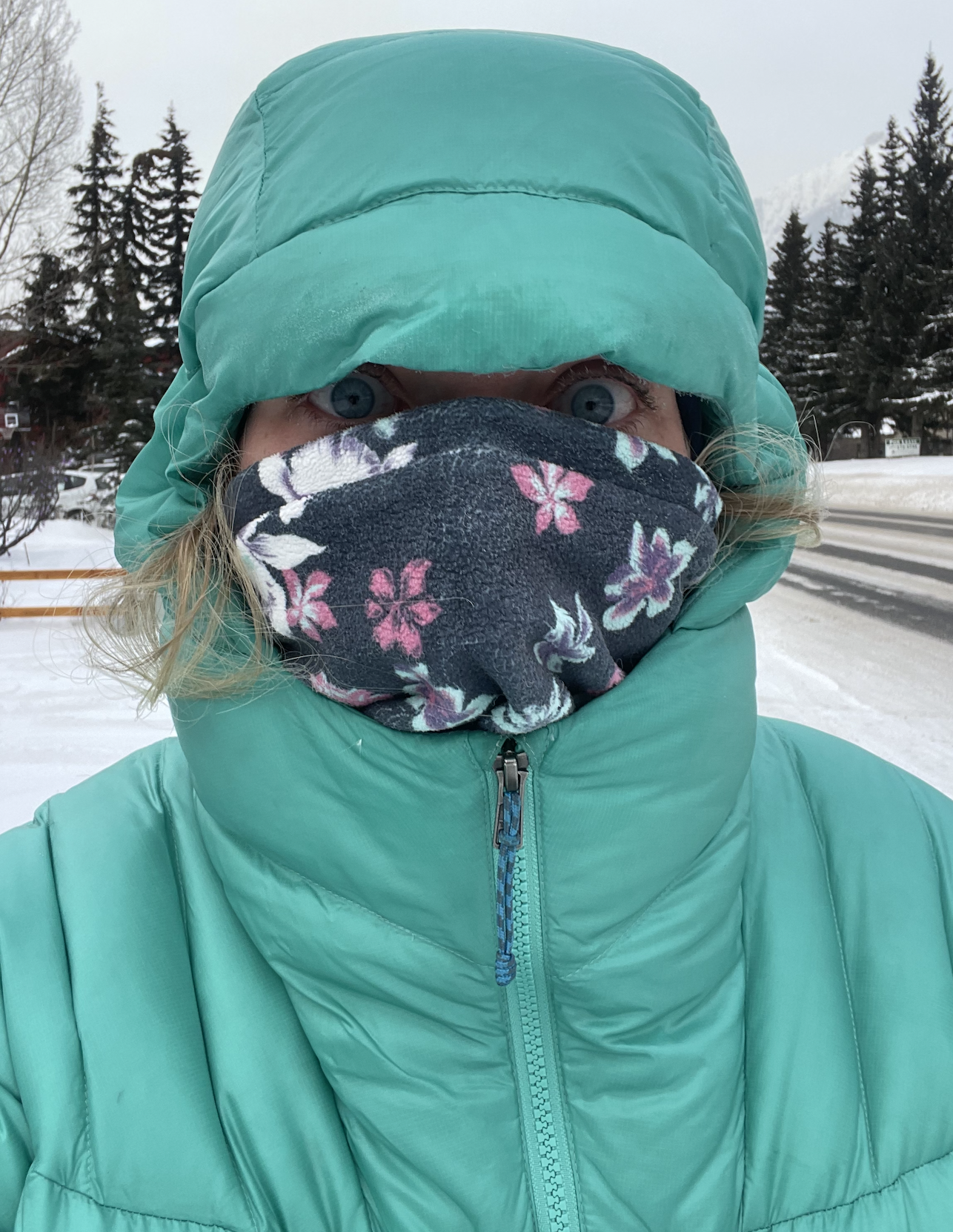
To keep the face warm, I’ve found nothing more effective than a think smear of Vaseline or similar goop.
Calories: Finally, stay fueled. Even if you aren’t doing a long or hard workout, staying warm burns calories. Remember to pack and eat snacks, and store them somewhere they won’t freeze, like an internal pocket. Make it something tasty you actually want to eat, or it will be easy to make an excuse not to. This time of year, I love to put a well-honeyed hot tea in my drink pack to sip on. Many hydration mixes are surprisingly good warm, too!
Stay warm and keep doing your snow dances!