
Posted by Bruce Manske on Jan 22nd 2026
The Junior Birkie has become a Premier Midwest Youth Event
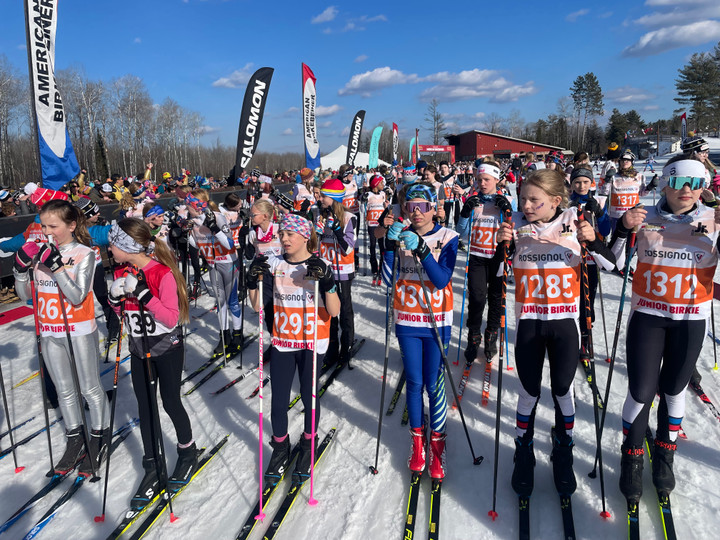
Birkebeiner skiers, both old and new alike, have a long and storied history. Cross country skiing began as a form of transportation, it became a popular recreational activity, and soon developed intoa competitive sport.There is a story behind every great cross country ski event. The Junior Birkie is no different; it began a long time ago, in a land far away.
Legend has it, while wearing protective birch bark leggings, backcountry skiers trudged through the
mountains and rugged forests of Norway’s Osterdalen Valley, from Lillehammer to Trondheim, during
the Norwegian Civil War. These noble warriors successfully smuggled Prince Haakon, the son of King
Sverresson and Inga of Vartieg to safety, and affectionately became known as Birkebeiner skiers.
To honor Nordic traditions and history in America, Tony Wise launched the American Birkebeiner in
1973. Wise called upon skiers to challenge themselves against the snow-covered hills of Northern
Wisconsin. Because of his call, thirty-four men and one woman were on the starting line, clad in
woolen sweaters and knickers, for the 50-kilometer race from the Lumberjack Bowl in Hayward to
Telemark Lodge in Cable, Wisconsin.
The American Birkebeiner has flourished significantly over the years; it now represents a mecca for
outdoor enthusiasts, a fitness destination, and a lifestyle where friends and families meet to ski, bike,
and run. The Birkie has grown from a single, one-day event into a week-long celebration of Nordic
activities, as well as a year-around schedule of outdoor activities and events. The Junior Birkie is one
of many additions to the American Birkebeiner schedule; it specifically focuses on young skiers and
Nordic fun.
On Friday, February 25, 2000, the Junior Birkie made its debut at Fish Hatchery Park in Hayward,
Wisconsin. The event was sponsored in part by TNT Video, along with proceeds from Don Maher's
song, “Ode to Tony Wise and Birkie Trail.” The Junior Birkie provided a competitive race experience
for skiers ready to move beyond the children’s event, the Barnebirkie. According to Cherie Morgan,
executive director of the American Birkebeiner Ski Foundation (ABSF), who originally proposed the
idea for the event, "We received feedback from coaches and parents that they wanted a competitive
event for junior skiers in the 10 to 15 age category.” Morgan added, “Several Midwest coaches
considered the Kortelopet too long for juniors, and felt the Barnebirkie was an event for novice skiers.
As a result, the Junior Birkie race was developed.”

The 2000 Junior Birkie organizers, Scott Wilson and Kevin Brochman, both United States Ski
Association coaches, claimed a 2.5-kilometer race would attract competitors from Wisconsin and
Minnesota, as well as skiers from across the United States. They expected many young skiers to
already be in the Hayward area with their parents, who were planning to ski the Johnson Bank
American Birkebeiner. Wilson stated, “This new event provides an opportunity for competitive junior
skiers to focus on speed and technique; plus, this race is a shorter distance, similar to the Junior
Olympic Qualifier races. It's going to be a fun time for the young athletes, as well as a great spectator
event."
Kevin Brochman was a member of the U.S. Olympic Ski Team during the 1984 and 1988 Winter
Olympic Games, and served as a U.S. Ski Team coach in 1998. He added, “The idea behind the
Junior Birkie event is to create a fun activity that would add excitement to the American Birkebeiner
schedule; this addition, fills the gap between the Barnebirkie and the Kortelopet for young skiers.”
Other coaches agreed, including Ken Schoville, youth development coordinator for Central Cross
Country Skiing, "Our emphasis has been on getting kids to ski appropriate distances at a fast pace.
This race gives juniors an alternative, and introduces them to racing and interval starts. It also
provides an opportunity to network with coaches who are searching for competitive skiers."
Mother Nature dealt a serious blow to the 2000 American Birkenbiener race, with her unseasonably
warm temperatures and rain. For the first time in the 28-year history of the American Birkebeiner,
race officials cancelled the 50-kilometer cross country ski race. Warm weather turned much of the
course to slush and stones. ''The organizers felt that the trail conditions just simply did not allow them
to complete the race,'' said Phil Van Valkenburg, marketing director at Telemark Resort in Cable,
Wisconsin. Van Valkenburg said, “The cancellation was the first for the American Birkebeiner;
although, in 1981 race officials postponed the race for two weeks due to poor skiing conditions; and in
1998, warm weather forced organizers to shorten the course.” Yet, in 2000, several events did take
place, including the Salomon Elite Sprints, the Hayward Chamber of Commerce/Madshus Citizen
Sprints, the Sons of Norway/Swiss Miss Barnebirkie, and the first Junior Birkie.
The inaugural Junior Birkie attracted a field of less than 100 boys and girls, yet the spectators and
competitors will never forget that day. One athlete, C.J. Waggoner helped shovel snow to improve the
course, and then went on to win the race. During the 2000 Junior Birkie, Scott Wilson recalls assisting
Kevin Brockman record finish times on a clipboard and using hand-held stopwatches, while parents
stood in puddles at the start line, in the pouring rain, holding umbrellas for their young skiers. After
the race, Wilson proudly proclaimed, “Aside from the weather, and having to haul in snow from near
and far, the first Junior Birkie was truly a success story.”
The 2001 Junior Birkie greeted skiers with plenty of snow, a well-groomed course, and a sunny,
cloudless sky. Thanks to a grant from Herbert H. Kohl Charities, the ABSF and Fish Hatchery Park
hosted the 2nd annual Junior Birkie. The ski course and the individual start format remained similar to
the previous year, featuring moderately rolling terrain, and grooming for both classical and freestyle
techniques. The weather was certainly colder than the balmy February temperatures from the
previous winter, but the enthusiasm generated by 108 skiers, aged 10 to 15 was much greater. The
field consisted of 55 boys and 53 girls.
Scott Wilson took his race expertise to the Winter Olympic Games in Salt Lake City, Utah during the
winter of 2002; therefore, he called upon his close friend, Dennis Kruse, to become the race chief for
the Junior Birkie. Kruse, at that time, was the vice president of the ABSF, and already had Birkie
duties that needed his attention at Telemark Resort, including the opening ceremonies and the Birkie
Expo. As a result, he incorporated the ski trails at the Telemark Resort, as the new race venue for the
2002 Junior Birkie. Adding to the excitement of a new venue, an Alberta Clipper hovered over central
Wisconsin, and Century Tel became the race sponsor. The storm left behind eight fresh inches of
snow, but Bill Pierce, ABSF groomer, worked his grooming magic with a Pisten Bully and Jack Moin
fine-tuned the course with his Tidd Tech. The 2002 Junior Birkie event was highly successful, and
Telemark Resort became its new home.
A High School Team Relay event, open to skiers in grades 9-12, made its debut as an addition to the
Junior Birkie schedule in 2004, and drew a very competitive field of skiers from Wisconsin,
Minnesota, and Michigan. Each skier, in a 3-person team, traversed a 1.5-kilometer loop, tagging off
to the next skier of his or her team in front of the flagpoles at the Telemark stadium. Scott Wilson and
the CXC Competition Committee realized the Junior Birkie had become one of the biggest events of
the season for Midwest skiers’ ages 15 and younger.
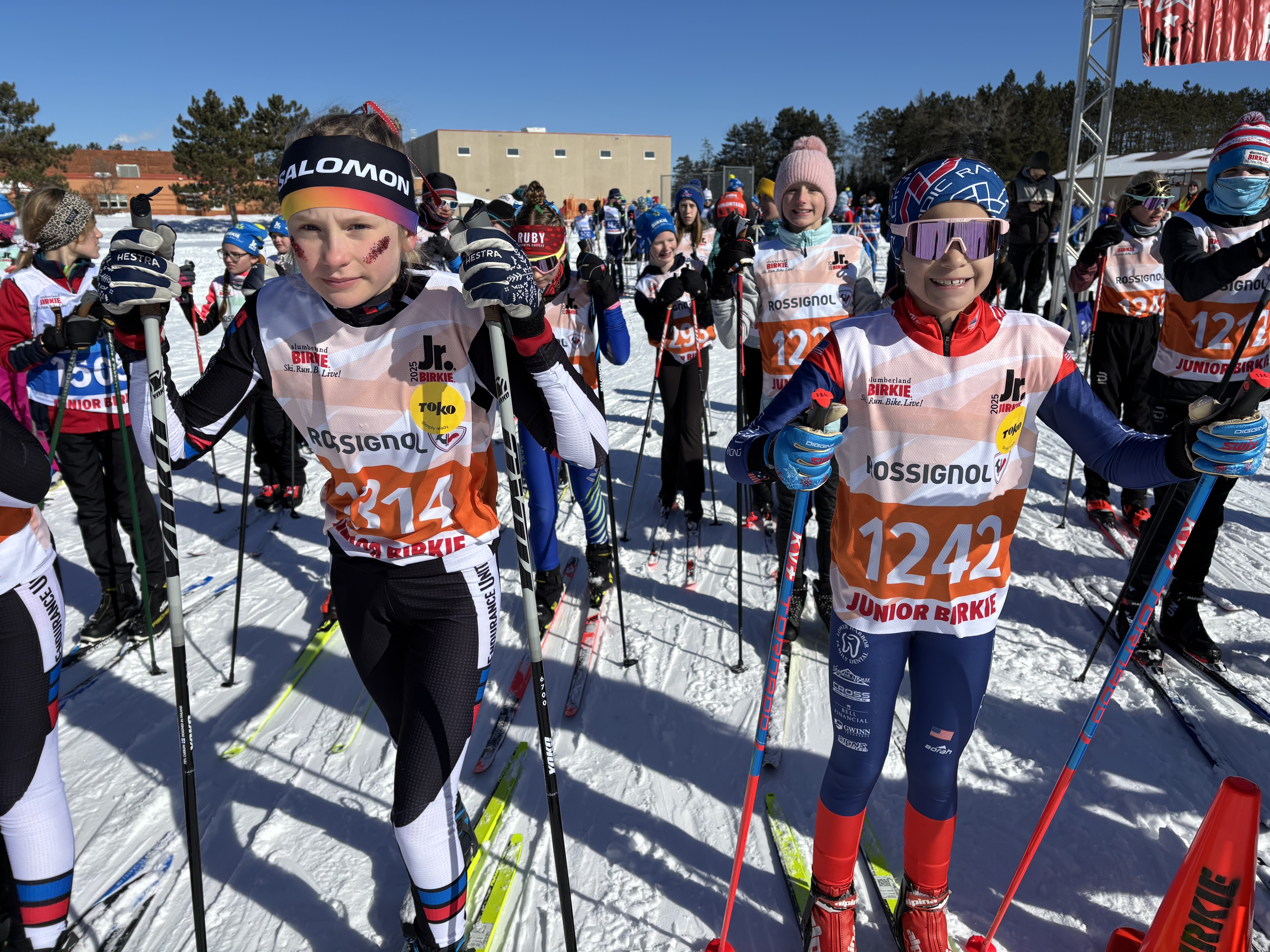
According to Bryan Fish, U.S. Ski Team Development Coach, “Skiing is the ‘cool’ thing to do in the
winter with friends. It is an opportunity to slide and glide, and it is a time to laugh and play outside.
Skiing is the type of fun that is energizing and excites kids, and keeps friends and families skiing
together.” To include more fun and competition into cross country skiing, the 2006 Junior Birkie added
another twist to the schedule, the CXC Central High School Championships. The top athletes, from
their respective State Championships in Minnesota, Wisconsin, Michigan, Illinois, and Ohio were
invited to race. The pursuit-style event began with a 3 km mass start free technique race, skiers then
changed to classic skis and poles in a stadium transition area, and finished with a 3 km classic race.
The first skier to cross the finish line claimed the title of CXC Central High School Champion. “We
were really excited about this opportunity for kids to ski head-to-head,” said Scott Wilson.
Telemark Resort continued to be the venue of choice for the Junior Birkie and the High School Relays
until 2014, when a major snowfall made transportation for volunteers and participants traveling to the
Telemark Resort nearly impossible. Junior Birkie Race Chief Everett Myers reluctantly canceled the
events scheduled for Telemark Resort. “My first thought was keeping everyone's loved one's safe and
not putting kids in harm's way for a ski race,” remembers Myers. Although, due to a quick response
from the ABSF staff, Everett Myers, race sponsors, and the ABSF grooming crew, headed by Chris
Campbell, the 2014 Gear West Junior Birkie proceeded with an untimed event held on Main Street in
downtown Hayward. Over 75 hearty athletes skied out Main Street and followed the Barnebirkie
course onto the City of Hayward Golf Course. Considering the last minute change, ABSF
Sponsorship Director Susan Kendrick said, “Participation was great, and although the event was
untimed, skiers were happy to keep the tradition of the Junior Birkie alive.”
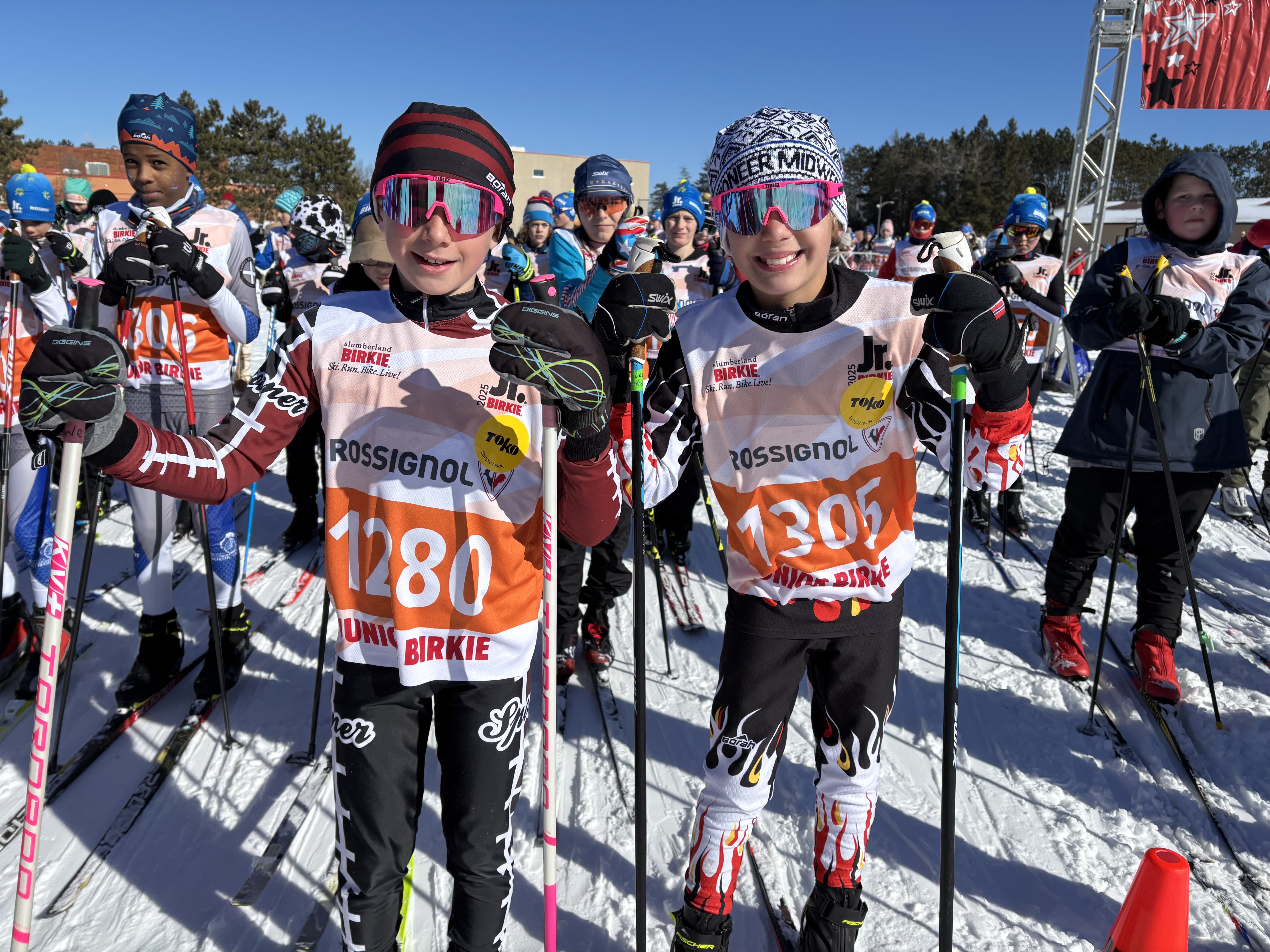
In 2015, due to the positive response from families, participants, and spectators, the American
Birkebeiner Ski Foundation decided to keep the Junior Birkie in downtown Hayward; in addition, the
11th annual High School Sprint Relays would take place entirely on Main Street. Bruce and Karen
Manske became the Junior Birkie Race Chiefs and helped to format the new event schedule. For the
second year, Gear West was the Junior Birkie sponsor, which started behind the Hayward Elementary
School, the same location as the Barnebirkie, and finished on Main Street. The High School Sprint
Relays started and finished on Main Street, immediately following the Junior Birkie mass start races.
That same year, the Junior Birkie became part of the CXC Youth Cup, a series of eleven races
developed in cooperation with the Minnesota Youth Ski League and CXC to promote health and
fitness for youth across the Midwest. The CXC Youth Cup offers athletes ages 10 to 13 the
opportunity to experience the excitement of travel, friendship, and competition associated with Nordic
skiing. Also in 2015, The American Birkebeiner International Bridge, a re-creation of the structure
Tony Wise, the Birkie’s creator, had built for skiers at the Telemark Resort, made its first appearance
in downtown Hayward.
Change is usually a good thing – in 2016, the Junior Birkie races started at the beach on Lake
Hayward, requiring athletes to ski over the International Bridge and up Main Street to the finish line.
The Junior Birkie Team Sprints followed, with the racing action taking place on up and down Main
Street.
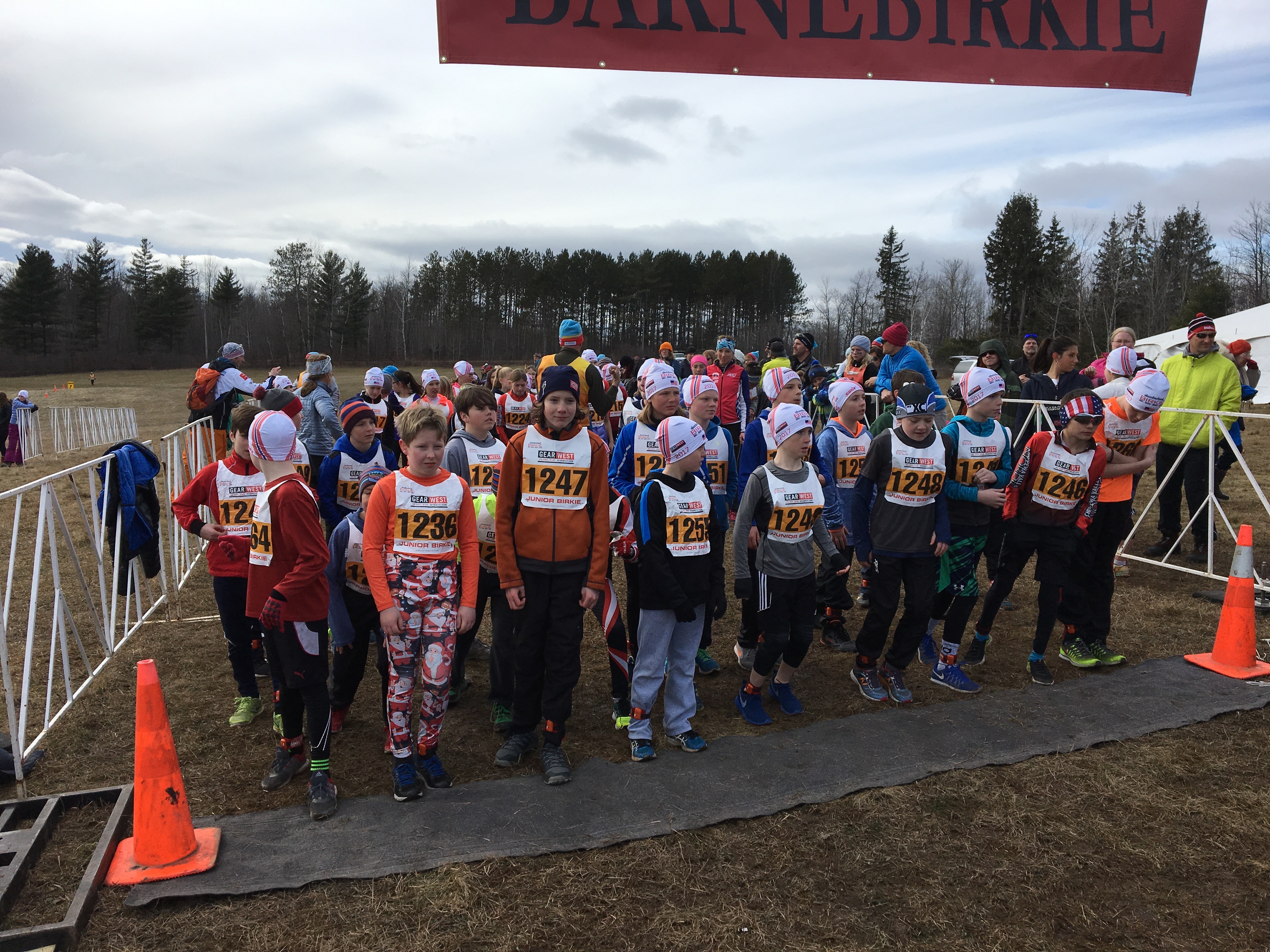
The 2017 American Birkebeiner ski race, along with the Kortelopet and Prince Haakon, were
canceled for the 2nd time due to unseasonable warm weather, rain, and insufficient snow, which
created icy and unsafe conditions on the famous Birkie Trail system. The ABSF joined the efforts with
the Manske’s to keep young athletes excited about “Birkie Fever.” The Junior Birkie was converted to
foot races at Fish Hatchery Park. Over 150 athletes had a wonderful time “running” the Junior Birkie
in an individual mass start race, as well as 3-person mixed relays.
The ABSF reworked Birkie Weeks scheduling in 2018, with several events moving to Thursday,
including the Junior Birkie. The mass start races began behind the Hayward Primary School, and age
group starts were reorganized to focus more on U8-U14 athletes. A trend showed that many high
school athletes had graduated to the Prince Haakon and Kortelopet races. High school teams were
still invited to participate in the Team Sprints on Main Street, an event that continues to grow.
The new Birkie week schedule worked well, so Gear West and Rossignol remained the Junior Birkie
sponsors during the 2019 and 2020 Thursday afternoon races. The Team Sprints featured a record
number of teams, as spectators lined Main Street to follow the action of Junior Birkie athletes.
COVID 19 put a damper on many events throughout the world in 2021, including the American
Birkebener. Each event had specific safety measures and protocols, including virtual options and
staggered starts for the primary Birkie events. The Junior Birkie was moved to a new venue, the
Birkie OO Trailhead. The ABSF and the Junior Birkie race crew were dedicated to keeping an
important youth event on the schedule. Kids got to ski on the famous American Birkebeiner trails,
starting near the iconic Kortelopet stadium. Unfortunately, no relays were held in 2021.
The 2022 and the 2023 Junior Birkies once again started behind the Hayward Intermediate School.
The two courses, 1.5k & 3k, travelled through the City of Hayward Golf Course and headed down
Main Street. The Junior Birkie Mass Start Races remained part of the CXC Youth Cup for U12 and
U14 age categories. The 1.5K course had athletes ski down Main Street, turn at the base of the
International Bridge (no bridge crossing), and head to the Finish Line. The 3K course also continued
down main street, traveled over the International Bridge, turned around, crossed the bridge again and
raced back up Main Street to finish at the American Birkebeiner Finish Line. Team Sprint Races all
took place on Main Street. Teams consisted of two racers, each skiing twice.
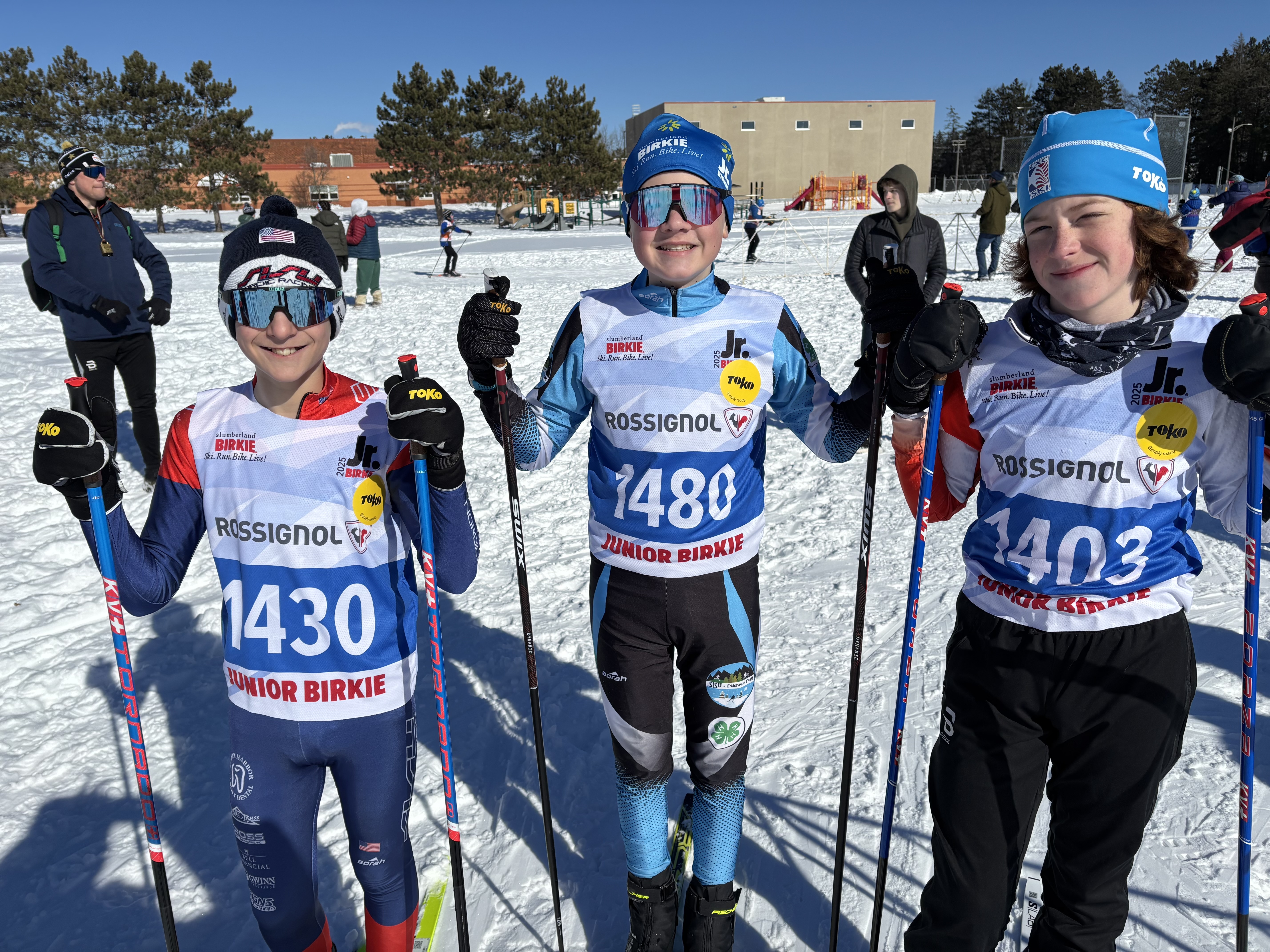
Mother Nature again showed her force in 2024. Although we did not receive much natural snow that
year, the ABSF was excited to host the 50th American Birkebeiner celebration and the 25th
anniversary of the Junior Birkie on the man-made snow loops at the Birkie Trailhead in Cable,
Wisconsin. The 2024 Junior Birkie mass start races started and finished at the American Birkebeiner
Trailhead in front of thousands of Nordic fans, including US Ski Team member, Jessie Diggins. It was
an incredible day that featured over 450 young skiers. Due to the lack of snow, there were no Team
Sprints.
Birkie Week 2025 was back to normal, with a full Thursday schedule that included the Barnebirkie,
Para Birkie, Barkie Birkie, the Giant Ski Race, and the Junior Birkie. The 2025 Junior Birkie, reached
one of the highest participation levels, and featured many highlights during the Team Sprints. The
schedule was back to the basics: the startline was behind the Intermediate School and finished on
Hayward’s iconic Main Street. Plus, the Team Sprints featured its largest field, with exciting starts and
finishes on Main Street. It is very exciting that both the Junior Birkie Mass Start Races and the Team
Sprints have tracked increased participation with each new season.
The 2026 Junior Birkie promises to be the best ever – see you in Hayward!