
Posted by Gretta Scholz - Team SNØ on Nov 26th 2026
Technique drills to help with transition to on snow skiing
As cross country skiers we spend a significant portion of the year just preparing for skiing; running, biking, hiking, and of course rollerskiing. While all of these things increase fitness and prepare your body for snow skiing, rollerskiing provides the best alternative in terms of actual ski movements and technique for on snow preparation. We spend many hours over much of the year rollerskiing and working on technique improvements. It is often harder to improve and perfect technique on rollerskis as they are more unstable and don’t quite match the feeling of skis. For example relying too much on ratchets when classic rollerskis causes you to kick back rather than setting your kick pocket which is necessary for when you’re on snow. I find doing drills and specific technique work on rollerskis over the summer and fall and then immediately once on snow to be helpful. This reminds you of what you’ve been working on and helps translate those movements from wheels to skis! Here I will share some of my favorite drills for skate and classic that have helped me improve my technique.
Skate drills:
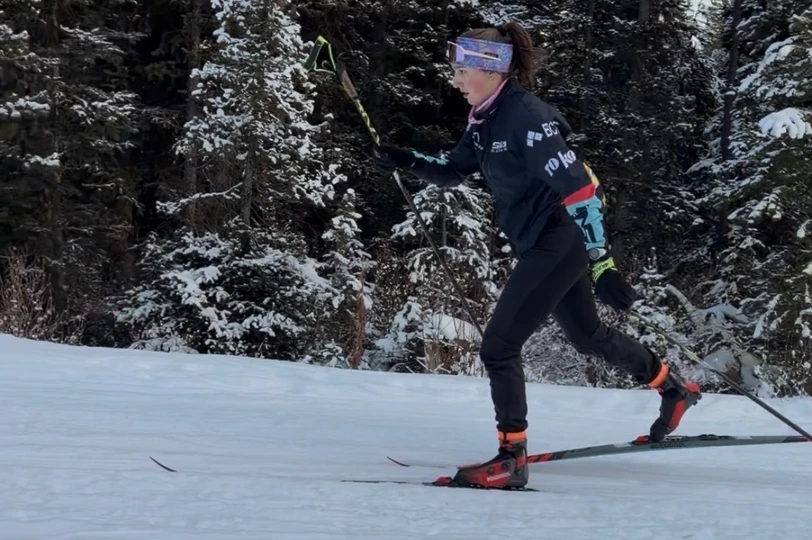
One of the most important things to focus on is position and balance. You want to be able to transfer your weight fully over each ski and glide. On a gradual downhill practice transferring your weight and gliding as long as you can on each ski. You can also try hopping on the glide portion of your stride when doing no pole to put yourself in the correct body position. While this can feel really unsteady and off balanced, it forces you to land with more knee drive and your hips stacked over your feet in the exact position you want to be in when loading your legs for the next glide. I also find skiing without poles helps isolate your lower body and allows you to fully focus on planting feet under you and fully transferring your weight. Alternatively, skiing with one pole isolates your upper body and can help you think about keeping the core stable and upper body quiet. If you are twisting and unable to stop it when using one pole it’s likely your upper body is twisting slightly when using two poles. You can also see this while holding a pole up at around eye level, keeping the pole horizontal and pushing just with your legs can also exaggerate the twist of your body and you will notice if the pole swings back and forth or not. These two drills help you practice engaging your core to keep the upper body stable which is super important as it makes it much harder to transfer your weight and balance out over one ski when your upper body is twisting around or falling over to one side.
Classic drills:
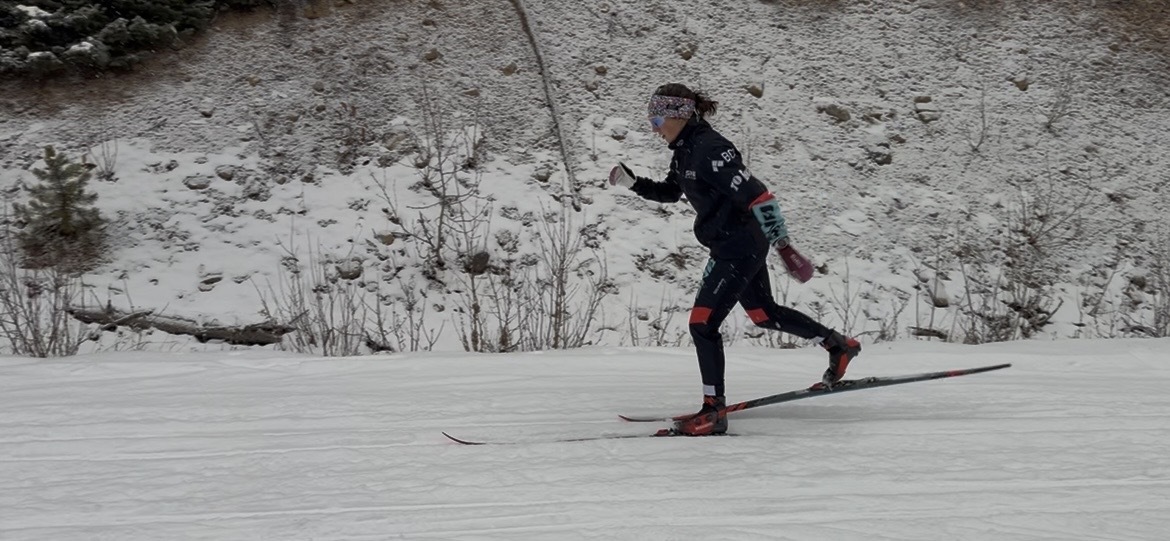
You can transfer many of the skate drills over to classic skiing as well. Skiing with no pole or with one pole gives a similar result of isolating parts of the body and allowing you to focus on one portion at a time. You can also add a hop into the glide portion of your classic stride to help get into the correct body position. However, one of the drills that I think has helped my classic skiing the most is thinking about classic striding as bounding. While the movements are of course significantly less exaggerated in a classic stride, the position you land in when bounding is the body position you want to be in when you glide. Similarly, when you push off into the next bound is essentially how you should be setting your kick pocket. I like to start by taking my skis off and doing a very slow bound on a gradual uphill, pausing between each to feel the position I should be in. This puts you in a position where your ankles are flexed, your hips are stacked over your ankles, and your body has a slight forward lean. Then when you compress down, deepening knee and ankle flection, that’s how setting your kick pocket should feel. After going through a couple sets of slow bounds on foot, I will put my skis back on and do the same slow bounding motions on my skis. It should feel similar, however, when you pause before your next bound you will now be gliding. As it is an exaggerated movement it can feel fairly uncomfortable and unsteady, but if you can glide between each bound holding that body position it will be much easier to hold it when simply kicking from ski to ski.
Drills can be incredibly helpful in setting your technique up for success on snow. Especially if you can practice drills on rollerskis in the summer and fall and then immediately as you get on snow. If you can set good technique habits early on and continually practice, it will only get easier to keep it together when skiing easy as well as in races. Improving your technique is the easiest way to improve speed. It makes you more efficient, meaning you can go faster without going harder making it highly valuable. I think drills are one of the best ways to focus on technique and make overall technique improvements. They give you specific movements to think about and replicate when skiing, that will over time improve your efficiency and your overall speed!