
Posted by Jack Young: EnjoyWinter Athlete Force on Dec 19th 2025
Handling Pressure
If you’re reading my skiposts, you are probably aware that I had the race of my life this past weekend in the freestyle sprint in Davos. This result put me in a great spot for Olympic qualification, but before the race, I was under a lot of pressure. I had good races in Ruka and Trondheim, but they weren’t good enough to guarantee me any security of staying on the World Cup. This put me in the position where I could either perform in Davos or go home. I want to talk about how I handle stress about racing, but first, let me explain just why Davos was so important.
Like so many other cross country skiers, my biggest goal for this winter is to make the Olympic team and start the classic sprint in Val di Fiemme. Since I had all of the sprint starts for period one of the world cup, the path of least resistance to make the team was to simply perform well on the world cup. In order to make the team via the world cup, an athlete needs either a top 8 in an Olympic specific event (classic sprint in my case) or to be in the top 45 on the world cup sprint rankings at the closing of the selection period in mid-January. The Olympic criteria also caps the amount of athletes that can be selected via this sprint specific criteria at 4. If more than 4 athletes either get top 8s or reside in the top 45 come January, only the 4 athletes ranked highest will go. The last wrinkle in this process is that being selected to the team does not guarantee a start. If the coaches deem that an athlete who was not selected via the sprint criteria has better potential in the classic sprint, they can choose to start that athlete over one of the four who qualified in this 4 person “sprinter cap”.
So where did I stand after Trondheim? Exactly in the position I was trying very hard to avoid coming into this year: having one race left where failure could spell the end of my Olympic dream. Without a top-30 in Davos, I would have to go home to race US Nationals in Lake Placid and win the freestyle sprint qualifier. This would likely earn me a discretionary bid for the Oberhof freestyle sprint which is the last sprint of the World Cup selection period. I would have to do well enough there to vault me back into the top 4 US men in the sprint rankings. Even if I did make the team via this avenue, it is highly unlikely that I would actually get to start the classic sprint because there would be 4 men on the team who had gotten to race the classic sprint on the olympic course during the Tour de Ski. I still haven’t proven that I can perform in World Cup classic sprints, so this avenue ends in a dead end even if I did manage to make the team.
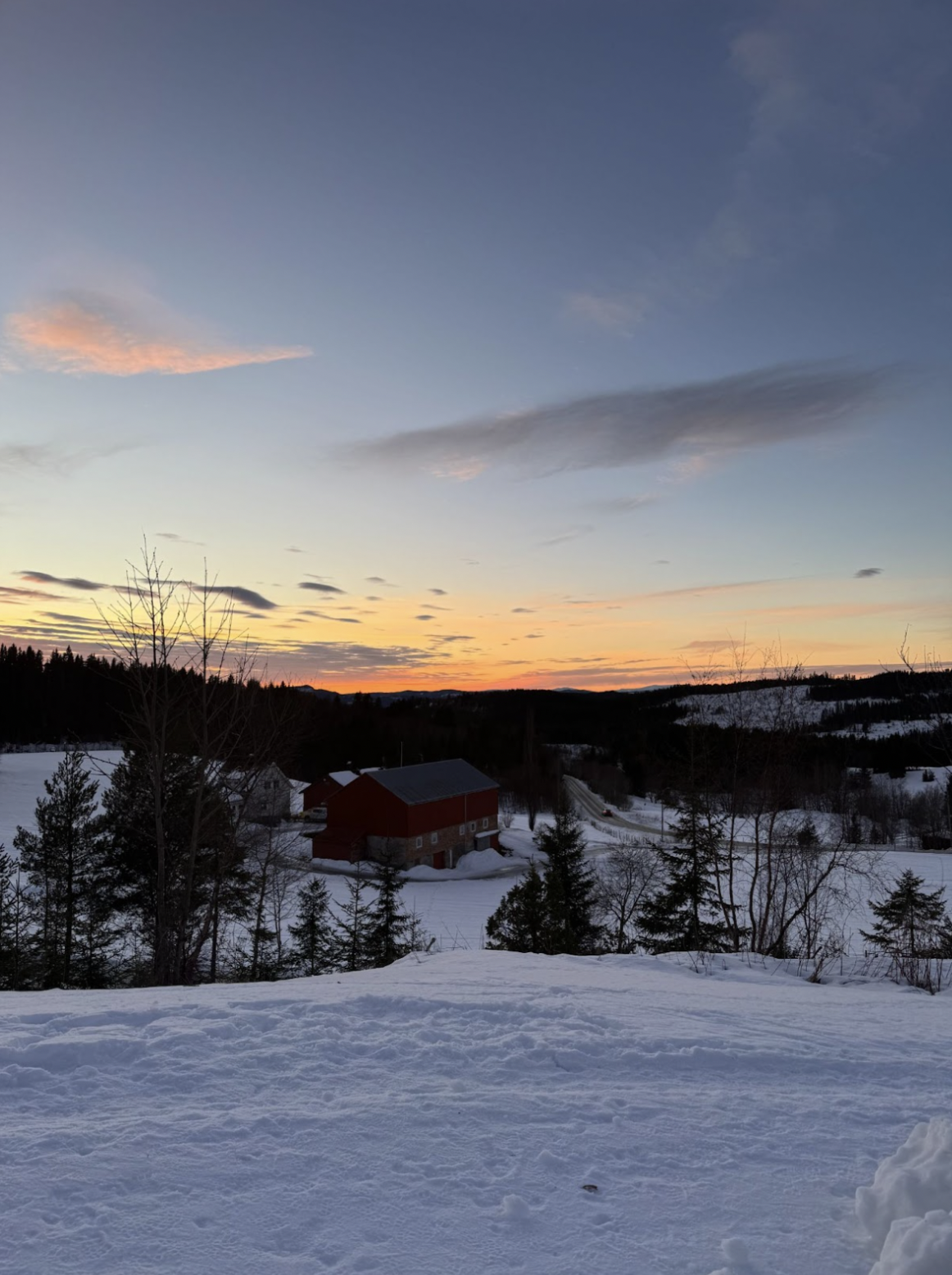
Sunset in Trondheim
After narrowly missing the heats in Trondheim, I knew exactly what I had to do the following weekend to stay in Europe and keep fighting for an Olympic spot: qualify. I had been looking forward to Davos because I raced well there last year placing 12th after the rounds. However, I had qualified 28th–only 3 tenths away from not qualifying. The idea of the fate of my season coming down to that narrow of a margin was stress inducing, and the week of preparation for the race ended up being a constant battle with nerves. Here’s what I did to both keep my sanity and prepare myself to perform on race day as well as I could:
The first reason I’m able to handle and actually thrive in stressful environments is the confidence I have in the preparation I’ve done over the course of the year leading up to competition. I’ve always found that the easiest and simplest answer to “what if I’m not good enough?” is: I prepared as best as I possibly could, so if I do fail, that’s just the way things go. This mindset doesn’t exactly provide solace in a stressful headspace, but it at least keeps me from agonizing over the details of my prior training that I have no control over now. Taking this route can be scary because it takes away the possibility of making excuses for failure. However, if part of your process for handling stress is to find excuses for the case where you fail, then you will find yourself failing much more often than succeeding.

Surprisingly nice set up in the Scandic Hotel in Trondheim
Moving onto the conscious decisions I made in this last week to quiet my nerves and get ready to perform, the very first thing I did after the Trondheim classic sprint was to write the training plan for the coming week. There are very few major ways to tweak a training plan between race weekends, but there are infinite minor tweaks you can make. The sooner I get down on paper what the week of preparation will look like in the training department, the sooner I can stop worrying about getting it right. When I leave the days up to an important race up in the air training-wise, I find I make way too many unnecessary, minor tweaks and end up driving myself and my coaches crazy in the process. My plan was to do hard intervals, 3x4’ L4, on Sunday, rest until Wednesday when I would do some speed on the course, and then finally do the same race prep workout on Friday that I always do. The plan was simple and easy to execute. When I’m feeling nervous, I don’t want there to be a bunch of things I have control over. Taking the training plan away as a stressor calms me quite a bit in these situations.
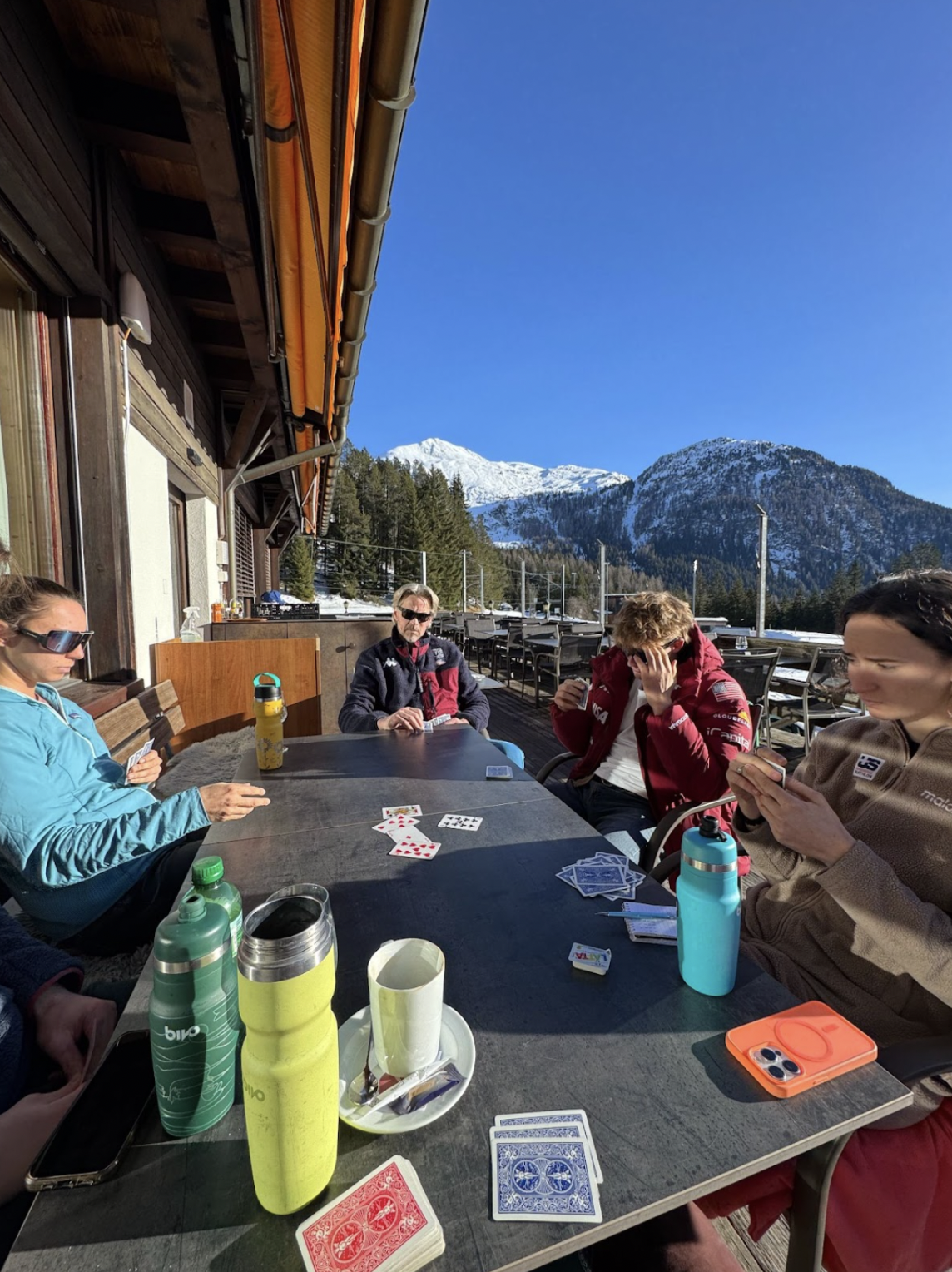
Winning hands of Hearts can take your mind off of racing
With the training plan for the week being static, what could I control during the week? Sometimes I struggle with the boredom of how little I’m training during the season. A big step I can take is actively trying to fill up my days with anything except scrolling instagram. I brought a bunch of books with me this year, but last year, having school work to do helped. For example, I’ve been reading a pretty heavy book: I know this much is true by Wally Lamb, and I’ll admit, reading about someone else's troubles really puts in perspective just how fine I’ll be either way–whether I succeed or fail. Nils van der Poel, the author of How to Skate a 10k, has some thoughts worth reading about creating meaning in life outside of sport. He claims that when he feels like he has meaning outside of speed skating, he becomes comfortable with the idea of losing. With this comfort, he is able to relax and have more fun in his sport–two things that lead to better performance. Whatever the distraction is, I think it is crucial to have a distraction that has nothing to do with sport. In my experience, the positive feedback loop of stressing over a race can only be broken by thinking about something entirely away from skiing.
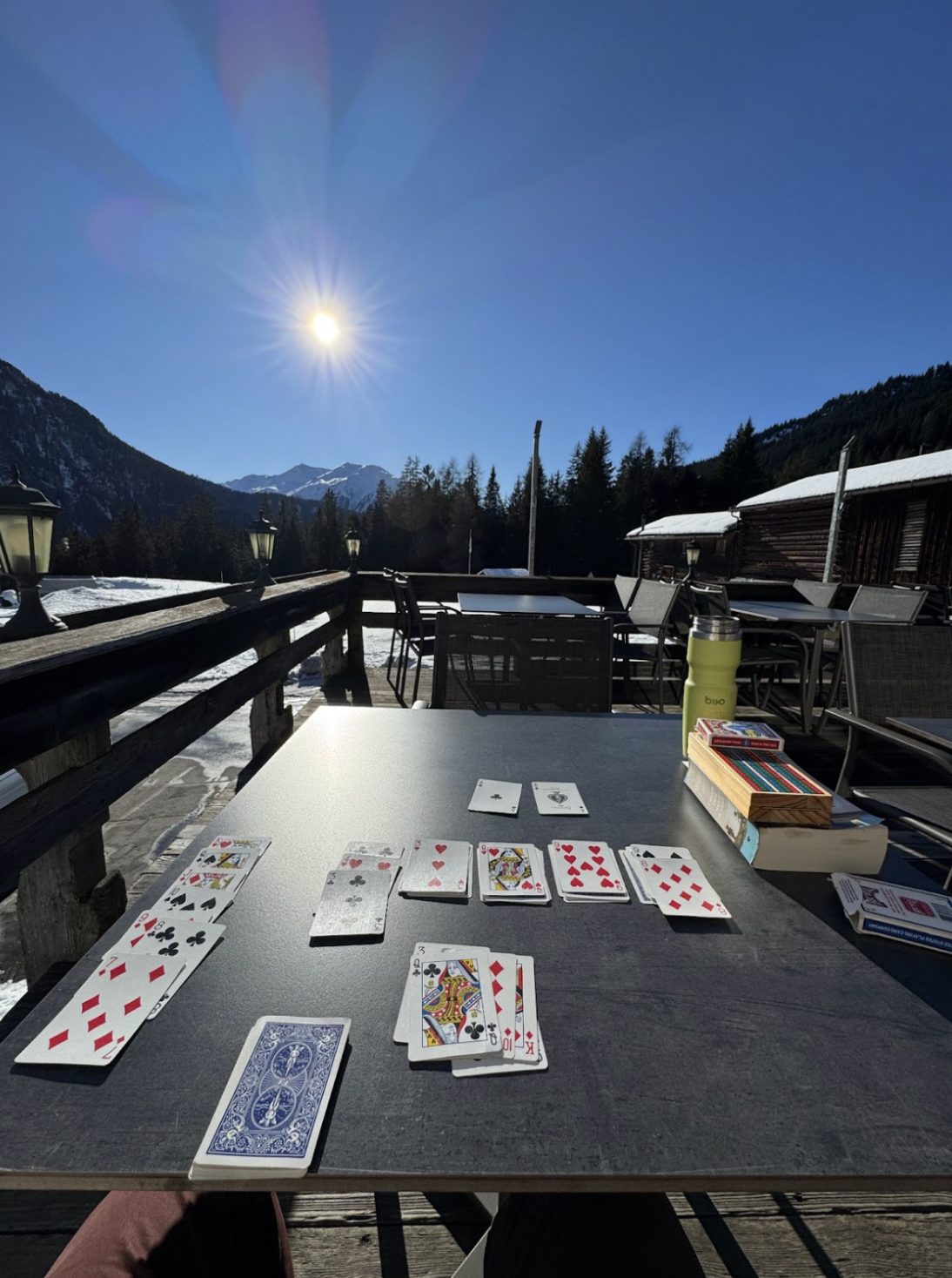
Any solitaire tips?
In most cases, I get stressed for ski races because I have set goals and I am afraid of not achieving them. If this is the case, there is no reason to put energy into thinking about this specific performance goal! Of course, this is so much easier said than done. In order to not think about something you have to actively think about something else. Setting process goals for races can accomplish this. My goal in Davos was qualifying, but my process goals were things I could actually control: Get out as fast as possible then ease the tempo off until the corner, rest into the corner, then explode up the hill. After I had accomplished these goals I would be deep enough into the race to stop thinking and do what I have done so many times before. I’ve found it particularly powerful to set process goals for the start of races, as those are the times when you aren’t hurting that much and therefore still have the mental capacity to be stressed.
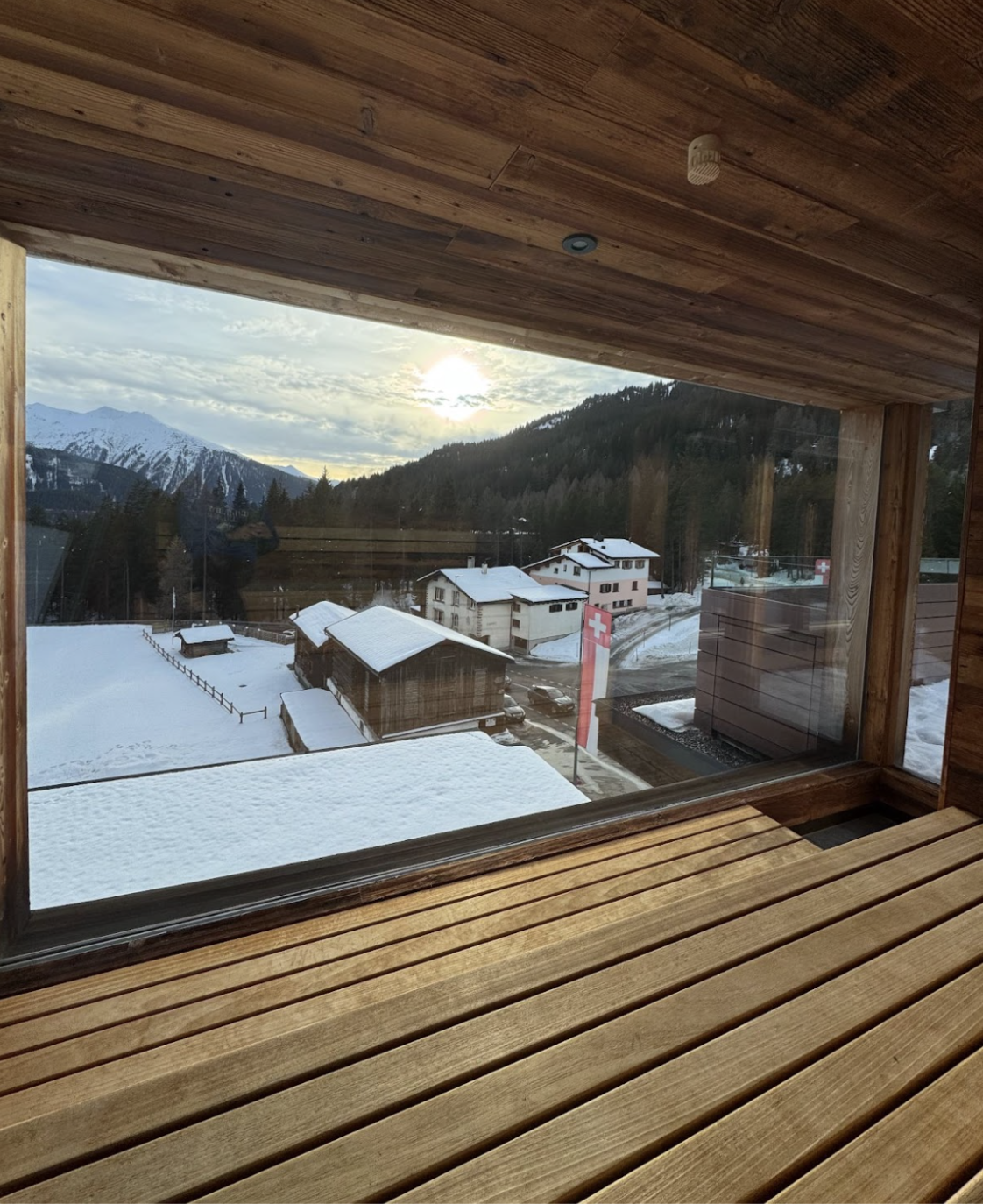
Sweet sauna in Davos
The more things in my life that I can feel like I am putting on auto pilot or I have figured out beforehand, the more at peace I feel going into a big race. If I give myself decisions to make during a race week where I am super stressed, I will undoubtedly agonize over them and then doubt them once I make them. I find peace in: a static training plan, routine, and acknowledging the possibility of failure and what that would entail. Even if failure means a season going to waste, I am still incredibly privileged for these things to be the things I am stressing about in life.
However! At the end of the day, if you really care about succeeding in something with as many intangibles as a sprint qualifier in cross country skiing, no matter how well you prepare or how good your self talk is, you are still going to be nervous. At the end of the day, when I feel like I have done whatever I can do to eliminate as much negative nervous energy as possible, I like to just invite the rest in. I’m nervous because I’m excited and I care. Even if being nervous is uncomfortable, which of course it is, at some point you just have to embrace it and hopefully find some gratitude that sport is currently the biggest stressor in your life.