
Posted by Jack Young: EnjoyWinter Athlete Force on Nov 5th 2026
Balancing Academics and Skiing at Colby
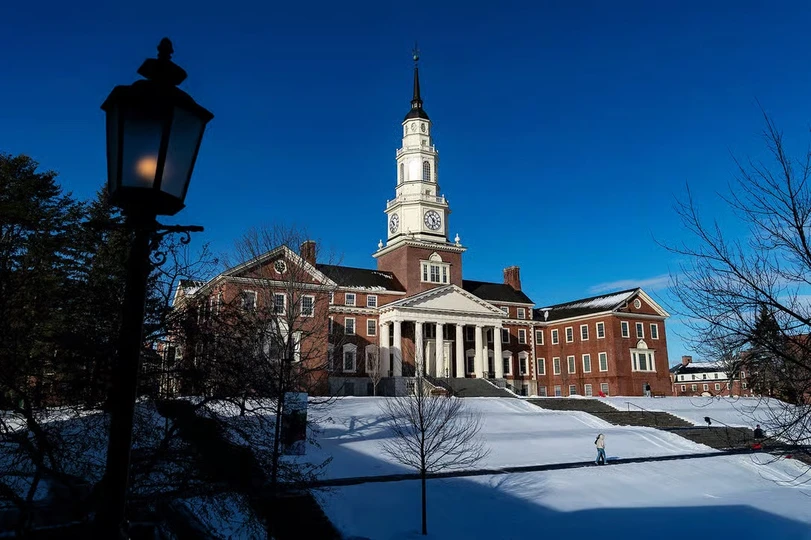
After last week’s post, I received a response from a reader asking about the academic side of my college search and what I ended up studying at Colby. In hindsight, it was an oversight to include so little about my academic pursuits in a post about a college decision. The point of college is to pursue education beyond high school–not just continue a ski career. It is not that I didn’t care about my academics, in fact, I cared quite a bit about the quality of the education I would receive in college. I think it’s fair to say that I cared more about school than skiing when I first entered college. I was drawn to Colby, Bowdoin, and Dartmouth because of the high graduation rates and liberal arts approach to higher education. I had very little idea what I wanted to study in college beyond knowing I had an interest in history and math, so my general thinking around school choice was that it didn’t matter where I went as long as I ended up at a school where I was confident I could figure out what I wanted to do once I got there. I was pretty sure that Colby, Bowdoin and Dartmouth checked that box.
When I got to Colby, I was excited to both train harder than I had ever trained before during a school year and work harder academically than I had ever worked before. It’s not like I didn’t work hard at skiing and my academics in high school–I did, but playing multiple sports, being a member of the concert and jazz band, and commuting 30 minutes each way to school and 45 minutes each way to Craftsbury a couple times a week to train in the winter took away from time that could be spent training, studying or recovering. I went into my freshman fall assuming that I could train harder than ever while also staying on top of my courseload. I was right–for the most part.
During my freshman fall, I did well in my classes: Calc 2, Spanish 1, First year writing, and Geology 101, and I was for the most part able to train well. Certainly, I was training better than any fall before then when I had football practice every afternoon, but I wasn’t sleeping as much as I should have due to homework on the weeknights and I was staying out late on the weekends.
I took my first college history course my freshman spring, but I didn’t take my first education class until my sophomore fall. This is when I started to realize what I was interested in doing for the rest of my life. That fall, I took proofs as a requirement for a possible math major, education 101 and the intermediate world history course required of all history majors. After this semester, I became excited about a possible career in teaching either math or history. As for my pursuit of skiing, I was excited about training and the prospect of qualifying for NCAAs, but I still didn’t have any big goals for skiing beyond the NCAA circuit. Because of this, it was very clear to me that my biggest focus at Colby should be academics. That is not to say I didn’t figure some things out my sophomore year to execute both aspects of my life better. I was still staying out too late on the weekends, but I began to manage my time better so that I wouldn’t have to stay up so late studying on the weekdays (an extra hour of sleep every day will do wonders for recovery). When I look back at my sophomore year, it seems to me like it was the most balanced year of my time in college. I was giving 100% of my attention to my studies while also finding ways to prioritize training and social time. With this, I had another great year on the academic side of things and qualified to race at the NCAA championships in Lake Placid. I even took an extra class the spring of my sophomore year to get a graduation requirement out of the way.
It was after my sophomore year of school that my mindset around the balance between academics and sport began to shift. During my sophomore spring, I made my initial major declaration and began pursuing a Math and History double major and an education minor. I was excited about all three subjects coming into my junior year, but I was much more excited about the prospect of qualifying to race in the North American world cups that winter. That 23-24 season is still the most hours I have ever trained in a year, and I also continued to do well in school. I stopped going out on the weekends entirely, and started managing my time during the days the best I ever had leading to having plenty of time for both training and studying. That fall, I really didn’t do anything except train, study and sleep. At this point, I was getting addicted to the process of training and starting to think about the possibility of doing it after college.
Possibly the biggest decision I made in deciding the balance between academics and sport in college came when I was registering for classes for my junior spring. In order to stay on track to graduate with a math major, it was important that I took real analysis (allegedly the hardest math class at Colby) that spring. I was excited for the challenge and came incredibly close to signing up for that class. However, for whatever reason, I had a feeling that fall while registering that I wanted to give myself a better chance at success in skiing. I knew that the road ahead for me as a math major was going to be difficult. At that point in school, I had realized that the time requirement for math classes was sometimes twice that required of education and history classes in weekly homework.
That spring, I only took three classes, two history and one education, and I had a fantastic winter and spring of skiing on both the NCAA and world cup circuits. Coming into my senior year, I was sure that I wanted to pursue skiing after college. It was less clear what the proper balance was between this pursuit and finishing up my major(s). After I made the decision to not take real analysis, I had to switch up my majors to being Education and History with a Math minor. This change dropped my weekly workload by quite a bit and opened up my spring schedule for ski racing. Most math classes at Colby meet on Fridays and having a three day weekend was both great for training and competition, as all of our races in the winter are on Fridays and Saturdays. Even with a lightened course load, I was still pursuing multiple majors and a minor. I couldn’t devote all of my energy to both academics and sport, so that left the question: how do I strike a balance?
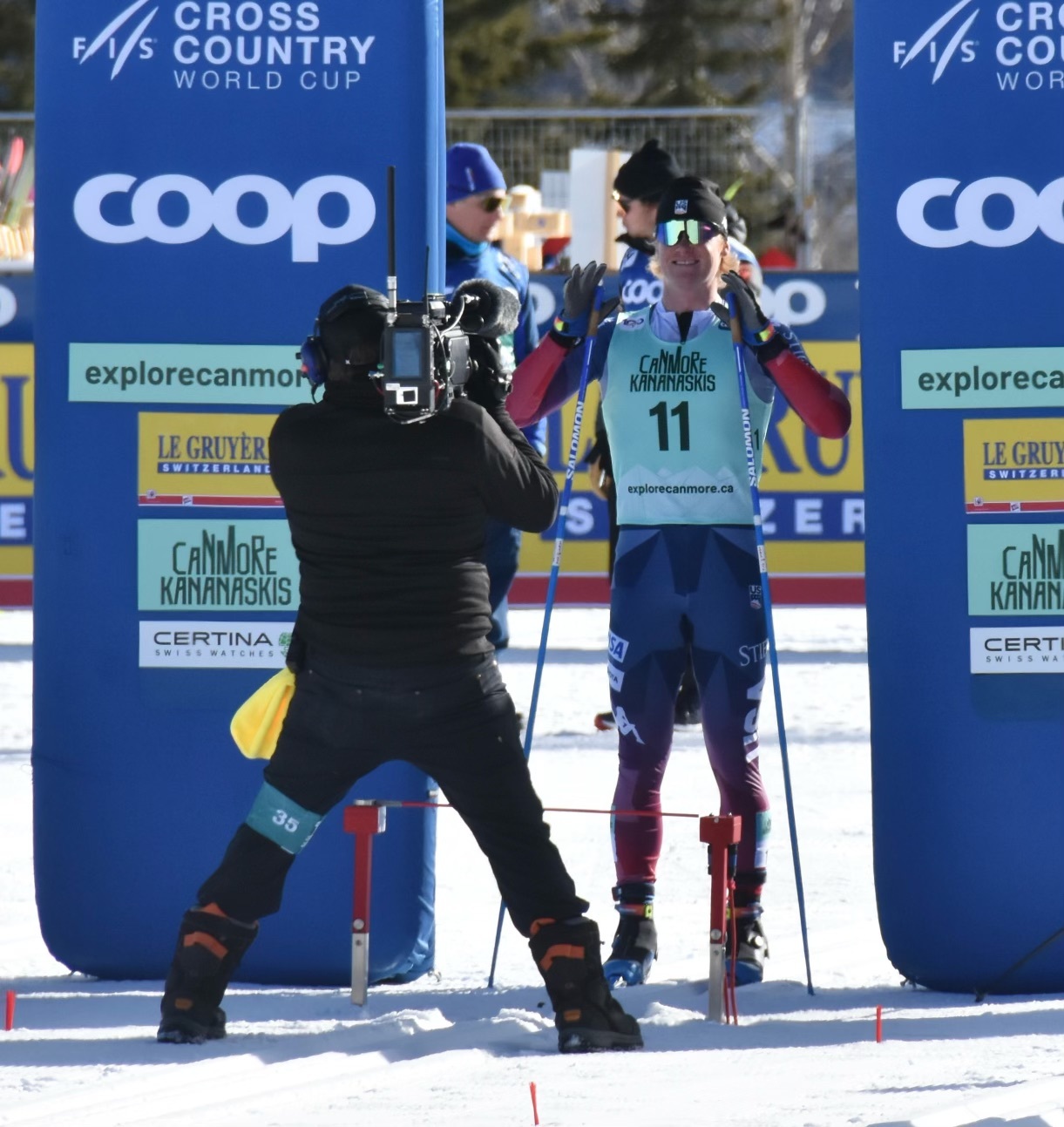
My first world cup start in Canmore, Canada
The reason this balance was hard to strike was because for the first time in my life, I actually saw skiing as a career option instead of just something I did on the side. Until this point, I was doing my best to train and recover as well as possible while prioritizing my academics. I did this because I saw my academics as an investment in the future while skiing was just something I was doing at the time. As soon as I saw a future for myself in the sport beyond college–skiing on the world cup, qualifying for the olympics, and supporting myself solely based on skiing–I began to approach my time in college as a crucial step in my progress towards this new career goal. Having made this decision about my post college career, it was important to change how I approached the balance between school and skiing.
Someone reading this may be asking: why couldn’t I stay fully committed to school for just one more year and then shift my focus to skiing after graduation? I could have done this, but I had opportunities coming that year in my ski career that were too big to pass up. After my performance in the North American world cups my junior year, I received two world cup starts– both for skate sprints–iin period one of the world cup in December in Europe. In order to keep my spot on the world cup, I had to accept those starts and travel over to Europe to race. It was imperative that I kept my spot on the world cup because at that point, it was likely that team USA would only select sprinters for the Olympic team that next year from the world cup; without world cup starts in the fall of 2025, any sprinter would have little chance of qualifying for the Olympics. As I saw it, there would be no pathway to the games in 2026, the year after I graduated, if I didn’t accept the world cup starts my senior year.
All of this is to say that my performance in skiing during my senior year of college was incredibly important for setting me up for success my first year after graduating. This didn’t mean that I was going to take time off from school or not finish out my majors; it more meant that I was going to refocus some of the energy I had been spending on academics to skiing. In theory, this was a huge shift, but in practice, due to the time management skills I had been picking up along the way, not that much changed. The biggest difference in my senior year of college was that I refused to do any homework after 9pm and I traveled a lot more. The only way I could stick to both of those things and still do ok in school was if I managed my time well and communicated with my professors well. To accomplish this, I intentionally registered for classes with professors that I had existing relationships with who I knew would understand me missing multiple weeks of classes, and I held myself to a very strict schedule during the day so I could get to bed on time.
In the end, it all ended up working out. I had an excellent senior year of skiing where I not only set myself up for success post-grad but also had some excellent races at NCAA championships representing Colby. In addition to my ski success, I graduated with distinction in both of my majors and finished out my math minor. I may have spent a little less time and energy on my academics my last two years than I should have, but when I look back on those years, I’m mostly proud of the work I put in, and I feel like I got a lot out of my time at Colby academically. Without the Colby education department, I doubt I would have realized how passionately I feel about education in the US. My time at Colby certainly helped me find what I wanted to do with my life, and it was really an added bonus that I found out while I was at Colby that that path could wait until after my ski career was over.
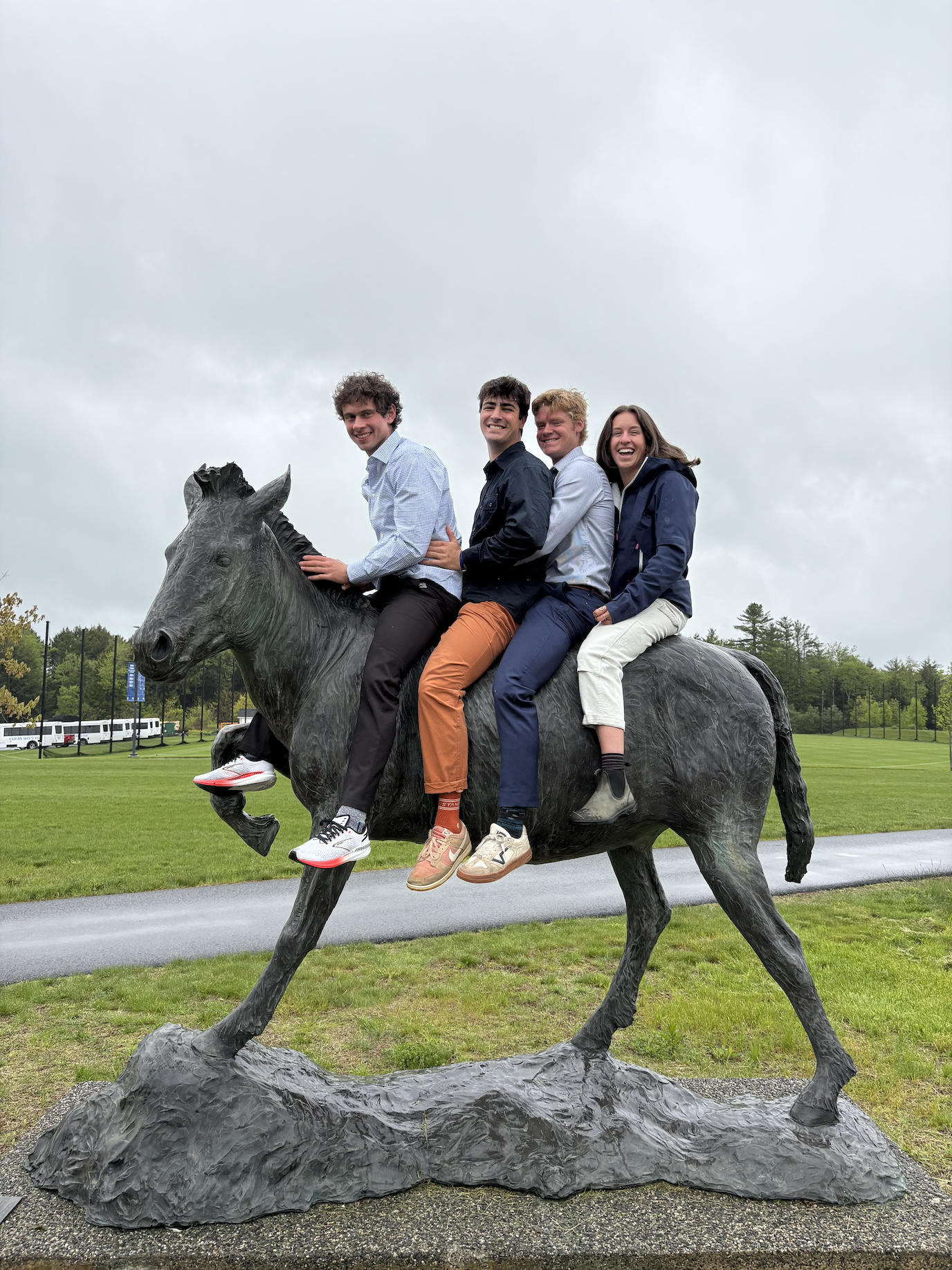
graduation day with the seniors